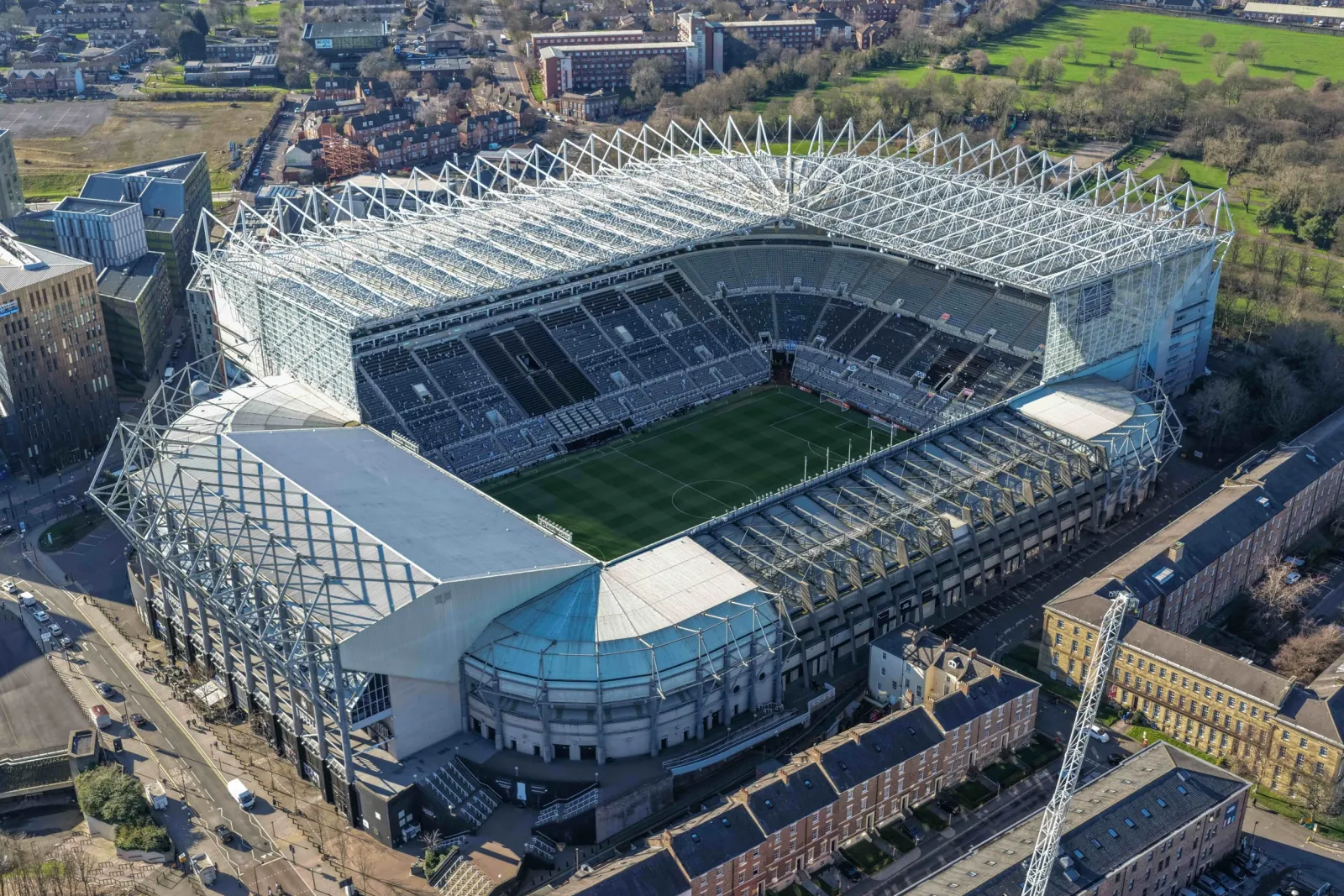
Newcastle United is leaning towards a £1.3 billion project to build an oval-shaped stadium on Leazes Park, a plan that would see the club's historic St James' Park demolished and replaced with leisure, office, retail and accommodation space.
The Magpies have called St James' Park home since 1892, but club officials say a new stadium could unlock revenue streams needed for long-term competitiveness.
What the Proposed Stadium Would Look Like
According to a report in The Telegraph, the proposed arena would sit directly adjacent to the current Leazes End of St James' Park. Capacity is projected at between 65,000 and 72,000 seats, with the lower figure considered most likely. The design features an oval silhouette with a "wave effect", meaning two slightly smaller side stands would rise upward while larger tiers would sit behind each goal.
The exterior is said to include black-and-white illuminated cladding, a visual cue reminiscent of Bayern Munich's Allianz Arena, although the club has denied that this will be the final look.
What Would Happen to St James' Park?
If the new stadium proceeds, St James' Park would be demolished. The eastern portion of the current site would be redeveloped for leisure, office, retail and accommodation uses, while the remaining land would be converted into green space. An alternative proposal, still on the table, would retain the existing ground and add an extra tier to the Gallowgate End, effectively expanding the current stadium rather than replacing it.
Financing the £1.3 Billion Project
The club's ownership group, led by Saudi Arabia's Public Investment Fund (PIF), does not plan to fund the entire cost from its own balance sheet. Instead, Newcastle United will seek external financing that will be repaid over time. SunSport reported that club executives met with representatives from US bank Goldman Sachs this month to discuss loan structures and repayment terms.
Chief executive David Hopkinson said the club "need[s]" a new stadium for the revenue it will unlock, citing increased match-day income, corporate hospitality, naming rights and non-football events as key drivers.
Timeline and Key Milestones
The club expects to make a final decision on the stadium location and design by 2027. If the Leazes Park option is chosen, construction would start in 2029, after St James' Park hosts its scheduled Euro 2028 matches. The build phase is projected to last at least four years, meaning the new arena could be ready for the 2033-34 season.
Background: Newcastle's Stadium History and Past Expansion Talks
St James' Park was opened in 1892 and has been expanded several times, most notably in the 1990s when the Gallowgate End was rebuilt and the Leazes End was modernised. The 52,719-seat capacity makes it one of the larger Premier League grounds, but the club's owners argue that the current footprint limits commercial opportunities and modern fan experiences.
Previous attempts to increase capacity have included a 2019 proposal to add a third tier to the Leazes End, which was rejected by the Newcastle City Council on heritage grounds. The current oval-shaped concept represents a fresh approach, seeking to create a purpose-built venue that meets contemporary standards for sightlines, acoustics and multi-use flexibility.
Impact on Fans, the City and Local Economy
Supporters are divided. Some fans cherish the heritage of St James' Park and fear that demolition would erase a key part of the club's identity. Others welcome the prospect of a modern arena that could host larger crowds, concerts and other events, potentially boosting the local economy.
Economically, the mixed-use development planned for the former St James' Park site could generate thousands of jobs in construction, retail and hospitality. The new stadium's larger capacity would increase match-day footfall, benefiting nearby businesses on match days.
What Comes Next?
Between now and the 2027 decision point, Newcastle United will continue detailed design work, community consultations and financial negotiations. The club must also secure planning permission from Newcastle City Council, which will evaluate the impact on traffic, heritage and green space.
Stakeholders to watch include the PIF, Goldman Sachs, local authorities and fan groups. The outcome will shape the club's financial trajectory and the city's urban landscape for decades.
For supporters and residents, the key takeaway is that a definitive decision is still several years away, but the discussion is already influencing planning, investment and community sentiment across Newcastle upon Tyne.