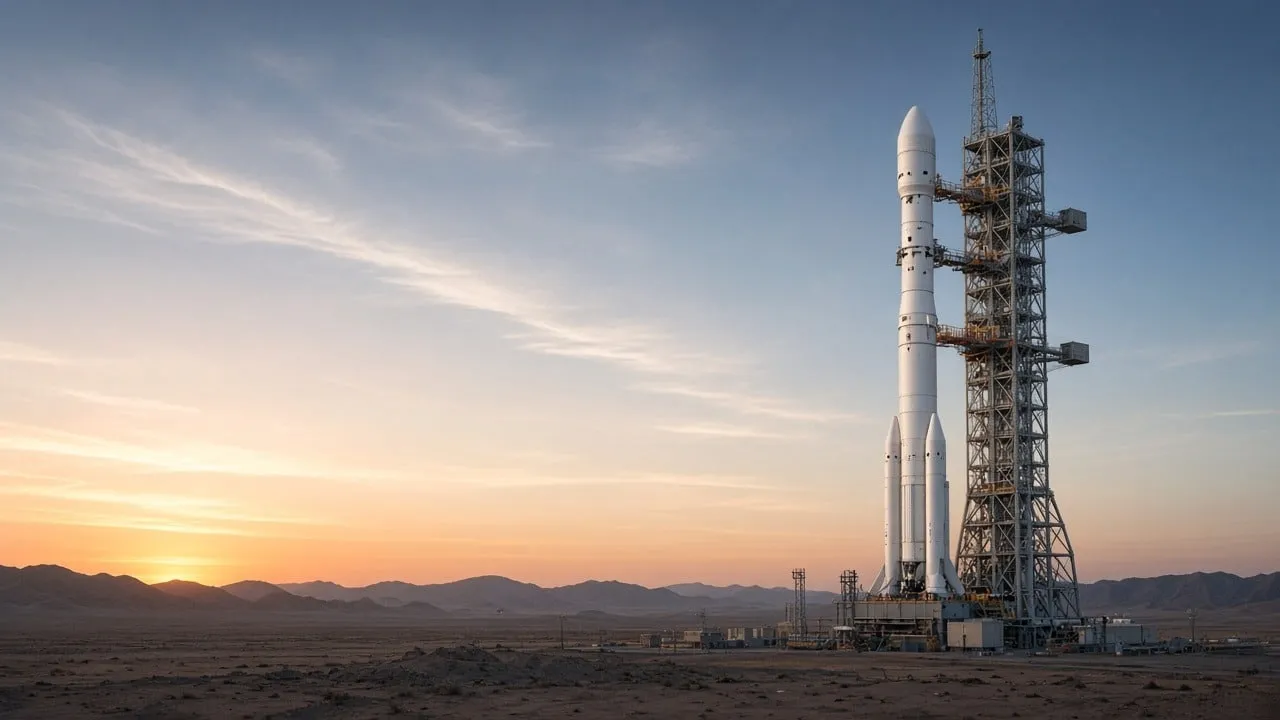
Pakistan First Astronaut Mission Reaches Milestone with Shenzhou-24 Drill
Space cooperation between Pakistan and China has achieved a significant milestone following the successful completion of a pre-launch rehearsal for the upcoming Shenzhou-24 spacecraft. Radio Pakistan reported that the exercise took place at the Jiuquan Satellite Launch Centre in northwestern China, marking a critical operational test for the flight crew.
During the joint pre-flight exercise, all three astronauts successfully completed their operational procedures. Zhou Lu, an official at the China Astronaut Research and Training Center, stated that the crew demonstrated determination and accurately performed all assigned tasks during the drill.
This development unfolds as Pakistan prepares to send a national representative into orbit on the Shenzhou-24 crewed mission. The appointment of the Pakistani participant as a payload specialist was officially announced by the China Manned Space Agency on November 7.
Understanding the Historic Shenzhou-24 Joint Spaceflight
The upcoming mission marks a notable chapter in international space exploration. It will be the first joint spaceflight involving Chinese and foreign astronauts in the history of the Chinese manned space program. This flight represents a major milestone in bilateral space cooperation between Islamabad and Beijing.
According to Gwadar Pro, the Pakistani astronaut will spend a short period in orbit before returning to Earth aboard the Shenzhou-23 spacecraft. This operational arrangement highlights the complexity and coordination required between the two national space programs.
The collaboration builds on years of diplomatic and technological ties between the two nations. Space exploration has increasingly become a focal point of their strategic partnership, encompassing satellite technology, research, and now human spaceflight.
The Selection and Training of Pakistani Astronauts
The path to this mission began in February 2025, when Pakistan and China signed a formal cooperation agreement in Islamabad. The accord laid the groundwork for the selection and training of Pakistani astronauts for missions destined for China's space station.
Following three rigorous rounds of selection and assessment, two candidates emerged. Muhammad Zeeshan Ali and Khurram Daud were selected as reserve astronauts for the historic space program.
Both candidates subsequently joined China's specialized astronaut training program. The intensive preparation includes simulation exercises, survival training, and familiarization with the systems aboard the Chinese space station.
How China Manned Space Program Operates
The China Manned Space Agency oversees the Shenzhou program, which is the backbone of China's human spaceflight endeavors. The program relies on the Long March series of rockets and the Jiuquan Satellite Launch Centre, situated in the Gobi Desert.
Jiuquan serves as the primary site for all Chinese crewed space missions. The facility includes comprehensive infrastructure for rocket assembly, satellite testing, astronaut quarantine, and launch control operations.
Training facilities, such as the China Astronaut Research and Training Center, prepare participants for the physiological and psychological demands of space travel. Candidates must master zero gravity adaptation, emergency procedures, and scientific payload operations.
Bilateral Space Cooperation History
Pakistan and China share a long history of collaboration in space science. Past cooperation primarily focused on satellite development and launch services. Pakistan launched several communication and earth observation satellites using Chinese launch vehicles.
The transition to human spaceflight represents a qualitative leap in this partnership. Sending a Pakistani citizen into orbit requires deep institutional trust and technical integration between the space agencies of both countries.
Observers note that this mission strengthens technological ties and inspires a new generation of scientists and engineers in Pakistan. Education initiatives in aerospace engineering often follow such high-profile achievements.
What Comes Next for the Shenzhou-24 Mission
Following the successful completion of the pre-launch rehearsal, mission controllers will review data from the exercise. Final checks on the spacecraft, life support systems, and launch vehicle will continue in the days leading up to the flight.
The public and observers will monitor announcements from the China Manned Space Agency regarding the exact launch date and the final crew roster. The safe execution of the flight and the subsequent return of the crew remain the primary objectives for both nations.