How Symptoms Were Dismissed by Medical Staff
Sitting in an accident and emergency waiting room, mother-of-three Kelly Noad watched helplessly as her four-year-old daughter Emily slumped exhausted in a plastic chair. For three months leading up to this day, Emily had been wobbly on her feet, like little children can be, but instead of being met with concern, Kelly was appalled at the response she received from medics.
As we sat in emergency care one day for what seemed like the millionth time, a nurse came to see us, marking the second time that week they had waited there, according to Kelly, 41. The medical staff member asked if the child was wearing the right shoes, suggesting that dizziness and frequent falls could stem from footwear not fitting correctly. While this discussion took place, Emily woke up from sleep and vomited, prompting the nurse to complain about bringing a sick child to the hospital before walking away.
Kelly felt frustrated by the repeated dismissals, having worried for weeks that something was wrong with her daughter's brain. Alongside balance issues, Emily suffered from dizzy spells and vomiting throughout the spring of 2021. No one had given her a computed tomography scan of her head to see if anything was wrong, and instead, professionals blamed her shoes, which felt like a nightmare scenario to the family.
The Search for Answers Through Months of Uncertainty
Time after time, general practitioners and hospital medics dismissed the symptoms as a routine virus or food allergy. Kelly, living in Bristol with her civil servant husband Jamie, now 50, and their other children Joseph, now 15, and Max, now 17, struggled to find answers. Working as a childminder, she had looked after numerous children over the years and had never seen anything like this because children typically bounced back from viruses, but Emily did not.
At first, doctors suspected viruses, then a possible food allergy, prompting the family to stop giving her milk, strawberries, and other favourite foods in a desperate bid to isolate the cause. They found nothing while the child remained wobbly on her feet, resembling someone with vertigo, and constantly falling over. The turning point arrived when the nurse questioned why a sick child was brought to the facility, prompting Kelly to beg for a scan.
The Devastating Brain Tumour Diagnosis
The medical team finally agreed to perform the diagnostic procedure, taking the young patient to the scanning room where she went into the tube. Minutes later, the same nurse who questioned her shoes and the hospital visit approached Kelly, offering a cup of tea. Shortly after, doctors asked Kelly to call Jamie to the hospital and escorted them into a side room to deliver devastating news.
The symptoms of vertigo, sickness, and dizziness were not caused by a virus, an allergy, or incorrect footwear. Instead, doctors discovered a huge brain tumour, specifically a grade one pilocytic astrocytoma, which is a benign and slow-growing mass. According to the Brain Tumour Centre, these growths usually occur in children, with symptoms including headaches, fatigue, vomiting, and difficulties with balance.
The parents felt totally stunned as their world collapsed around them after months of begging for help and getting turned away. The tumour was located at the front of the brain and had already grown to the size of an apricot during June 2021 amid pandemic conditions, requiring immediate surgical removal.
Fifteen-Hour Surgery and the Fight for Survival
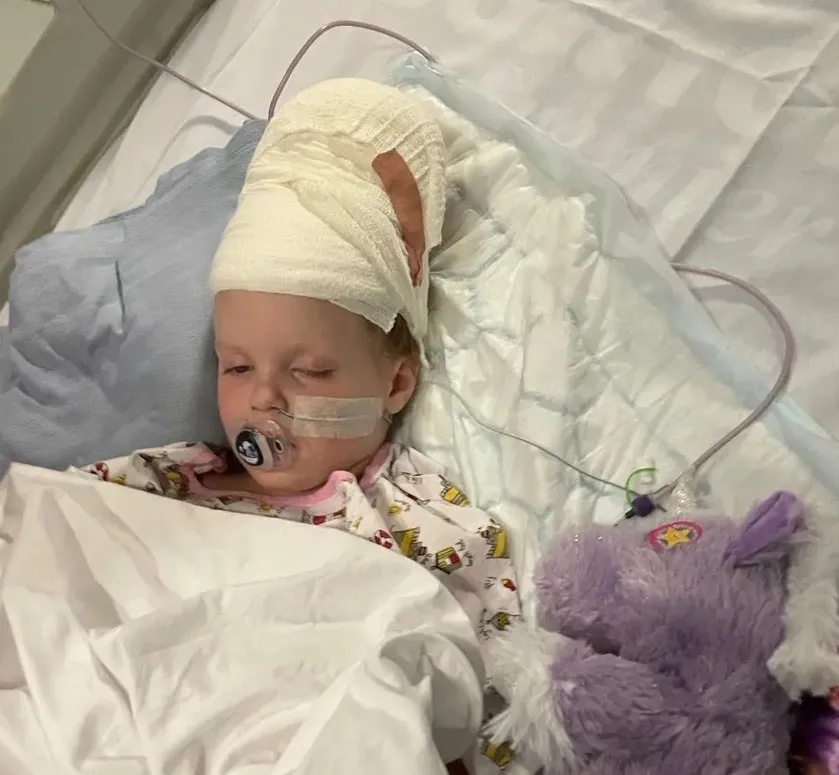
The young patient went into the operating theatre for a procedure lasting fifteen hours, requiring her entire body weight in blood transfusions. The family had planned a holiday for the following week, but surgeons informed them that the child would not have survived if they had gone away. It was terrifying to realise how close they came to losing their daughter before discovering the true scale of the medical emergency.
Following the operation, Emily suffered from posterior fossa syndrome, a condition that can sometimes occur after brain operations. This complication develops in around 25 per cent of children with medulloblastoma, with symptoms appearing one to three days post-surgery, including loss of muscle tone, weakness on one side of the body, memory troubles, unsteadiness, and decreased ability to talk or loss of speech.
Emily became totally paralysed from head to toe, unable to walk, talk, eat, or move, appearing like a prisoner trapped inside her own body. Supported by Lennox Children's Charity, the parents found it traumatic to watch their daughter lie there helpless, especially since they had expected a straightforward recovery after the operation.
Overcoming Meningitis and Long-Term Recovery
Physical therapy helped the child make slow progress, as posterior fossa syndrome can persist for months or years while remaining a treatable condition. However, further complications arose when Emily contracted bacterial meningitis while in hospital just three weeks after her brain surgery, pushing the family to fear the worst once again. Doctors drained fluid from her brain and administered antibiotics to clear the infection, and despite being touch and go, she pulled through.
Now eight years old, Emily is almost walking again while remaining somewhat wobbly on her feet due to posterior fossa syndrome. Kelly stopped working as a childminder to focus entirely on her daughter's needs. Although her voice sounds deeper and her speech remains broken up as a result of the paralysis, she has started learning to dance, deals with migraines, and has returned to school to make amazing progress.