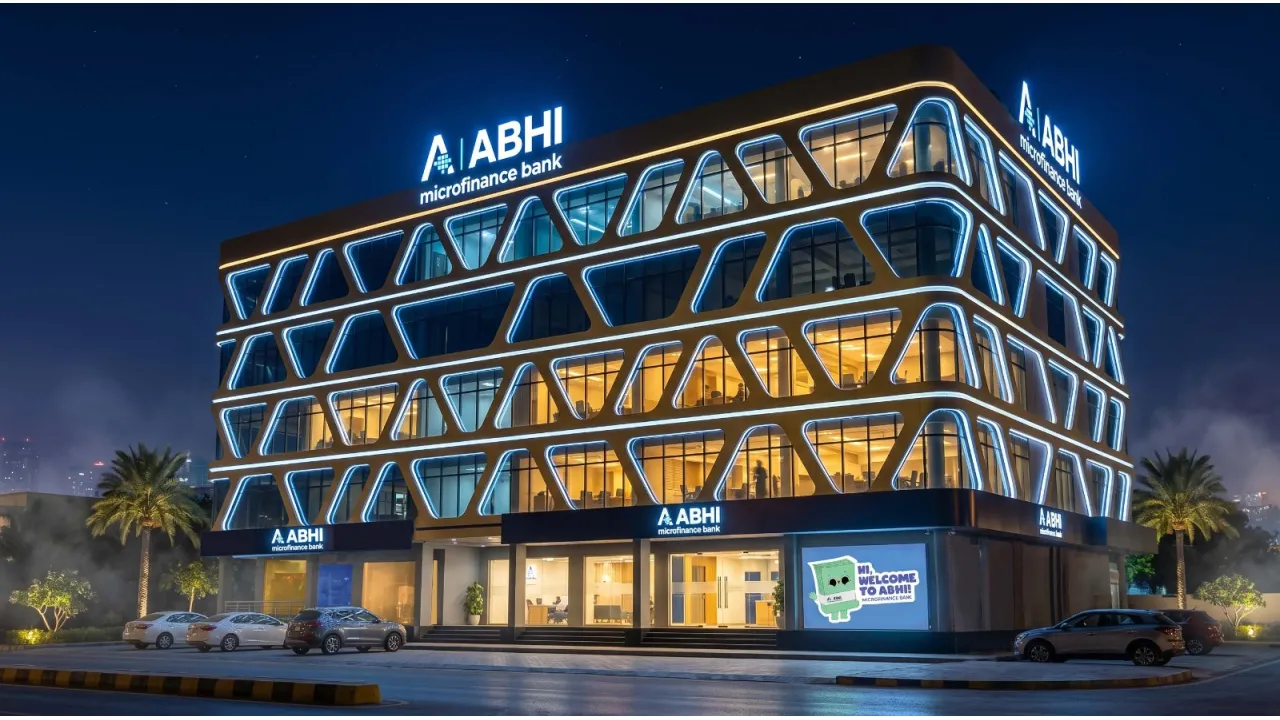
ABHI Microfinance Bank has raised about Rs. 2.05 billion through the book-building portion of its IPO, after demand ran past the shares on offer, according to Pakistan Stock Exchange book-building data and a company announcement.
What the Book-Building Results Reveal
The book-building tranche covered 99 million of the bank's 132 million ordinary shares on offer, at a floor price of Rs. 15.00. PSX data show an indicative strike price of Rs. 15.50, with bids for about 157.17 million shares, which is roughly 159 percent of the offer at the floor and about 106 percent at the strike.
The company said the book build is Pakistan's first fintech-led microfinance bank IPO. It reported bids of more than Rs. 2.4 billion, with strong interest from foreign funds, local institutions, and high-net-worth investors.
How the IPO Is Structured
The remaining 33 million shares will go to the public at the strike price on November 12 and 13, 2026. ABHI had earlier said the full IPO could raise between Rs. 2 billion and Rs. 3 billion, with proceeds meant to expand its loan book and strengthen its capital base.
Background: Microfinance and Fintech in Pakistan
Microfinance banks in Pakistan serve low-income individuals and small enterprises that lack access to traditional banking services. Over the past decade, the sector has grown steadily, supported by regulatory reforms that encourage financial inclusion. Fintech companies have increasingly partnered with microfinance institutions to digitise loan applications, disbursements, and repayments, improving efficiency and reach.
ABHI Microfinance Bank, founded in 2015, positioned itself as a fintech-enabled lender, offering mobile-first products and data-driven credit scoring. Its rapid growth attracted attention from both domestic and overseas investors seeking exposure to Pakistan's expanding financial inclusion market.
Why This IPO Is Significant
Being the first fintech-led microfinance bank to list on the Pakistan Stock Exchange, ABHI's offering signals a maturation of the sector. It demonstrates that investors are willing to fund technology-driven financial models, which could encourage other microfinance firms to adopt similar digital strategies.
The strong bid coverage, over 100 percent at the indicative strike, indicates robust demand. Foreign funds and high-net-worth individuals, traditionally cautious about emerging-market equities, placed sizable orders, suggesting confidence in ABHI's business model and the regulatory environment.
Use of Proceeds: Expanding the Loan Book
ABHI disclosed that the capital raised will be directed toward two primary goals: expanding its loan portfolio and bolstering its capital adequacy ratio. By increasing the loan book, the bank aims to serve more underserved borrowers, particularly in rural and semi-urban areas where digital penetration is rising.
Strengthening the capital base will help the bank meet Basel III-style requirements and improve its resilience against credit risk. A healthier capital position also enables the bank to offer larger loan amounts and diversify its product suite.
Impact on Stakeholders
Existing shareholders benefit from a higher market valuation and increased liquidity. For prospective investors, the IPO provides a gateway into Pakistan's micro-finance and fintech convergence, a segment projected to grow at double-digit rates over the next five years.
Borrowers stand to gain from expanded credit availability and enhanced digital services, potentially lowering the cost of borrowing and reducing turnaround times for loan approvals.
What Comes Next: Post-IPO Timeline
After the public allocation on November 12-13, 2026, the shares will begin trading on the Pakistan Stock Exchange. The company is expected to file a prospectus supplement outlining the final pricing and allocation details within the next few days.
Regulators will monitor the post-listing performance, particularly the bank's compliance with capital adequacy norms and its adherence to fintech-related consumer protection guidelines.
Practical Takeaways for Investors
- The book-building tranche raised Rs. 2.05 billion, covering 99 million shares at a floor price of Rs. 15.00.
- Indicative strike price is Rs. 15.50, with bids for 157.17 million shares (159 % of the floor offer).
- Remaining 33 million shares will be offered to the public on November 12-13, 2026.
- Proceeds are earmarked for loan-book expansion and capital-base strengthening.
- Strong participation from foreign funds, local institutions, and high-net-worth investors signals confidence in the fintech-led microfinance model.
Investors should review ABHI's prospectus for detailed risk factors, including credit risk, regulatory changes, and market volatility, before committing capital.