Pakistan's first original Netflix series premiered its trailer at Mohatta Palace in Karachi on November 24, unveiling the show's official music for the first time.
What Is the New Series and When Does It Arrive?
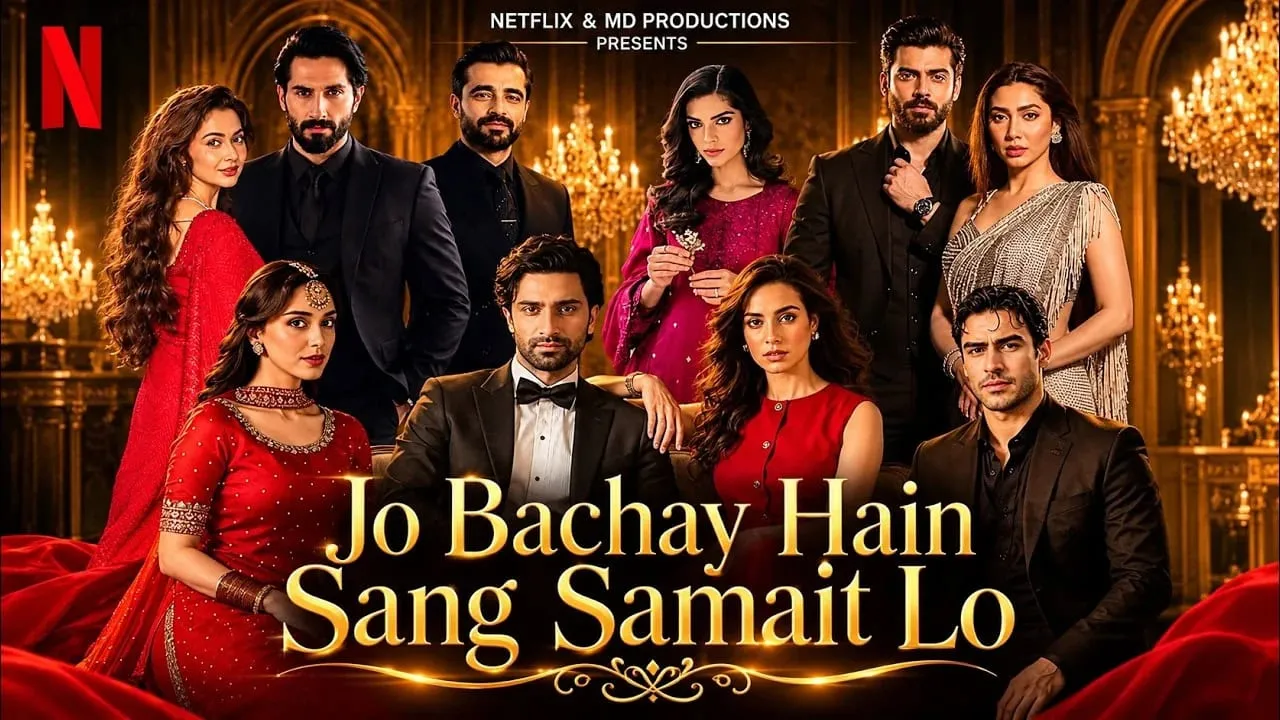
The series, titled Jo Bachay Hain Sang Samait Lo in Urdu and All the Love Our Hearts Carry for international audiences, will drop its first part on December 4. It is an Urdu-language drama that spans three generations and weaves together six love stories drawn from Farhat Ishtiaq's bestselling 2013 novel of the same name.
How the Project Came Together
Momina Duraid Productions developed the project in collaboration with Netflix's Middle East and North Africa division. The development cycle lasted nearly eight years, a period that included script adaptation, securing rights from the author, and extensive casting negotiations. Filming stretched across locations in Pakistan, Rome, and the United Kingdom, giving the production a visual canvas far wider than traditional Pakistani television dramas.
The international locations were chosen to reflect the novel's themes of diaspora, migration, and cross-cultural love. Production designers recreated period-accurate interiors in Rome for the storyline set in the 1970s, while the United Kingdom locations captured the contemporary diaspora experience of Pakistani families living abroad.
Who Stars in the Cast?
The ensemble reads like a who's who of Pakistani entertainment. Fawad Khan stars as Mehmood, a patriarch whose decisions echo through three generations. Sanam Saeed plays Victoria, a character whose name signals the series' blend of Eastern and Western influences. Mahira Khan, Hania Aamir, Ahad Raza Mir, Iqra Aziz, Maya Ali, Bilal Ashraf, Ahmed Ali Akber, and Aamina Sheikh round out the ensemble, each portraying a distinct member of the inter-generational family.
Netflix marketing executive June Sauvaget thanked the cast in a recorded message during the Karachi event, highlighting the strategic importance of star power for attracting both regional and global viewers.
Why This Series Matters for Pakistani Storytelling
Fawad Khan noted that earlier Pakistani shows available on Netflix, including Humsafar and Zindagi Gulzar Hai, helped pave the way for this production. Those dramas built a loyal audience on the platform and proved demand for Pakistani storytelling at a global level. The success of those titles demonstrated that Netflix's algorithm could surface South Asian content to viewers beyond the subcontinent, encouraging the streaming giant to invest in original productions.
The new series marks the first time Netflix has commissioned a full-scale, original drama from Pakistan, moving beyond licensing existing shows. This shift signals confidence in the country's creative ecosystem, which has produced internationally recognized talent in film, music, and television.
Netflix's Commercial Context in South Asia
The series arrives at a commercially strong moment for Netflix in the region. The company told shareholders that viewing hours in India alone rose 24% year-over-year in Q3. This growth reflects increasing broadband penetration, a youthful demographic, and a willingness to explore content in regional languages.
Although the title briefly appeared on Netflix's Indian website, the platform has not confirmed whether the series will be available to Indian subscribers. The uncertainty stems from ongoing geopolitical tensions between India and Pakistan.
Political Tensions and Their Impact on Distribution
On that front, the All Indian Cine Workers Association wrote to Prime Minister Narendra Modi demanding a block on the series. The letter cited India's ongoing ban on Pakistani content following the May 2025 Pahalgam attack and called for a permanent law barring Pakistani productions from Indian screens. The Indian government has not responded.
Despite those tensions, watch parties for Pakistani dramas continue to draw crowds in Indian cities like New Delhi, Bengaluru, and Hyderabad. That grassroots demand suggests the appetite for Pakistani content remains strong regardless of official policy.
What Viewers Can Expect From the First Part
The first part of the series will introduce the three generations, establishing the central family's origins in pre-partition Pakistan, their migration to the United Kingdom, and the contemporary lives of their descendants. Six love stories will intersect, each reflecting a different era's social norms and challenges. The production values are expected to be higher than typical local TV dramas, with cinematic cinematography, location-specific set design, and a soundtrack that blends traditional South Asian instruments with Western orchestration.
How the Series Fits Into Netflix's Global Strategy
Netflix's strategy in the Middle East and North Africa (MENA) region includes expanding its library of original content in languages beyond Arabic, such as Urdu, Persian, and Turkish. By partnering with established local producers like Momina Duraid, Netflix can leverage existing talent pipelines while ensuring cultural authenticity.
For Netflix, original productions also serve to reduce reliance on licensed content, which can be subject to sudden bans or licensing renewals. Owning the intellectual property allows the streamer to monetize the series across multiple markets, potentially licensing it to other platforms or adapting it for local television.
Practical Takeaways for Audiences
Viewers in Pakistan can expect the series to be available on Netflix's standard subscription tier, with subtitles in English and other regional languages. For audiences outside Pakistan, the series will appear under its international title, All the Love Our Hearts Carry. Those interested in the original novel can compare narrative choices, as adaptations often condense sub-plots to fit episodic formats.
Industry observers recommend watching the trailer released at Mohatta Palace for visual cues about the series' tone and production scale. The official song, Jo Bachay Hain Sang Samait Lo, will also be available on major music streaming services, providing an early taste of the series' emotional palette.
What Comes Next?
After the first part releases on December 4, Netflix will monitor viewership metrics across key markets, including Pakistan, the United Arab Emirates, the United Kingdom, and potentially India. The company typically releases data on subscriber acquisition and retention within weeks of a new launch. If the series meets performance benchmarks, a second part could be scheduled for early 2027, following the novel's structure.
Regulators in India may issue a formal decision on the series' availability, but no timeline has been announced. Meanwhile, the Pakistani government's Ministry of Information has praised the project as a cultural export, indicating possible support for future collaborations.