Hisense Smart TVs Found Sending Viewing Data to Israel
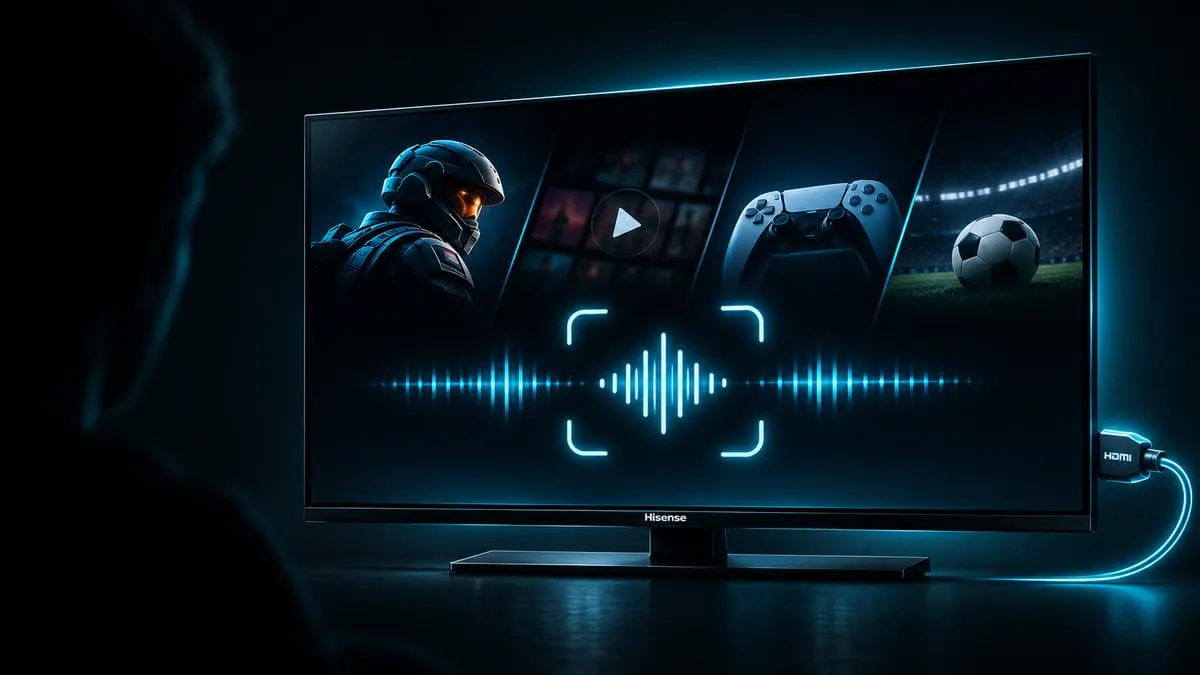
A television owner based in the United Kingdom found that his Hisense smart television transmitted private viewing data to an advertising technology company headquartered in Israel roughly every 2.7 seconds. The discovery occurred even while personalized advertisements were turned off on the device, raising fresh concerns regarding consumer privacy and data collection practices in the modern home entertainment market. The tracking mechanism identified in the UK test is also capable of monitoring content played through external hardware connected via HDMI ports, including gaming consoles and digital media streaming devices.
Gabriel Werneck identified the recipient of the data transmissions as Nexxen, an ad tech firm based in Israel. Public disclosures issued by Nexxen state that its software possesses the capability to recognize media content played through various connected appliances, such as dedicated media players and gaming consoles, provided they are linked to compatible television sets. This level of automated content recognition operates quietly in the background without requiring active engagement from the user beyond standard device operation.
Legal Action Taken by Texas Attorney General
Similar concerns regarding television tracking mechanisms have triggered formal legal interventions in the United States. On December 15, 2025, Texas Attorney General Ken Paxton announced a series of lawsuits targeting several major television manufacturers, including Hisense, Samsung, LG, Sony, and TCL. The state lawsuits allege that these prominent electronics companies gathered detailed viewing information from consumers without providing adequate knowledge or obtaining proper consent.
Following the initial lawsuit announcement, the Texas Attorney General's office revealed a subsequent development on December 17, 2025. Officials secured a temporary court order specifically barring Hisense from collecting, using, selling, or sharing viewing data gathered from Texas residents through automated content recognition technology. This legal hurdle highlights growing regulatory scrutiny facing smart television manufacturers across international jurisdictions.
How Automatic Content Recognition Tracks What You Watch
The technical investigation conducted by Werneck focused on a Hisense 55U65QEVS television running the VIDAA U09.60 operating system. According to his findings, software running continuously in the background listens to the audio output generated by the television. The system translates this captured audio into small digital patterns known technically as audio fingerprints.
The tracking system constructs a 72-bit fingerprint from approximately one second of sound data. It generates a fresh fingerprint roughly every quarter of a second and transmits these packets in batches of ten. These digital patterns are then compared against known audio recordings to accurately identify specific television shows, feature films, or commercial advertisements.
Alongside the audio fingerprints, the captured data messages included a persistent device identifier, exact timestamps, the currently selected input source, and a specific data field for the active application name. Werneck noted that the hardware device identifier remained completely static throughout his observation period. His technical report indicated that further detailed checks examining the exact information transmitted during HDMI playback remained classified as unfinished work.
Nexxen publicly acknowledges that it shares and licenses viewing data, along with audience demographic groups constructed from that harvested information, to various commercial partners. This data supports broader advertising campaigns, audience measurement metrics, and market research initiatives.
Prior Industry Studies on Smart TV Tracking
The recent findings align with earlier research examining smart television telemetry and data leakage. A comprehensive 2024 study presented at the ACM Internet Measurement Conference analyzed Samsung and LG televisions located in both the United Kingdom and the United States. Researchers documented viewing-recognition activity occurring actively during HDMI playback sessions, though turning off the relevant feature successfully halted traffic headed toward tracking servers in their controlled tests.
Similarly, the 2026 Watching the Watchers project reported observing HDMI tracking behavior on a Supersonic television operating on the VIDAA platform. Disabling the tracking feature successfully stopped associated data traffic on that specific tested set, although researchers noted that results varied considerably across different television software versions and streaming applications.
Navigating Privacy Settings on Smart Televisions
Werneck discovered that the specific setting labeled Agree to Enhanced Viewing Service had remained selected since the initial setup process of the television. Removing that particular permission successfully closed the established connection to Nexxen during his testing phase. On the specific UK model tested, this option was located within the menus under Settings, followed by Support, Disclaimer and Privacy, and Data Sharing, Privacy and EULA.
Follow-up technical checks conducted by the owner recorded zero outgoing network packets for a duration of 60 seconds while a configuration menu remained displayed on screen. Subsequent checks performed during active video playback, following a complete television restart and the installation of new software updates, yielded identical tracking behavior.
While the investigation by the television owner centered on a unit located in the United Kingdom, the prior court enforcement actions focused exclusively on consumers residing in Texas. Whether television sets sold by Hisense in other regions, such as Pakistan, use an identical tracking configuration remains entirely unverified. Representatives for the VIDAA platform note that the availability of specific services and user privacy controls vary significantly depending on the particular hardware model and regional market.