Every year on November 9, Pakistan pauses to remember a man whose words helped shape a nation. Iqbal Day, known in Urdu as Youm-e-Iqbal, is not just a date on a calendar. It is a moment for every Pakistani to look back at the life of Allama Muhammad Iqbal, to understand what he dreamed of, and to ask honestly how close the country is to that vision today.
The observance serves as a national reminder of the intellectual foundations that preceded the birth of the state in August 1947. Across provinces, citizens gather to reflect on a legacy that transcends simple poetry, touching the core of civic identity, spiritual awakening, and political autonomy.
Who Was Allama Sir Muhammad Iqbal?
Allama Sir Muhammad Iqbal entered the world on November 9, 1877, inside Sialkot, a bustling manufacturing and trading hub located in the Punjab province. His household possessed deep Kashmiri ancestry, and the young boy exhibited an early aptitude for academic pursuits. Initial learning took place at a traditional maktab before he transitioned to Sialkot Mission School, where he successfully cleared his matriculation requirements.
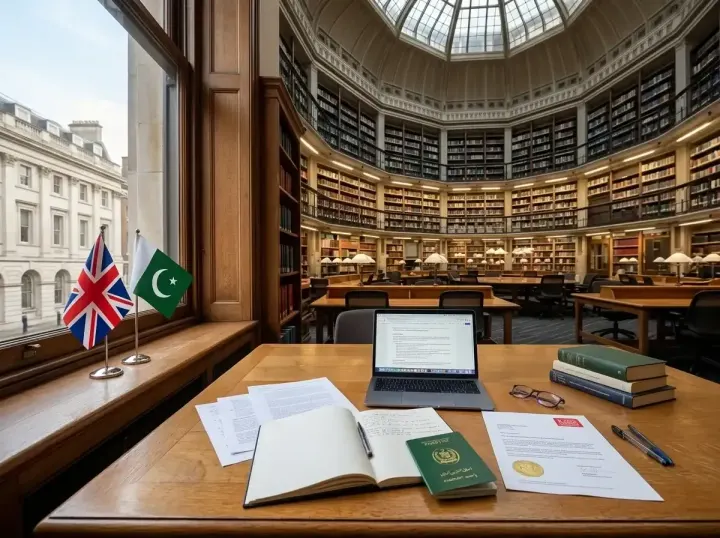
Following his foundational schooling, Iqbal relocated to Lahore to attend Government College, securing his Bachelor of Arts qualification in 1897 followed by a Master degree two years later. Employment as a lecturer in history, philosophy, and English at Oriental College soon followed. Driven by an intense desire for advanced study, he traveled to Europe in 1905, enrolling at Trinity College, Cambridge. Subsequent academic milestones included acquiring a doctorate from Germany and qualifying to practice law as a barrister. These formative years abroad broadened his intellectual horizons while firmly consolidating his affinity for Eastern traditions and Islamic thought.
History records him as a multifaceted figure operating simultaneously as a poet, philosopher, barrister, educator, and political theorist. Composing verse in both Persian and Urdu, his literary contributions remain among the most celebrated of the modern era. Official designations include Shair-e-Mashriq, translating to Poet of the East, Mufakkir-e-Pakistan, meaning Thinker of Pakistan, and Hakeem-ul-Ummat, the Sage of the Nation. The state officially designates him as the national poet.
The Philosophy of Khudi and Awakening the Self
Beyond aesthetic mastery, Iqbal gained renown for the profound conceptual framework underpinning his stanzas. Central to his worldview stood the doctrine of Khudi, denoting selfhood or individual ego. He maintained that every person and collective possessed latent greatness, which required deliberate cultivation through self-realization, unwavering faith, purposeful action, and moral fortitude. His literary output urged the Muslim populace of British India to shed apathy, recognize their intrinsic worth, and claim their rightful place globally.
His inaugural major publication, Asrar-e-Khudi, translated as The Secrets of the Self and released in 1915, formally introduced these tenets. The stanzas synthesized classical Eastern mysticism, drawing heavily upon the spiritual insights of the Persian master Rumi, with contemporary Western philosophical critique. This unique blend appealed simultaneously to intellect and emotion across diverse demographics. His Persian compositions achieved such renown that Iran continues to celebrate him as a preeminent master of the language.
The Historical Allahabad Address and the Quest for a Homeland
Iqbal's ambitions extended far beyond artistic expression into the realm of practical politics and minority protection. In December 1930, presiding over the annual gathering of the All-India Muslim League in Allahabad, he articulated a revolutionary proposal. He suggested that Muslims residing in the subcontinent required an autonomous political domain wherein they could govern according to their cultural and religious principles.
This articulation served as a crucial catalyst. Ten years later, in March 1940, the Muslim League under the leadership of Quaid-e-Azam Muhammad Ali Jinnah adopted the Lahore Resolution at Minto Park, subsequently renamed Iqbal Park. That formal declaration demanded sovereign Muslim-majority territories. Historians consistently view the Allahabad Address as the intellectual blueprint that rendered the Lahore Resolution feasible. Jinnah himself noted that his own political deductions regarding constitutional arrangements aligned closely with Iqbal's earlier prognostications.
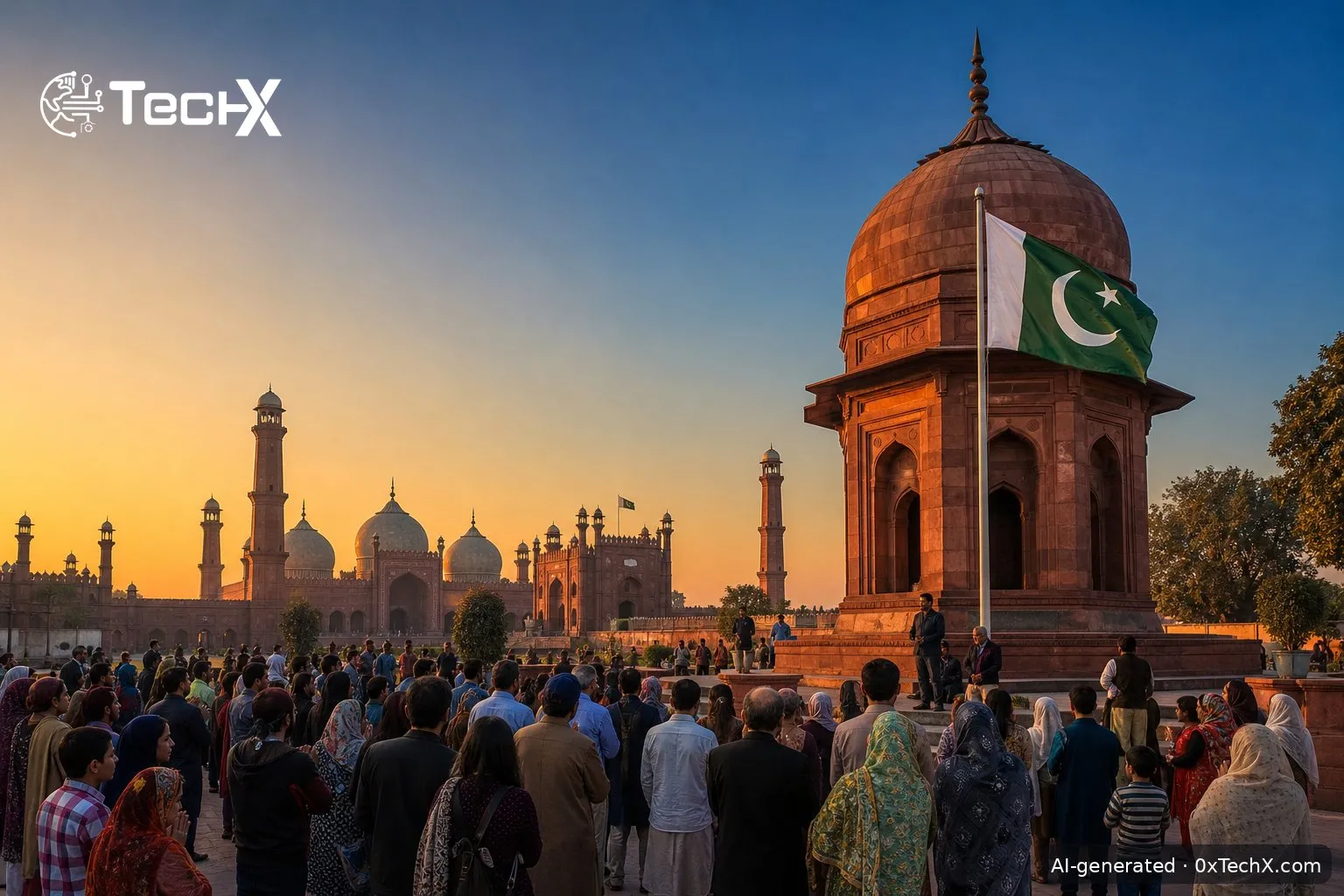
Death claimed Allama Iqbal on April 21, 1938, predating the establishment of Pakistan by nearly a decade. Despite missing the realization of his political objective, the emergent nation recognized its foundational debt to the Sialkot thinker. His final resting place sits adjacent to the historic Badshahi Mosque in Lahore, drawing countless visitors seeking to pay homage.
Public Observances and Cultural Celebrations Across Pakistan
The state officially recognizes November 9 as a public holiday, prompting closures across government offices and educational institutions. Schools and universities organize specialized events where students recite Persian and Urdu verses, engage in debates, and participate in academic symposia centered on his philosophy. Literary circles host traditional poetry gatherings known as mushairas to honor his contributions.
These festivities span all four provinces, functioning as a unifying cultural anchor. Regardless of regional or linguistic differences, citizens invoke his memory as a shared heritage. The day reinforces a collective narrative built around a unified national identity.
Relevance of Iqbal in the Contemporary Digital Era
The core tenets of Khudi and proactive resilience resonate powerfully within modern Pakistan, which maintains one of the youngest demographic profiles globally. Millions of citizens leverage digital platforms, software engineering, and entrepreneurial ventures to connect with international markets. This persistent drive mirrors the foundational philosophy championed by the thinker, visible among startup founders in Lahore, software developers in Karachi, and students pursuing advanced sciences in Peshawar and Quetta.
Digital repositories and social media channels amplify his stanzas every November, introducing classic couplets to younger generations navigating smartphone applications. Institutions such as the Iqbal Academy Pakistan actively preserve his manuscripts, ensuring translations remain accessible across multiple global languages. His writings thus maintain active engagement within contemporary digital discourse just as they did in colonial-era academic circles.
Frequently Asked Questions
When is Iqbal Day celebrated and why on November 9?
The observance takes place annually on November 9, commemorating the birth anniversary of Allama Muhammad Iqbal in Sialkot in 1877. The government designated this date as a national public holiday to acknowledge his role in shaping the ideological basis of the country.
What is Allama Iqbal's most important contribution to Pakistan?
He is recognized as the intellectual architect of the state, primarily due to his 1930 Allahabad Address, which outlined the concept for a separate Muslim-majority territory in South Asia, inspiring subsequent political movements.
What titles is Allama Iqbal known by?
Commonly referenced titles include Shair-e-Mashriq or Poet of the East, Mufakkir-e-Pakistan or Thinker of Pakistan, and Hakeem-ul-Ummat or Sage of the Nation, alongside his official designation as national poet.
Where is Allama Iqbal buried and can people visit his tomb?
His mausoleum, Mazar-e-Iqbal, is situated in Lahore next to the Badshahi Mosque and remains accessible to the public throughout the year, experiencing peak attendance during annual commemorations.