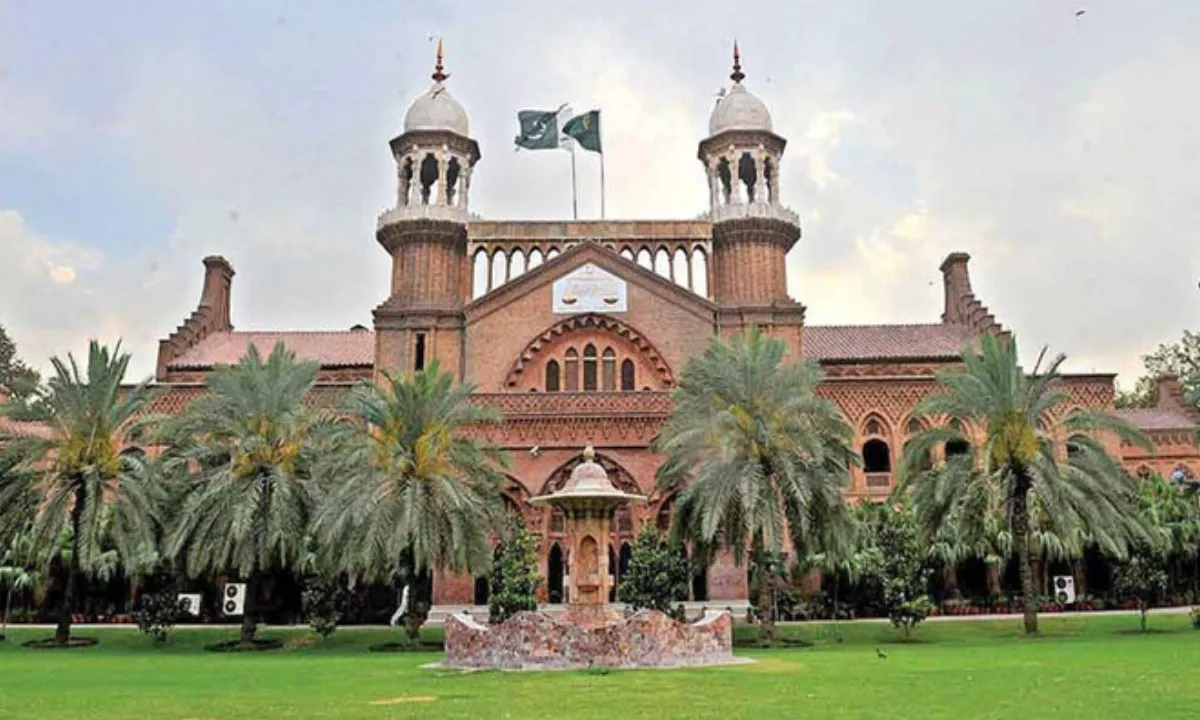
The Lahore High Court (LHC) issued a decisive ruling on private medical college fees, confirming the fee cap set by the Pakistan Medical and Dental Council (PMDC) and ordering refunds to students.
What the Court Decision Entails
In a 28-page judgment, Justice Khalid Ishaq dismissed petitions filed by private medical colleges that challenged the fee restrictions. The verdict responded to a petition filed by the University of Faisalabad through Imran Nazir and others.
The court held that the PMDC has the statutory authority to determine medical college fees and that private institutions cannot charge students without the council's approval. It further stated that the fee cap does not breach the Constitution, noting that medical education cannot be treated solely as a business.
Refund Requirements for Affected Colleges
Accepting petitions filed by students, the court ordered the colleges to refund excess fees within 30 working days. Under the ruling, the University of Faisalabad's medical college must refund more than Rs. 841,000 to each student, while FMH College Lahore must return more than Rs. 741,000 per student.
The judgment declared the decision a judicial precedent, warning that any retaliatory action against students could lead to contempt of court proceedings.
Background of the Fee Cap Controversy
The fee cap controversy dates back to 2022 when the PMDC introduced a ceiling on tuition and other charges for private medical colleges. The council argued that unchecked fee hikes were limiting access to medical education for middle-class families and inflating student debt.
Several private colleges argued that the cap infringed on their autonomy and financial sustainability. They filed petitions in the Lahore High Court seeking a declaration that the cap was unconstitutional.
Students and consumer-rights groups supported the PMDC's position, filing separate petitions that highlighted cases where colleges demanded fees far above the prescribed limit, leaving graduates with large loans.
How the PMDC Sets Fees
The Pakistan Medical and Dental Council is a statutory body established under the PMDC Act of 1962. Its mandate includes accrediting medical institutions, setting standards for curricula, and approving fee structures for private colleges.
When the council decides on a fee cap, it conducts a cost-analysis that considers faculty salaries, infrastructure, laboratory expenses, and a reasonable profit margin. The approved fee schedule is then published and becomes binding for all private medical colleges seeking accreditation.
Legal Basis for the Court's Ruling
The court's decision rests on two main legal principles. First, the constitutional provision that education is a fundamental right does not give private entities unfettered freedom to treat education as a purely commercial enterprise. Second, the statutory authority granted to the PMDC under the PMDC Act allows it to regulate fees to ensure fairness and quality.
Justice Ishaq cited previous Supreme Court rulings that upheld regulatory bodies' power to set price limits in sectors deemed essential for public welfare, such as health and education.
Impact on Students and Institutions
For students, the ruling means immediate financial relief. Those who paid more than the capped amount will receive refunds of Rs. 841,000 or Rs. 741,000, depending on their college. The court gave a 30-working-day deadline for the refunds, a timeline that institutions must meet to avoid contempt proceedings.
For private colleges, the decision imposes a clear constraint on fee setting. Institutions that have already collected excess fees must now adjust their accounting and may need to revise budgeting for upcoming academic years. The ruling also signals that any future attempt to raise fees without PMDC approval will likely be challenged in court.
What Comes Next
The PMDC is expected to monitor compliance and may issue further guidelines to ensure that refunds are processed promptly. The Lahore High Court has indicated that it will review any reports of retaliation against students, and could initiate contempt of court actions if such behavior is found.
Private colleges may consider appealing the decision to the Supreme Court, but any appeal will have to address the constitutional arguments presented by the LHC.
Practical Takeaways for Students
- Students should contact their college's finance office to request the refund amount specified in the judgment.
- Refunds must be received within 30 working days; any delay should be reported to the court or the PMDC.
- Students who face intimidation or retaliation for seeking refunds can file a contempt petition with the Lahore High Court.
Broader Implications for Medical Education in Pakistan
The judgment reinforces the role of regulatory bodies in safeguarding the affordability of professional education. It may prompt other provinces to review their fee structures and could lead to a more uniform national policy on medical college fees.
Industry analysts note that the decision could encourage private colleges to focus on cost-efficiency and quality improvement rather than relying on high tuition fees to fund expansion.
Overall, the Lahore High Court's ruling is a landmark moment that aligns legal authority, regulatory policy, and student rights in the realm of medical education.