Liverpool Winger Victor Munoz Suffers Injury Scare Against Brugge
Liverpool faced a fresh fitness concern during their Champions League fixture against Brugge when winger Victor Munoz required intensive treatment before leaving the pitch. The Spanish player sustained the injury just before the half-time whistle following a forceful challenge that halted a promising attacking run. Medical staff rushed to the pitch to attend to the forward as team-mates gathered around him in concern.
The incident occurred as the winger hurtled into the Brugge penalty box, driving forward with pace. Defender Jorne Spileers met him with a thumping challenge that sent the Spaniard into the air. The impact immediately halted the movement, which had shown strong potential as an attacking highlight for the team.
Fitness worries create severe complications for clubs competing in multiple demanding tournaments simultaneously. Maintaining momentum across European and domestic schedules requires careful management of physical resources. When rapid attackers experience fitness setbacks, coaching staffs must adjust their tactical approaches rapidly to compensate for the absence.
Squad depth serves as a primary defense against the physical toll of a heavy fixture calendar. Supporters and analysts monitor every physical setback closely because losing a dynamic player alters the offensive output of the squad. Team officials depend on thorough medical evaluations to understand how long a player might remain unavailable for selection.
What Happened During the Incident
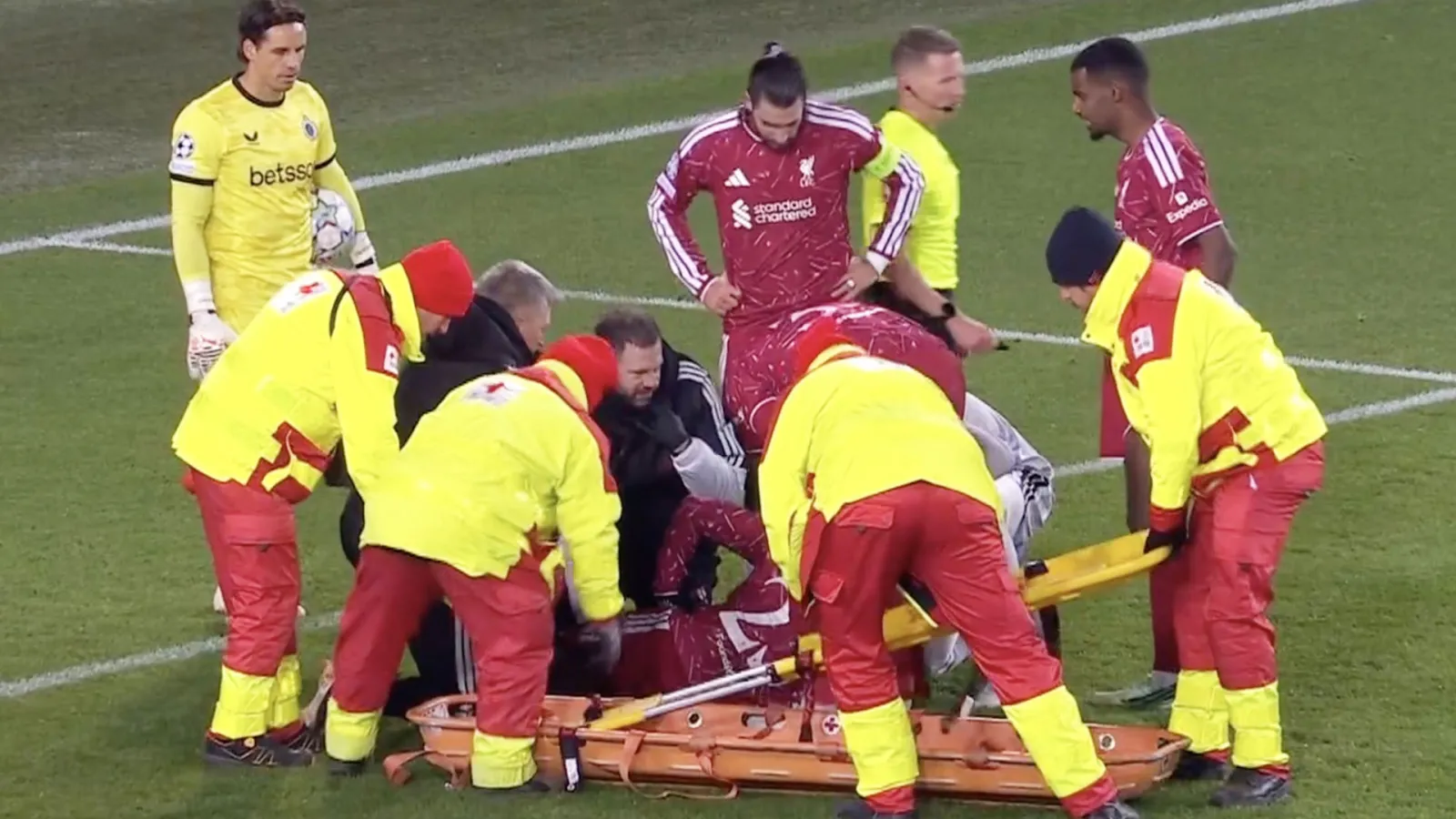
As Victor Munoz hit the turf, he writhed in agony, prompting immediate concern from the bench and players on the field. Medical personnel administered intensive treatment to the winger while he lay on the pitch. The severity of the situation became apparent as preparations were made to remove him from the playing surface.
Initial fears suggested a long spell on the sidelines for the Liverpool player given the manner of the collision. However, the situation shifted when the winger was placed on a stretcher for safety protocols before managing to get up and walk off the pitch under his own power. This development offered some relief to the coaching staff watching from the touchline.
Collisions inside the penalty area frequently involve high velocities and heavy contact between defenders and attackers. Referees and medical teams watch these plays closely to determine whether malicious intent or accidental impact caused the damage. In this case, the challenge from Jorne Spileers halted the offensive sequence instantly.
Players surrounding the injured athlete often signal the severity of the situation through their immediate reactions. Teammates raised their hands to summon medical staff across the grass without delay. The swift response from trainers ensured the player received immediate attention before any further movement occurred.
The Impact on Liverpool and the Champions League Campaign
Fitness worries create significant challenges for clubs competing in multiple demanding competitions like the Champions League and domestic leagues. Squad depth becomes vital when key attacking options face spells out of the team due to physical knocks. Managerial staff rely heavily on effective rotation to keep players fit through intense fixture lists.
Injuries sustained during European nights often disrupt tactical plans and force immediate substitutions. Wingers who offer pace and direct running are particularly difficult to replace directly without altering the team dynamic. Supporters and analysts wait for official updates from the medical department to gauge the true extent of the physical damage.
European fixtures impose immense physical demands on athletes due to high travel frequencies and intense match tempos. Teams often need every available squad member to perform during congested winter months. Losing an attacking outlet affects the strategy for upcoming matches in both continental and domestic arenas.
Managerial tactical flexibility gets tested whenever a starter exits the field unexpectedly. Substitutes must integrate smoothly into existing game plans to maintain team performance levels. Analysts evaluate how well the substitutes perform in maintaining the attacking threat established by the starting lineup.
Understanding Champions League Medical Protocols
Modern football applies strict protocols regarding head injuries and heavy impacts to ensure player safety. Stretchers are frequently deployed as a precautionary measure when a player goes down in pain inside the penalty area. Medical teams assess joint stability, impact trauma, and concussion symptoms before allowing any athlete to be moved.
Once initial assessments are completed on the pitch, players either leave via medical transport or walk off if deemed stable. Victor Munoz experienced this exact procedure, transitioning from the stretcher to walking off the turf. Observers noted the shift in tone from severe alarm to cautious optimism as he departed.
Safety guidelines mandate that medical staff take absolute control of the situation when a player sustains a heavy impact. Referees halt the match immediately to allow unobstructed access for trainers and equipment. These standardized measures protect athletes from exacerbating joint or muscle damage through premature movement.
Communication between on-field medics and the bench ensures that coaching staff receive real-time updates regarding substitution requirements. Preparing a replacement player takes only moments once medical personnel confirm the inability of the injured athlete to continue. This systematic approach prioritizes physical welfare above competitive urgency.
What to Watch for Next Regarding Victor Munoz
Further assessments at the training ground determine the recovery timeline following matches featuring heavy challenges. Club doctors review scans and perform physical tests to identify any structural damage to muscles or joints. Press conferences held by the manager typically provide the next official update regarding squad availability.
Fans and reporters monitor training ground photographs and club announcements ahead of the next fixture. The primary focus remains on whether the winger requires a period of rehabilitation or returns quickly to full training. Match schedules leave little time for recovery, making every assessment crucial for the upcoming weeks of the season.
Rehabilitation programs are tailored specifically to the nature of the trauma identified during clinical scans. Physiotherapists guide athletes through controlled movements designed to restore strength and flexibility without risking further harm. Monitoring progress daily allows medical departments to adjust recovery milestones dynamically.
Upcoming fixtures dictate the urgency of recovery timelines for players holding prominent roles in the team. Coaching staff plan training sessions around the expected availability of recovering squad members. Transparent communication from the club helps manage expectations among supporters tracking the physical condition of key performers.