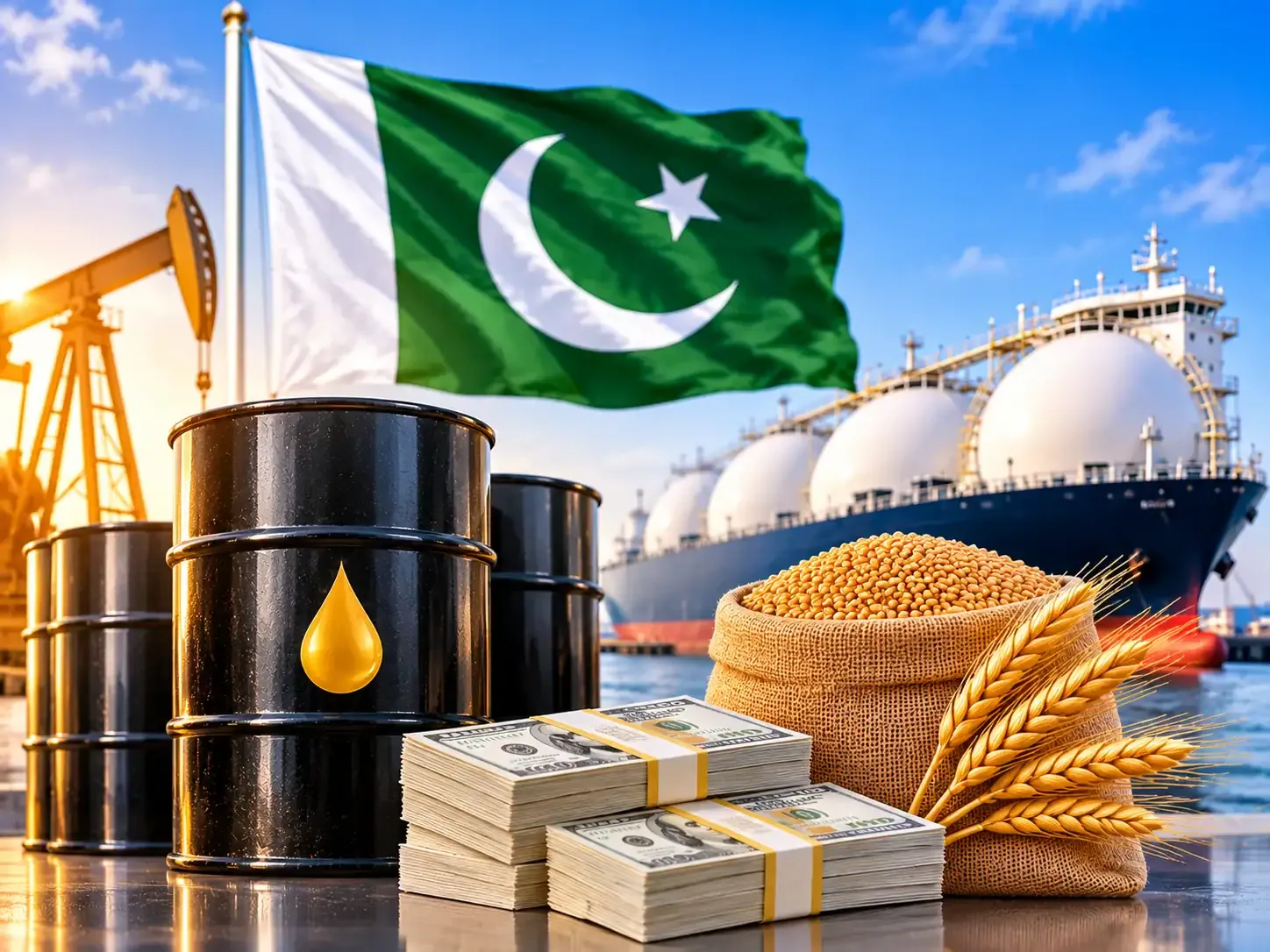
Pakistan has secured a $500 million trade finance facility backed by the Multilateral Investment Guarantee Agency (MIGA) to finance essential imports, including crude oil, petroleum products, liquefied natural gas (LNG) and wheat. The financing has been arranged through a consortium of Commerzbank, J.P. Morgan and Standard Chartered Bank at an interest rate of 2% to 3%. The facility will initially remain valid for one year, with an option to extend it for up to three years.
According to the Ministry of Finance, the government will also use the facility to finance imports of fertiliser, food items, industrial machinery and other strategic commodities. Pakistan selected the three banks after inviting bids from nine international financial institutions through a competitive process.
Understanding the MIGA Guarantee and International Trade Finance
The Multilateral Investment Guarantee Agency functions as an arm of the World Bank Group. Its primary objective is to promote foreign direct investment in developing countries by providing political risk insurance and credit enhancement. By backing this $500 million trade facility, MIGA provides commercial lenders with a safety net against non-commercial risks. This institutional backing lowers the perceived risk profile of the borrowing country, allowing private banks to extend credit lines that might otherwise be unavailable or prohibitively expensive.
Trade finance facilities of this nature operate as revolving or term credit lines specifically earmarked for purchasing physical goods. Commercial banks disburse funds directly to international suppliers upon the shipment of goods, ensuring that the importing nation receives critical supplies without immediately depleting its foreign exchange reserves. The involvement of Commerzbank, J.P. Morgan and Standard Chartered Bank demonstrates confidence from major global financial institutions in the structure of this agreement.
Commodities Covered Under the New Financing Agreement
The newly secured funds target specific sectors that form the backbone of the domestic economy and daily consumer life. Energy security remains a top priority, with the allocation covering crude oil, refined petroleum products and liquefied natural gas. Pakistan relies heavily on imported energy to meet domestic electricity generation, transportation and industrial needs. Securing predictable financing for these energy products helps prevent domestic shortages and stabilizes supply chains.
Beyond energy, the facility covers vital agricultural commodities and production inputs. Wheat imports ensure national food security, while imported fertiliser supports domestic crop yields for upcoming farming seasons. The inclusion of industrial machinery and other strategic commodities means that manufacturing sectors can also access necessary capital goods to maintain production lines and sustain export-oriented industries.
How the Selection Process and Consortium Were Formed
Securing favorable terms required a transparent and competitive bidding mechanism overseen by government authorities. Pakistan invited proposals from nine international financial institutions before finalizing the current arrangement. This competitive approach allowed the Ministry of Finance to negotiate an interest rate ranging between 2% and 3%, which is considered highly competitive given current global borrowing costs and market conditions.
The winning consortium brings together three distinct global banking institutions with extensive experience in emerging markets and structured trade finance. Commerzbank, J.P. Morgan and Standard Chartered Bank collaborated to pool resources and manage the $500 million exposure. This syndication spreads the financial risk among multiple lenders while providing Pakistan with a unified administrative channel for drawing down funds as needed.
Timeline of Discussions and Financial Implications
Formal discussions regarding this guarantee package began in April 2026. Negotiating sovereign-backed financial facilities involving multilateral agencies typically requires months of technical reviews, risk assessments, and legal structuring to align domestic fiscal policies with international lending standards. While the specific guarantee fee payable to MIGA has not been publicly disclosed, the broader economic benefits of the arrangement are already being evaluated by financial analysts.
The arrangement is expected to diversify Pakistan's external financing sources and help manage the cost of essential imports. By reducing reliance on short-term expensive loans or drawing down volatile foreign exchange reserves, the government gains budgetary breathing room. Diversifying funding streams lowers overall debt servicing risks and provides a predictable framework for managing external payments over the next several years.
Duration and Future Extension Options for the Facility
The financial agreement carries an initial validity period of one year. During this twelve-month window, the government can use the credit lines to pay for incoming shipments of crude oil, wheat, machinery, and other approved commodities. The structure includes a built-in option to extend the facility for up to three years, subject to performance reviews and agreement among the participating banks and MIGA.
This phased timeline allows the Ministry of Finance to monitor macroeconomic indicators and foreign exchange reserves while maintaining a reliable backup for external trade obligations. As the facility operates over the coming months, observers will monitor how efficiently the funds are deployed across the energy, agricultural, and industrial sectors to support broader economic stability.