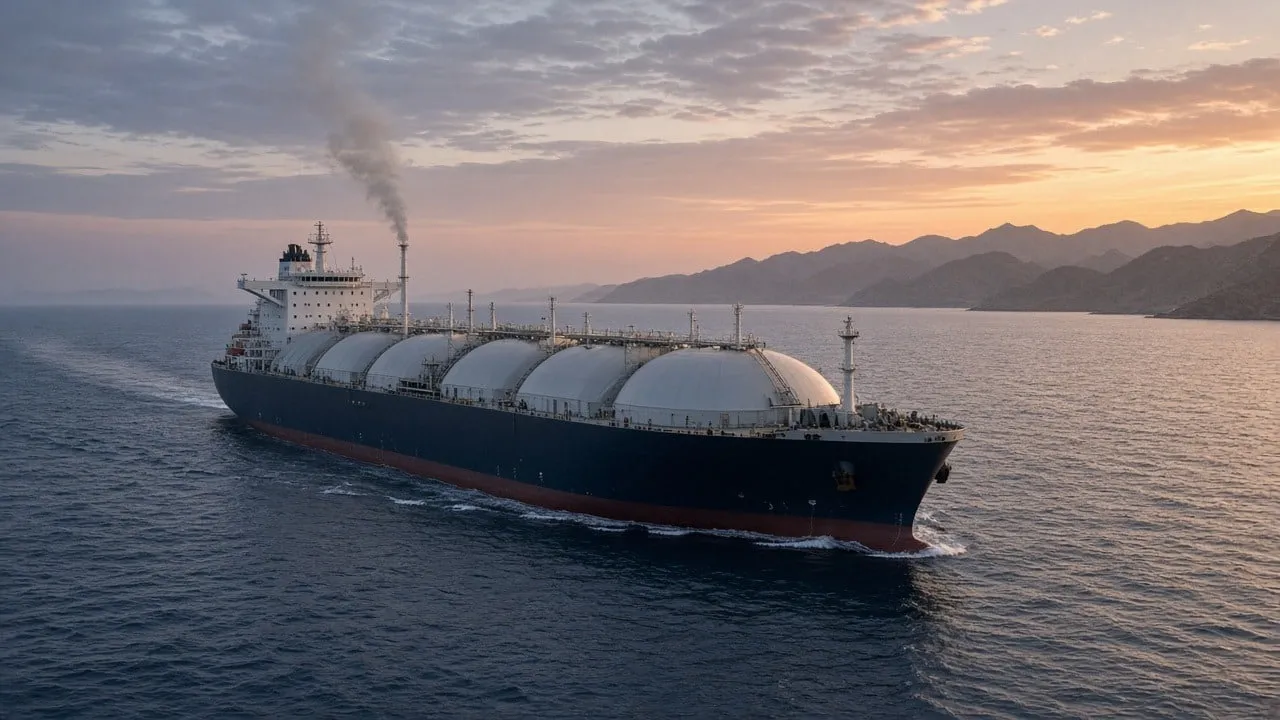
Pakistan will receive its second liquefied natural gas (LNG) cargo from Qatar on Friday, November 27, as the government works to secure additional supplies ahead of a projected winter demand surge.
The LNG vessel Al Mashabiyyah is due to berth at the Engro Elengy Terminal on Friday and begin discharging its cargo, a senior Petroleum Division official confirmed.
The shipment follows the arrival of Al-Daayen at the Pakistan GasPort Limited terminal on November 15, marking the first Qatari cargo of the season.
In parallel, the government is negotiating with Qatar for four more cargoes in December and six in January. Pakistan LNG Limited is also preparing to invite bids from international LNG traders on November 30 for two spot cargoes, with deliveries targeted for December 14-15 and December 25-26.
Why the New Cargo Matters for Pakistan's Energy Landscape
Pakistan's gas network faces a sharp seasonal swing. During summer, domestic consumption is modest, but winter brings a three-fold increase in heating and cooking needs. The new Qatari cargo is intended to bridge the gap between existing pipeline supplies and the rising demand.
Winter gas demand is expected to rise dramatically across the country's two main transmission networks. The Sui Northern Gas Pipelines Limited (SNGPL) network, which serves Punjab and Khyber Pakhtunkhwa, is projected to climb from roughly 500 million cubic feet per day (mmcfd) to 1,500 mmcfd. In the south, the Sui Southern Gas Company (SSGC) network, covering Sindh and Balochistan, is expected to increase from about 300 mmcfd to between 500 and 600 mmcfd.
How Pakistan Secures LNG: The Procurement Process Explained
Pakistan does not produce enough natural gas to meet its winter needs, so it relies on imported LNG. The process typically involves three steps:
- Negotiation with exporting countries - Government officials negotiate long-term or short-term contracts with supplier nations, such as Qatar, which has abundant LNG capacity.
- Spot market bidding - State-owned Pakistan LNG Limited issues tenders inviting international traders to submit offers for specific cargoes. The upcoming November 30 tender will cover two spot cargoes.
- Regasification and distribution - Once a vessel arrives, the cargo is off-loaded at a regasification terminal (Engro Elengy or Pakistan GasPort). The gas is then fed into the national transmission system.
Regasified LNG currently supplies 163 mmcfd to the power sector and 91 mmcfd to the fertilizer sector, underscoring its strategic importance beyond household use.
Impact on Households and Industry
Domestic consumers receive natural gas mainly during designated cooking hours. To free up more gas for households in December and January, the government plans to suspend 35 mmcfd of supplies to the compressed natural gas (CNG) sector for the two months. This temporary reduction will help shift gas toward residential cooking and heating.
Industries that rely on gas, particularly power plants and fertilizer manufacturers, will continue to receive their allocated volumes. The power sector's 163 mmcfd of regasified LNG is critical for maintaining electricity generation during peak winter loads, while the fertilizer sector's 91 mmcfd supports agricultural output.
Historical Context: Pakistan's LNG Imports Since 2015
Pakistan began importing LNG in earnest in 2015 after a severe gas shortfall forced the government to look abroad. Initial contracts were signed with Qatar, the United States, and Nigeria. Since then, the country has imported over 30 million tonnes of LNG, with Qatar remaining the largest single supplier.
Seasonal imports have become routine, with the winter months (December to February) accounting for roughly 60% of annual LNG volumes. The current schedule, two cargoes in November, four in December, and six in January, reflects an intensified effort to avoid the supply gaps that plagued the 2022 winter, when rolling blackouts affected major cities.
What Comes Next: Timeline and Key Milestones
The immediate next steps are clear:
- November 27 - Arrival and off-loading of Al Mashabiyyah at Engro Elengy Terminal.
- November 30 - Publication of the spot-cargo tender by Pakistan LNG Limited.
- December 14-15 and December 25-26 - Expected delivery dates for the two spot cargoes, pending successful bids.
- December-January - Ongoing negotiations with Qatar for additional cargoes, aiming to lock in four December and six January shipments.
Stakeholders should watch for the tender results, which will be announced within a week of the November 30 deadline, and for any official statements on the outcome of the Qatar negotiations.
Practical Takeaways for Readers
For households, the government's decision to suspend 35 mmcfd of CNG supply means that some CNG stations may see reduced fuel availability in December and January. Consumers are advised to plan for alternative fueling options or adjust travel schedules accordingly.
Businesses in the power and fertilizer sectors can expect a stable gas flow, as the government has earmarked specific volumes of regasified LNG for these critical industries.
Investors and traders monitoring the South Asian energy market should note the upcoming spot-cargo tender, which could influence regional LNG price benchmarks.
Overall, the second Qatari cargo is a key component of Pakistan's strategy to meet winter energy needs, safeguard electricity supply, and keep essential industrial processes running smoothly.