Understanding the Proposed Fuel Price Adjustment and Power Bill Increases
Electricity consumers across the country will pay a combined Rs95 billion more in bills for October, November, and December if the National Electric Power Regulatory Authority approves a fuel price adjustment sought by the federal government. The Power Division has formally asked the regulatory authority to approve an average increase of Rs3.04 per unit for all three months. This request was sent after the federal cabinet gave its formal approval to the financial plan.
The proposed rate is 67 paisa per unit higher than the fuel price adjustment rate applied for September 2026. The regulatory authority will hold a formal hearing on the request on December 2 and decide whether to approve the requested increase. These monthly adjustments are a routine mechanism within the power sector to pass on the actual cost of generation fuels to end consumers.
The proposal follows separate estimates calculated for each of the three months. An increase of Rs2.88 per unit had earlier been sought for October, while the Ministry of Energy estimated a rise of 92 paisa per unit for November. For December, the government expects tariffs to go up by Rs5.13 per unit.
Based on these varying figures, the Power Division has proposed a uniform average increase of Rs3.04 per unit for all three months. This uniform approach aims to smooth out the immediate financial blow across the quarter rather than imposing sharp monthly spikes on household and commercial budgets.
How the National Electric Power Regulatory Authority Processes Adjustments
The National Electric Power Regulatory Authority, commonly known as NEPRA, functions as the primary regulator for the electricity sector. Its core mandate involves determining tariffs, setting standards, and reviewing petitions submitted by distribution companies and the federal government. When fuel prices fluctuate in international or domestic markets, utilities incur varying costs to generate electricity from thermal sources like furnace oil, coal, and natural gas.
To manage these variances, the regulatory framework allows for periodic fuel price adjustments. The Power Division submits petitions based on actual generation costs compared against reference tariffs. Once a petition arrives, the regulator schedules a public hearing where consumer advocates, industrial representatives, and technical experts can raise objections or seek clarifications.
The upcoming hearing scheduled for December 2 represents a critical step in this regulatory procedure. During the session, officials from the Ministry of Energy and distribution companies will present data justifying the monthly estimates of Rs2.88 for October, 92 paisa for November, and Rs5.13 for December. Following the hearing, the authority reviews the arguments before issuing a final determination.
Breaking Down the Monthly Estimates for October, November, and December
The financial burden on consumers varies significantly across the three months under review. October began with an initial estimation of Rs2.88 per unit, driven by specific generation mix requirements and fuel procurement costs incurred during that period. November followed with a comparatively modest estimated rise of 92 paisa per unit, reflecting shifts in demand and potentially lower spot prices for certain generation fuels.
December presents the steepest financial challenge in the quarterly cycle, with the government expecting tariffs to climb by Rs5.13 per unit. Winter demand patterns, adjustments in gas allocations, and reliance on alternative thermal generation often push costs higher during the final month of the year. Averaging these three distinct figures yields the uniform rate of Rs3.04 per unit proposed by the Power Division.
Households and industrial units must prepare for the cumulative impact of these adjustments once notification is issued. The combined extra payout of Rs95 billion will be distributed across consumer categories based on their monthly electricity consumption volumes.
Practical Impact on Households, Businesses, and the Broader Economy
The proposed adjustment carries profound implications for domestic budgets and commercial enterprises alike. An additional expenditure of Rs95 billion across three months reduces disposable income for average citizens, forcing households to curtail discretionary spending. Inflationary pressures typically follow rising utility costs, as manufacturers and service providers pass higher production expenses down to the retail level.
Small businesses, retail shops, and agricultural tube-well operators feel the squeeze directly through inflated monthly power invoices. Higher operational overhead can restrict business expansion and complicate financial planning for industrial sectors that rely heavily on consistent electricity pricing. Sector experts monitor these adjustments closely to gauge the health of consumer purchasing power and industrial competitiveness.
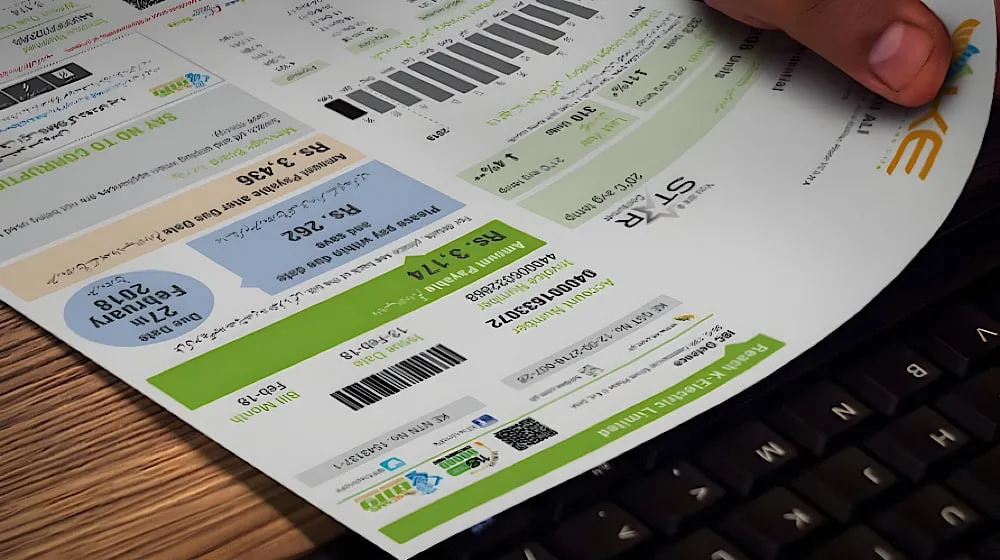
Consumers living on fixed incomes find managing these periodic tariff spikes particularly challenging. Utility management systems generally add these adjustments as separate line items on current bills, making it straightforward to identify the cost of fuel price variances separate from base tariffs and taxes.
What Comes Next in the Regulatory Review Procedure
All eyes now turn toward the scheduled December 2 hearing where the regulatory body will scrutinize the government petition. Interveners and consumer associations typically use this platform to question the efficiency of power generation plants and the accuracy of fuel consumption data submitted by the ministry. If the regulator finds discrepancies or determines that certain costs were avoidable, it holds the authority to adjust the requested figures downward.
Following the hearing, the authority generally takes a few days to deliberate before releasing its official verdict. If approved, distribution companies will incorporate the Rs3.04 per unit uniform adjustment into upcoming billing cycles. Consumers should watch for the official regulatory notification following the December proceedings to confirm the exact timeline for billing implementation.