SOT Events Launches Possible Worlds in Lahore
SOT Events, the signature thought-leadership series of the Beaconhouse Group, brought its twentieth edition, Possible Worlds, to Faletti's Hotel in Lahore today, opening two days of conversations on the choices shaping Pakistan's future. The Lahore event follows the launch of the series in Islamabad on 24 October. Organised by Beaconhouse Group, SOT Events has evolved over more than 25 years into one of Pakistan's most significant platforms for open, public discourse. Possible Worlds continues in Lahore on 29 November with further conversations, debates and performances, before concluding in Karachi on 12 December at Beach Luxury Hotel.
Speaking about this year's theme, Chair SOT Events and CEO Beaconhouse, Kasim Kasuri said, SOT has always created space to question, challenge and exchange ideas openly. Taking Possible Worlds to three cities allows us to widen that exchange and bring more people into conversations that will ultimately affect us all.
Opening Keynote and Education Panel
The day opened with a keynote by Andreas Schleicher, Director for Education and Skills at the OECD, on how AI can become a scaffold for education rather than a crutch. This opening address set an analytical tone for the entire gathering, drawing attention to how classrooms must adapt to emerging technology. Educators and administrators often debate the correct integration of automated tools in learning environments. Schleicher addressed these tensions directly by framing technology as a structural support system rather than a replacement for critical thinking.
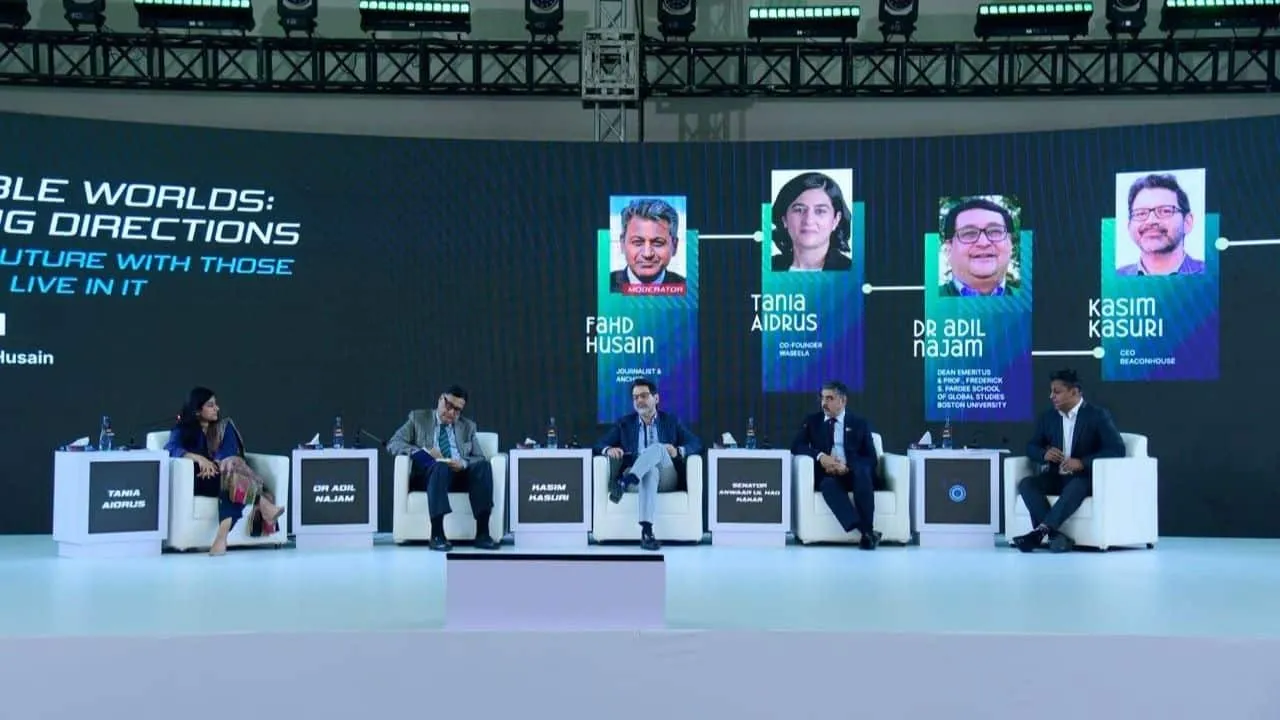
Following the keynote, the event featured Possible Worlds: Setting Directions, a docu-panel curated and hosted by Fahd Husain. A documentary capturing young Pakistanis' hopes and concerns set the stage for a discussion with Kasim Kasuri, Senator Anwaar ul Haq Kakar, Dr Adil Najam and Tania Aidrus on what one generation owes the next. Panelists examined the responsibilities carried by current leaders toward younger demographics, touching upon economic hurdles, governance structures, and the importance of creating lasting institutional opportunities.
Recognizing Alumni and Exploring Cricket's Future
During the proceedings, the BOSS Distinguished Alumni Awards 2026 honored past students of Beaconhouse for their excellence and achievements in their fields. These awards highlight the long-term impact of educational institutions on professional spheres across the country. Recipients represented diverse industries, demonstrating the wide scope of accomplishments nurtured within the school network over decades.
Sports discussions also drew significant attention during the first day of panels. In Cricket's Next Innings: Talent, Opportunity and Change, moderated by Junaid Zia, Ramiz Raja, Zainab Abbas and Abdul Razzaq discussed who gets the chance to play and progress in the game, and the future of Test, ODI and T20 cricket. Speakers analyzed the structural shifts required to unearth raw talent from smaller towns and ensure merit-based selection. They also debated how the changing global broadcast landscape influences traditional formats of the sport compared to shorter versions.
Sustainability, Culture and Digital Parenting
Environmental concerns formed another major pillar of the Lahore gathering. Driving Towards a Sustainable Future, moderated by Isfundiar Kasuri, brought together Adil Saeed Khan, Suneel Munj, Mekaeel Malik and Muhammad Aqib Zulfiqar to examine how Pakistan can make electric vehicles practical and worthwhile. Panelists addressed charging infrastructure limitations, high initial acquisition costs, and government policy frameworks needed to encourage clean transport adoption. Transitioning away from fossil fuels remains a complex challenge for emerging economies dealing with energy supply constraints.
Cultural preservation received detailed attention in The Art of Becoming, curated by the Lahore Biennale Foundation. This session featured Ayesha Husain, Qudsia Rahim, Salman Santo and Mehreen Ronald in a conversation on how Pakistani culture is preserved and reinvented. Participants discussed the tension between traditional art forms and contemporary digital expressions. They noted that cultural identity must evolve continuously to remain relevant to younger generations without losing historical roots.
Digital safety and modern parenting formed the focus of Growing Up Online: From Responsibility to Action. This panel brought together Craig Fullstone, Humayun Bashir Tarar, Omar Bashir Maniar, Sarah Ahmad and Muhammad Ali Nekokara to discuss how to raise digitally aware and independent children. Speakers shared strategies for managing screen time, protecting minors from online harms, and fostering healthy relationships with technology. Parents and educators face growing pressures as children access digital networks at increasingly early ages.
Gastronomy and the Changing Pakistani Palate
Culinary trends and consumer preferences were examined in The Pakistani Palate: What We Actually Crave. Food critic Ali Rehman was joined by Shahnawaz Khan, Zahra Khan, Ammar Mohsin and Safir Hasan to explore the changing tastes of Pakistani diners. The panel analyzed the rapid growth of diverse restaurant chains, the revival of traditional heritage recipes, and the influence of international food media on local appetites. Urban consumers increasingly demand higher quality standards and greater variety when dining out or ordering food delivery.