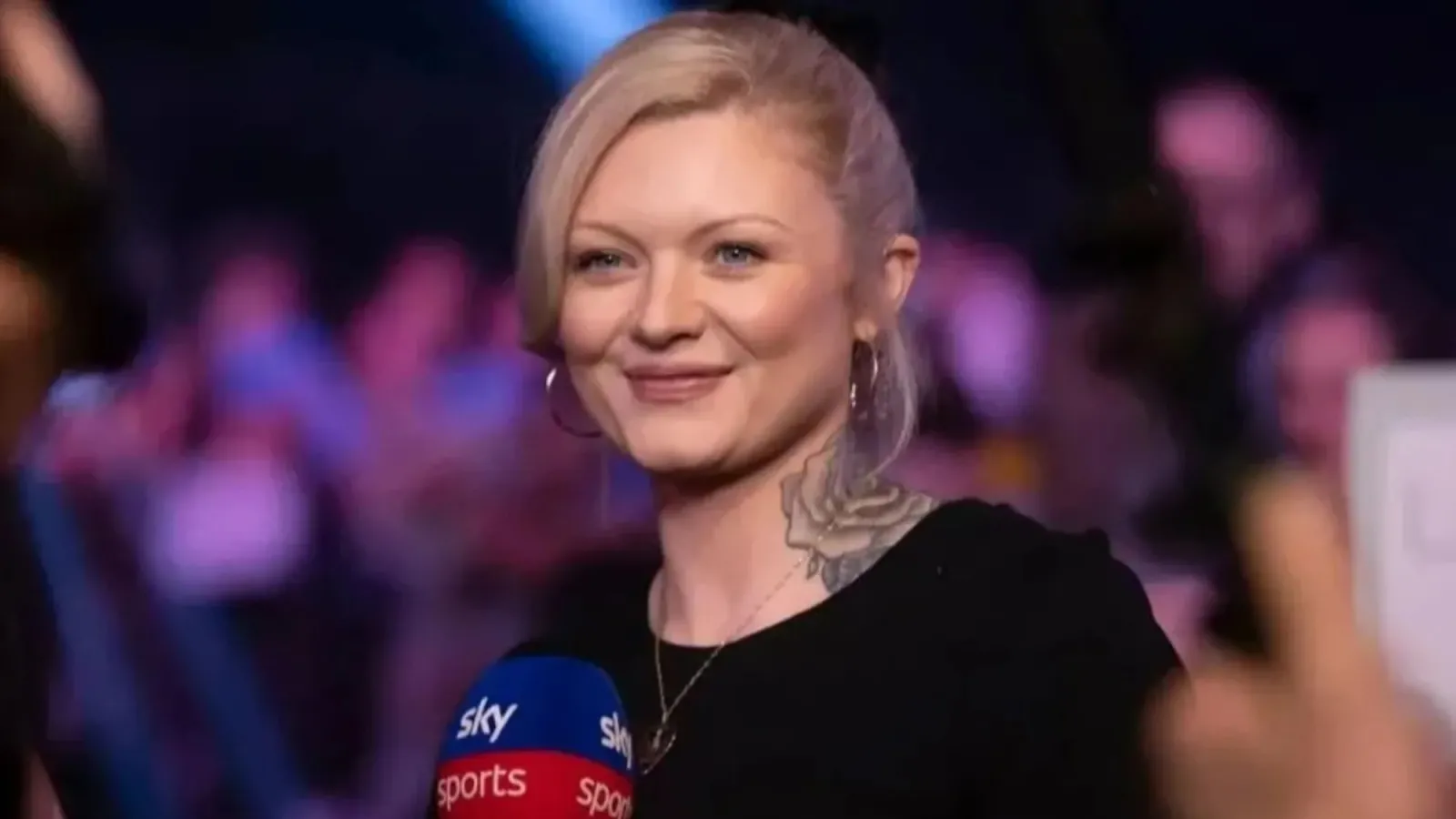
Sky Sports Darts Presenter Polly James Speaks Out on Online Trolls
Sky Sports darts presenter Polly James has opened up about the online hate and appearance-based abuse she faces, revealing she has been targeted as the ugly girl with the neck tattoo. James has become a familiar face on television screens during professional darts tournaments over the past five years. Alongside her broadcasting work with Sky Sports, she also hosts a show on Radio X. While her engaging and chatty interviewing style helps extract lively post-match reactions from players, her prominent body art has frequently drawn negative attention on social media platforms.
During an interview with Leasing Options, James discussed how she manages the daily influx of hostile comments directed at her personal appearance. Rather than letting the remarks disrupt her focus, she has learned to brush off the criticism. She explained that critics often fixate on her tattoos and physical features rather than her actual performance in front of the camera. The broadcaster maintains a confident attitude regarding her personal style, noting that professional standards matter far more to her than anonymous insults.
How Polly James Deals With Appearance-Based Internet Abuse
Internet trolls frequently target public figures for their personal style, and presenters in sports media often absorb a high volume of online criticism. For James, the abuse tends to center on her body art, particularly the striking tattoo on her neck. Instead of reacting with anger, she adopts a detached approach to the remarks coming from social media users. She invites critics to say whatever they want about her physical appearance.
Detailing her perspective to Leasing Options, James said, I have got to say, the stuff that I had was very much appearance-based. My thing was always like, Guys, you can say whatever you want about my appearance. You can call me whatever you want. You can say, That is the ugly girl with the neck tattoo. You go for it. That is fine. I am very happy in my own skin but if anyone started to talk about my work and my job, because that is where I hold my standards, then that would impact me. This distinction between personal insults and professional critique forms the core of how she protects her mental well-being while working in the public eye.
The Reality of Sexism for Women in Sports Broadcasting
Beyond personal attacks on her appearance, James encounters explicit sexism from a segment of sports fans. She notes that some viewers still question the presence of women working in sports journalism and broadcasting. This form of prejudice adds an extra layer of pressure for female reporters who must constantly prove their knowledge and competence to skeptical audiences. Professional sports media has traditionally been male-dominated, and women entering the field often face an uphill battle to earn standard recognition from traditionalists.
James is not alone in facing these hurdles within the broadcasting industry. Her Sky Sports colleagues Emma Paton and Abigail Davies have encountered similar sexist comments during their respective careers covering various sporting events. Addressing this persistent issue, James added, You get the odd bloke out there who will say, Oh, why is there a woman commentating on men is sports? Women in the media always feel that they have to push that little bit more, do that little bit more, because you are always fighting against the critics and stuff.
Building Resilience in the Public Eye
Sustaining a long-term career in television requires developing strong emotional resilience. Over years of broadcasting live sports events and hosting radio programs, James has cultivated a thick skin against digital negativity. She relies on the validation of her professional peers rather than the opinions of anonymous internet commentators. Professional feedback from colleagues within the television and radio industries provides the benchmark she uses to measure her success.
Reflecting on her growth in the industry, James noted that her ability to ignore online noise has strengthened over the past couple of years. The standards and feedback that she receives from her peers serve as the primary validation she requires. Dismissing hostile online remarks, she concluded, If Peter from Twitter wants to say, Look at that girl with that minging neck tattoo, then, yeah, you go for it, mate. I am cool.
Background on Polly James and Her Media Career
Before achieving widespread recognition as a prominent voice in professional darts coverage, Polly James built a diverse career across the British media landscape. Her journey into broadcasting spans both television and commercial radio. Known for a lively and approachable interviewing style, she has cultivated a distinct public persona that combines a passion for music and entertainment with mainstream sports coverage.
Her role on Sky Sports darts broadcasts places her at the center of major sporting tournaments, where she interacts directly with top-tier players immediately after high-stakes matches. Darts broadcasting has evolved significantly in recent years, shifting toward a high-energy entertainment format where presenters must connect instantly with both the live arena crowd and millions of television viewers at home. Alongside her television commitments, James maintains a strong presence in the audio medium through her work on Radio X, interviewing various musicians and public figures, such as an instance where she famously had Tom Jones sign her knickers in the radio studio.
The Broader Landscape for Women in Sports Media
The challenges described by James reflect a wider conversation happening across the sports media industry regarding diversity, inclusion, and online harassment. As networks hire more women to host, report, and analyze sports, public reception has largely been positive among modern audiences. However, a vocal minority of viewers continue to use social media channels to voice outdated views on gender representation in sports journalism.
Sports organizations, broadcasting networks, and individual journalists increasingly speak out against targeted online abuse. While social media platforms offer direct lines of communication between broadcasters and fans, they also expose media personalities to unmoderated hostility. Broadcasters like James, Paton, and Davies continue to pave the way for future generations of women in sports media by maintaining high professional standards and refusing to let online harassment diminish their presence on screen.