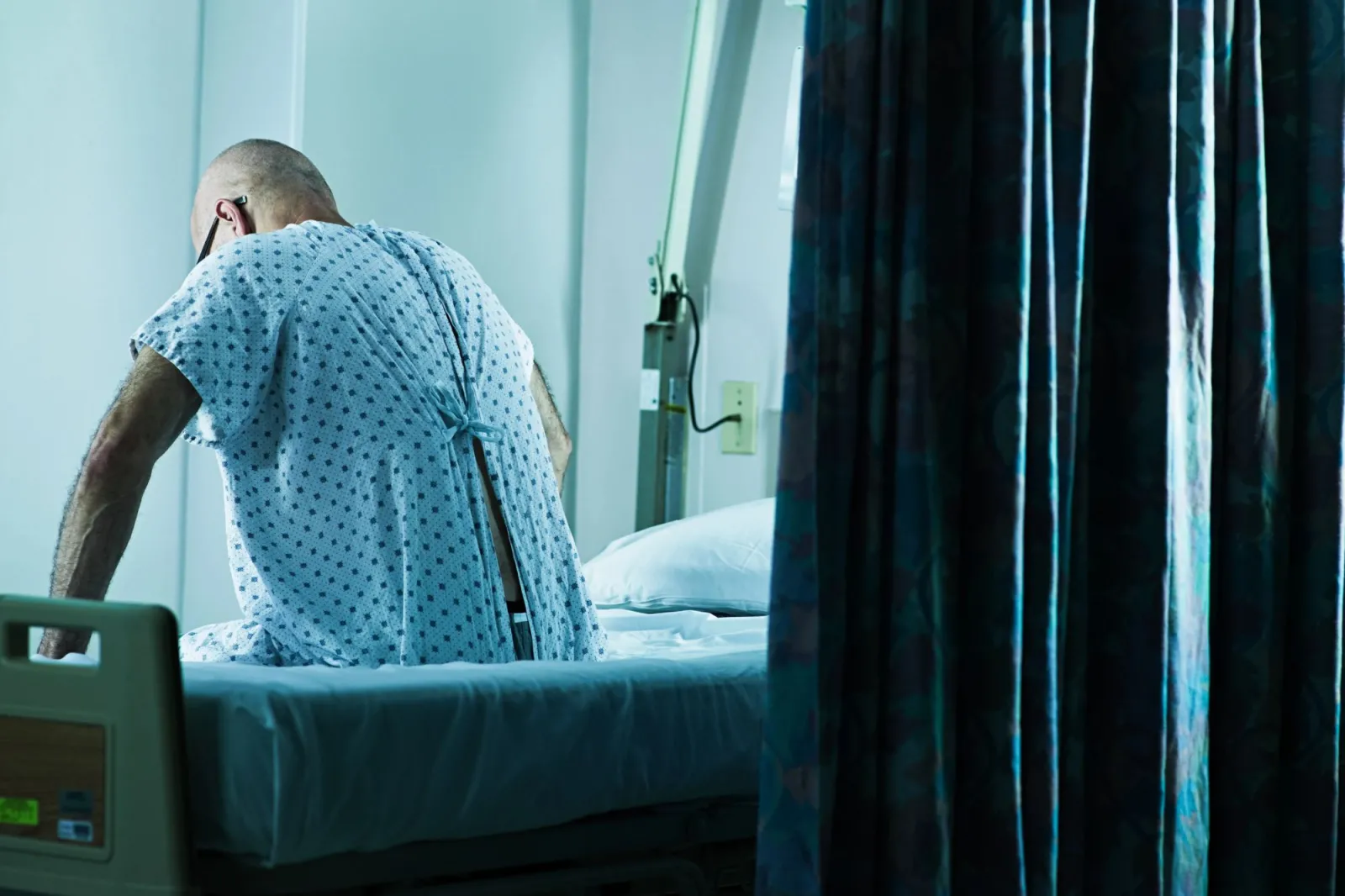
How the Misdiagnosis and Amputation Unfolded at Hospital Skaraborg
A Swedish patient underwent a devastating medical ordeal after Hospital Skaraborg provided an incorrect cancer diagnosis that ultimately resulted in the amputation of his penis and the removal of two vital organs. The harrowing mistake meant that the patient's urethra cancer went untreated for a devastating seven months, allowing the disease to spread and infect his member. The disturbing medical botch unfolded back in 2023, but the details have only just come to light through official reporting and incident documentation.
Hospital Skaraborg had told the man that he had prostate cancer, but in fact he was suffering from a cancer of the urethra. The botched diagnosis meant that the man's real illness was left to spread through his body without medication for seven months. By the time the hospital realized its mistake, doctors determined it was too late for conservative treatments.
Surgeons were forced to remove the cancerous penis as well as the patient's prostate and bladder. As a result of these radical surgeries, the man's urine and feces now pass through surgically created openings in his abdomen. The man has denounced the amputation as regrettable in an incident report seen by Swedish newspaper SkLT. He urged for stronger precautionary measures to stop a similar mistake from happening again.
The Role of External Laboratories in the Pathology Error
Hospital Skaraborg has now confessed that the life-changing surgeries might have been preventable if it had given the correct diagnosis from the beginning. The hospital had sent tissue sample to an external lab for analysis, and the results suggested he had prostate cancer. The botched tests were run by Swiss health company Unilabs and analysed in Skövde before being delivered to the clinic.
Unilabs have blamed the devastating mistake on poor training and a lack of expertise in their labs. However, the lab also added that it is unclear what treatment would have been appropriate if the diagnosis had been made at an earlier stage. Pathology errors of this magnitude highlight the complex dependencies between regional hospitals and third-party diagnostic contractors in modern healthcare systems.
When tissue samples are sent away from the treating hospital, communication channels and strict quality control protocols become vital. The misinterpretation of cellular structures in specialized fields like oncology can alter the entire trajectory of a patient's care. In this case, the reliance on an erroneous initial reading set off a chain of events that culminated in permanent, life-altering physical trauma.
How the Medical Blunder Was Discovered Years Later
The error was discovered when the hospital decided to analyse tissue samples from the man's urethra to see if his cancer had spread. It was then that the shocking blunder was uncovered, which Unilabs have now recorded as a serious patient injury which caused permanent harm. The mix-up was only identified in early 2026, around three years after the first failed test result, according to the incident report.
This prolonged timeline demonstrates the hidden nature of many diagnostic errors within large medical institutions. Often, a mistake made at the laboratory stage remains buried until a subsequent review or routine follow-up forces a re-examination of the original data. For this patient, the delayed discovery meant that corrective intervention was impossible by the time the truth emerged.
Internal reviews and mandatory reporting mechanisms are designed to bring such failures to light. Healthcare providers across Sweden are required to log severe adverse events to prevent future recurrences. Yet, for victims of such severe misdiagnoses, the institutional recognition of fault arrives long after the physical damage has already been done.
Understanding Urethra Cancer Versus Prostate Cancer
Urethra cancer is a rare form of malignancy that develops in the tube through which urine leaves the body from the bladder. It differs significantly from prostate cancer, which originates in the prostate gland located just below the bladder in men. Because these conditions affect adjacent anatomical structures, precise pathology is required to distinguish between them under a microscope.
Misidentifying one for the other can lead to completely misdirected therapeutic strategies. While prostate cancer treatments often involve hormone therapy, radiation, or targeted monitoring depending on the stage, urethra cancer may require surgical removal of local tissue much earlier. When the wrong protocol is applied, the actual disease continues to progress unchecked within the surrounding tissue.
Medical specialists emphasize that accurate tissue staging relies heavily on the expertise of the pathologist examining the biopsy slides. A failure in training or slide interpretation can misinform the entire clinical team. This disconnect between laboratory findings and actual pathology is precisely what occurred in the Skaraborg case.
Patient Impact and Institutional Accountability in Sweden
The physical and psychological impact of this medical blunder on the patient is profound. Living with surgically created abdominal openings for waste elimination alters every aspect of daily existence. The loss of reproductive and urinary organs through a preventable error represents one of the most severe forms of medical malpractice documented in recent regional healthcare records.
It is not known whether the clinician responsible for the misdiagnosis has faced disciplinary action or whether the man has received compensation. Legal and administrative reviews typically follow the filing of an official incident report, but outcomes often remain confidential under local privacy laws. Patient advocacy groups continue to press for greater transparency when hospitals commit severe diagnostic failures.
Hospital Skaraborg and Unilabs face ongoing scrutiny regarding their internal oversight procedures. As medical networks increasingly outsource diagnostic testing to private or external entities, questions of ultimate responsibility remain prominent. Ensuring robust quality assurance is essential to restoring public trust following incidents of permanent patient harm.