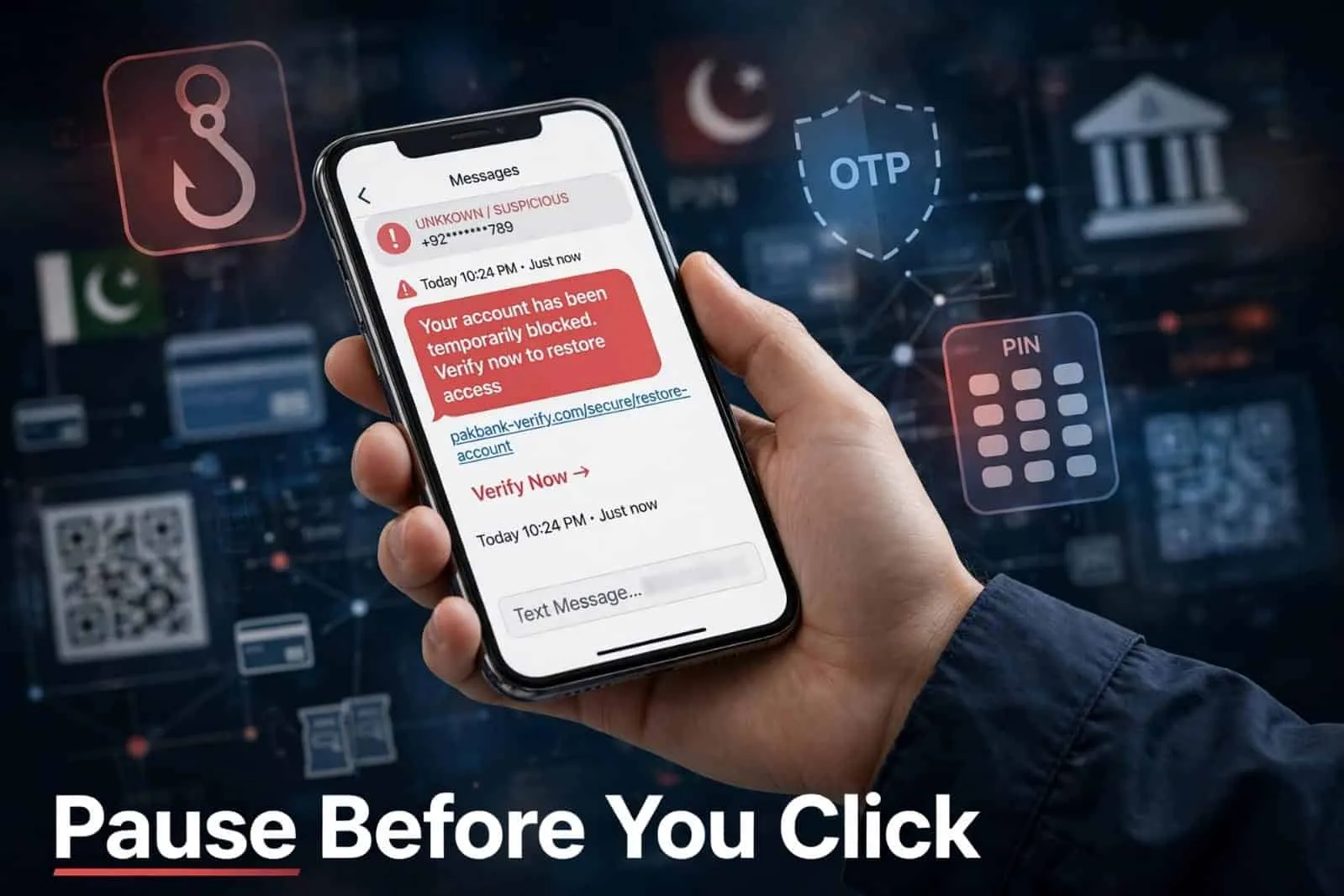
A buzzing phone brings an urgent warning about a temporarily blocked account that requires immediate verification, representing the typical method behind digital payment frauds in Pakistan. Instead of complex hacking, these quick messages trick people into bypassing a simple identity check by creating a false sense of urgency.
Phishing attempts cause nearly 40 percent of global online fraud losses. In Pakistan, digital channels process over 90 percent of retail transactions, creating massive opportunities for fraudsters.
Pakistan's Banking Mohtasib handled nearly 28,000 digital fraud complaints within a single year, returning over PKR 1.46 billion to victims. This demonstrates both the immense scale of the issue and the availability of help for quick responders.
Scams frequently begin with fraudulent emails or texts mimicking a bank and demanding account verification via a malicious link. While logos may look authentic, website addresses usually do not, and genuine banks never require links to confirm identity.
Phone calls use similar tactics under different guises, with callers posing as customer service agents demanding OTPs to fix compromised accounts. Other scammers impersonate police or FIA cybercrime officers, threatening fabricated cases to extort money. Legitimate law enforcement never collects fines or bribes over the phone, and no valid institution asks for PINs, passwords, or OTPs through text, email, or calls. Anyone feeling uncertain should hang up and dial the official number printed on their payment card.
Another emerging tactic involves tricking users into downloading screen-sharing software like AnyDesk under the guise of technical support. Once active, fraudsters monitor every keystroke, including OTPs, and occasionally gain complete control of the device, despite bank employees having no valid reason to operate a customer's phone.
Courier frauds employ similar methods through texts claiming parcels are held at customs or undelivered due to address errors. Targets are asked to click a link and pay a minor clearance fee designed to harvest credit card information rather than deliver any package.
QR codes create confusion because many believe scanning them only receives money. Fraudsters posing as buyers may use a payment receipt code to drain funds from a victim's account instead. Prizes requiring upfront fees follow the same rule, meaning any transaction requiring a payment, click, or scan to receive money is a warning sign.
Speed remains critical for anyone who has shared sensitive data. Victims must update passwords, freeze accounts when possible, and contact banks directly through official apps or card numbers rather than numbers found in suspicious messages. Prompt reporting of unauthorised transactions gives providers a chance to reverse them within a limited window.
Stopping these scams requires no technical skill, only a habit of pausing before taking action. Checking the identity of the sender and questioning rushed demands helps counter tactics used by fraudsters who rely on artificial urgency.