Andy Burnham EU Reset Deal Sparks Criticism Over Costs and Student Subsidies
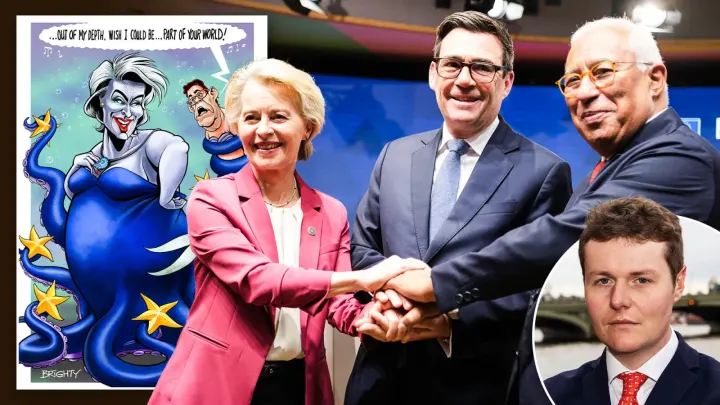
Prime Minister Andy Burnham has claimed a win-win European Union reset is available in black and white, but critics warn the arrangement will cost billions and fail to alleviate the ongoing cost of living crisis. Brussels officials maintain that the agreement depends on the United Kingdom capitulating to demands to subsidize European Union students attending British universities. This specific concession could carry a price tag exceeding £500million, drawing sharp criticism from politicians and analysts who argue it comes at the direct expense of debt-laden domestic students.
Observers suggest the Prime Minister is eager to secure an agreement with European leaders regardless of the financial fallout for British taxpayers. Six former Prime Ministers have expressed either unease or outright dismay over what critics describe as a betrayal of Brexit principles. Questions are also being raised regarding the transparency of the administration, drawing comparisons to questionable discussions with Manchester City club owners from Abu Dhabi.
Will Digital ID Return Under the New European Union Agreement?
Recent developments indicate that the controversial proposed agreement might incorporate plans for a Digital ID system. This comes despite the Prime Minister abandoning the concept months ago in what was previously marked as a cost-cutting decision for the government. The policy shift mirrors discussions surrounding other canceled initiatives, such as the previous administration's Rwanda scheme for tackling illegal immigration, which was initially scrapped by Labour before resurfacing in discussions because of European support.
Critics argue that the lack of transparency surrounding these negotiations leaves the public in the dark about binding commitments being made behind closed doors. Transparency advocates demand that the administration disclose the full details of the reset package rather than allowing terms to be dictated by foreign officials. The uncertainty surrounding technology mandates and border policies continues to fuel anxiety across various sectors of the economy.
The Debate Over Post-Brexit Economic Strategy and European Markets
The reopening of the Brexit debate has reignited polarization between those who view closer ties with Europe as essential and those who advocate for national sovereignty and independent trade paths. Critics of the reset argue that blaming departure from the bloc for domestic economic challenges is a false narrative akin to predictions made during the 2016 referendum. Proponents of keeping distance from European regulatory structures point to sluggish economies and social unrest on the Continent as evidence that closer integration is not a universal remedy.
Conservative leader Kemi Badenoch has emphasized that while Europe remains an important market, it cannot serve as the sole trading partner for the nation. Supporters of this view argue that the country must forge stronger economic links with modern global superpowers rather than accepting past trading constraints. CBI boss Rain Newton-Smith has urged leaders to remove gloom-tinted glasses to unlock the potential of domestic innovators and workers.
How the Proposed Student Subsidies Affect Domestic Higher Education
The potential inclusion of funding for European Union students in the reset package has alarmed university administrators and student welfare groups alike. Domestic students already face substantial tuition fees and maintenance loan burdens, leading to widespread concern that public funds might be redirected to support foreign nationals. Subsidizing incoming European scholars to the tune of more than £500million would impose a heavy fiscal burden on public finances already strained by high debt levels.
Higher education institutions rely heavily on international tuition fees, but policy shifts regarding European student enrollment have remained volatile since the implementation of Brexit. University representatives are calling for clarity on whether the government intends to fund these concessions through general taxation or cuts to other public services. Without explicit guarantees, students and educational institutions face a period of prolonged financial uncertainty.
Transparency Concerns and Questions Over Government Negotiations
Public scrutiny over the administration's negotiating style has intensified following revelations about secret or poorly disclosed governmental talks. Critics compare the lack of openness surrounding the European Union reset to separate controversies involving Manchester City and its Abu Dhabi owners. Transparency in public administration remains a core demand for voters who expect elected officials to account for every international commitment.
Legislators from multiple political backgrounds are demanding parliamentary oversight for any final agreement reached with continental counterparts. The perception that policy decisions are being made to satisfy foreign officials rather than domestic constituents threatens to erode public trust further. Observers continue to monitor developments closely as the government prepares for formal announcements regarding the scope of the reset package.