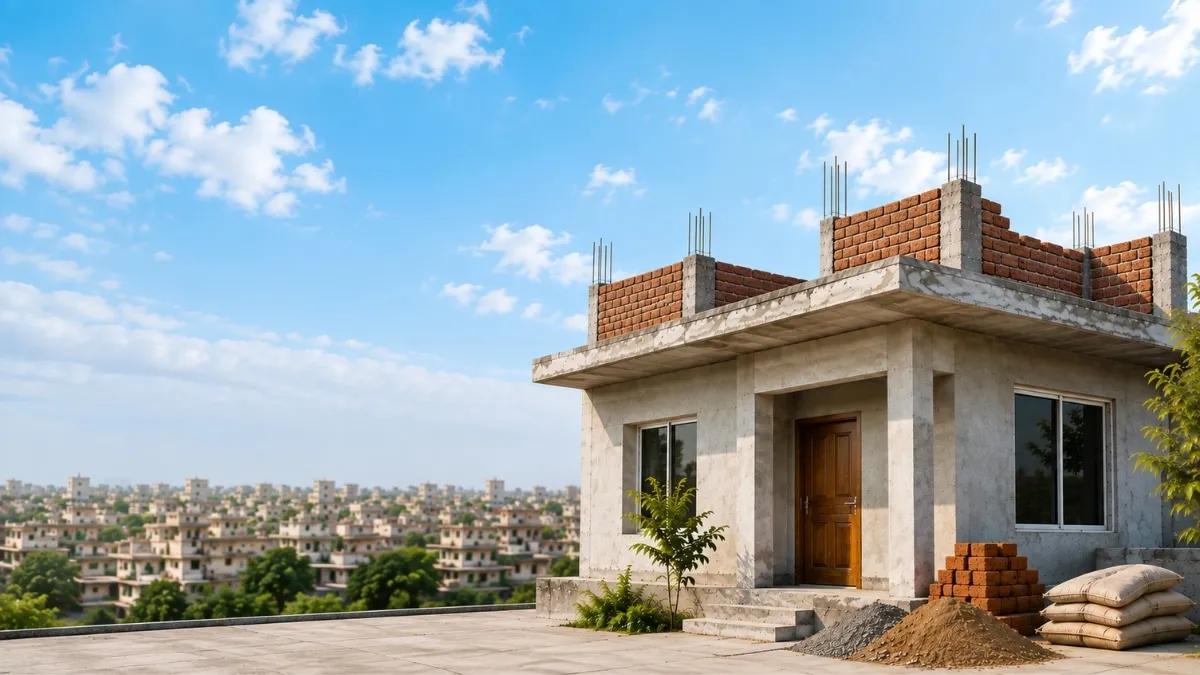
Apna Ghar Programme Targets 150,000 Home Loans by June 2027
The government has set an ambitious target of disbursing Rs. 1 trillion in housing loans over the next six months, aiming to finance 150,000 homes by June 2027 under its Apna Ghar programme.
It also plans to help 500,000 families become homeowners by 2029 as part of efforts to expand access to affordable housing finance. These measures reflect an intensifying push by public sector authorities to resolve chronic residential challenges through structured banking interventions.
The targets come as the government steps up concessional lending under the Apna Ghar programme, which offers financing to families seeking to purchase or construct their own homes. The government has allocated Rs. 71 billion in subsidies for fiscal year 2026-27, which is expected to facilitate housing finance of up to Rs. 835 billion.
The overarching architecture of the initiative involves rigorous oversight. The programme aims to finance 500,000 homes over five years. The government has directed participating institutions to make the process transparent and efficient, warning that delays will not be tolerated. Banks have also been asked to simplify application procedures and prevent political recommendations or nepotism in selecting beneficiaries.
Understanding Pakistan Housing Shortage and Mortgage Gaps
Pakistan is facing a profound residential deficit that affects millions of households across urban and rural settlements. Pakistan's housing shortage is estimated at between 9 million and 12 million units, while mortgage financing accounts for just 0.3 percent of the country's gross domestic product (GDP).
The stark nature of this financial gap becomes clear when viewed in a wider regional context. The figure compares with 12 percent in Indonesia and between 30 and 40 percent in Malaysia, highlighting the limited reach of formal housing finance in Pakistan. Traditional banking sectors have historically viewed long-term residential lending as high risk, leaving ordinary citizens reliant on personal savings or informal borrowing circles to build or buy property.
Expanding formal credit channels is expected to transform how residential properties are developed and acquired. The construction sector supports around 40 related industries and businesses and provides employment to millions of people. The government hopes that expanding housing finance will help more families purchase homes while supporting construction activity and related businesses.
Financial Terms and Eligibility Under Apna Ghar
Navigating the requirements of the credit facility requires an understanding of specific monetary structures. Under the Apna Ghar programme, launched on April 30, 2026, eligible applicants can obtain loans of up to Rs. 10 million for a maximum period of 20 years.
Underwriting guidelines require banks to finance 90 percent of a property's value, while borrowers will contribute the remaining 10 percent from their own resources. To keep monthly payments manageable during the initial phase of property ownership, a fixed markup rate of 5 percent will apply for the first 10 years, with no processing fee or penalty for early repayment.
These terms are structured to encourage long-term commitment without penalising borrowers who manage to accumulate surplus funds and clear their liabilities ahead of schedule. Financial institutions handling these files must ensure that credit assessments focus on repayment capacity while eliminating arbitrary bureaucratic hurdles.
Revisions to the Prime Minister Youth Business and Agriculture Loan Scheme
Alongside residential credit expansion, authorities are revamping broader economic support mechanisms for younger citizens and entrepreneurs. The government has also introduced changes to the Prime Minister's Youth Business and Agriculture Loan Scheme, including a new financing tier for loans exceeding Rs. 7.5 million and up to Rs. 25 million.
The State Bank of Pakistan has notified banks of the revised structure, under which the maximum loan tenure for the new tier will be eight years, including a grace period of up to one year.
The bank rate for the new tier has been set at six-month Karachi Interbank Offered Rate (KIBOR) plus 2.4 percent, while borrowers will pay an 8 percent markup. This structure balances market realities with targeted subsidisation, ensuring that commercial lenders maintain liquidity while end users receive manageable financing rates.
Structuring Tiers and Inclusion Guidelines for Youth Lending
The updated youth initiative now incorporates a multi-layered approach to accommodate varying business and personal needs. The scheme now offers four financing tiers, ranging from loans of up to Rs. 500,000 to financing of up to Rs. 25 million. Meanwhile, the Laptop for All and Prospective Overseas Workers components have been shifted to Tier 5 to streamline core business lending operations.
To promote gender equality in economic participation, commercial lenders face specific compliance quotas. Banks have also been directed to allocate at least 30 percent of youth scheme financing to women.
Collateral requirements vary depending on the scale of the borrowed capital. Personal guarantees will be sufficient for loans under the first two tiers, while loans under the third and fourth tiers will be secured according to individual bank policies. Working capital financing will have a maximum tenure of five years, while the overall maximum loan tenure will be eight years.
Monitoring Implementation and Ensuring Strict Compliance
The success of these large credit disbursement drives depends heavily on the operational efficiency of commercial banks. Regulatory authorities are maintaining close supervision to ensure that funds reach intended recipients without administrative bottlenecks or political interference.
Commercial banks participating in the Apna Ghar initiative and the youth scheme must report regularly on application approval rates, rejection reasons, and disbursement timelines. Any entity found stalling applications or imposing unauthorized charges faces strict administrative action. By enforcing transparency, the state intends to build public trust in formal banking products and stimulate long-term economic recovery across housing and allied industrial sectors.