Azad Kashmir Electric Bus Service Expansion Plan
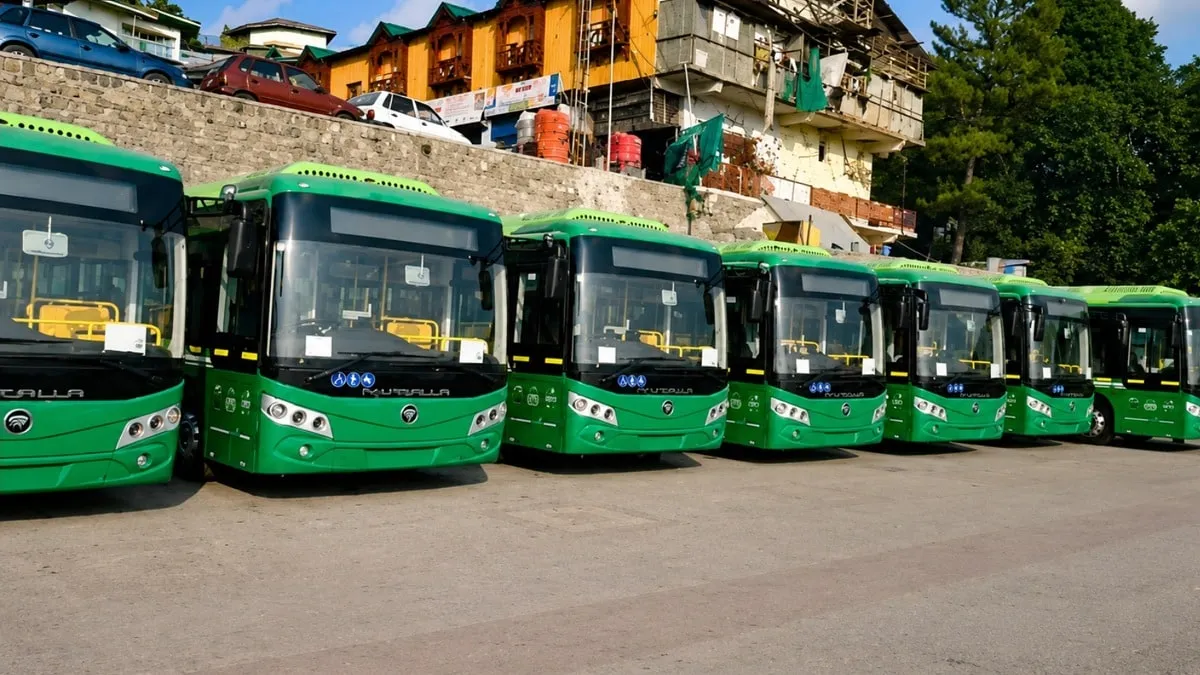
The Azad Jammu and Kashmir government has announced plans to launch an electric bus service with a fleet of 75 buses across seven cities. Minister for Forests and Wildlife Waqar Ahmad Noor announced the initiative during a press conference in Muzaffarabad, saying the buses will operate under the Kashmir Express Program to improve public transportation across the region.
Public transportation systems in hilly regions often face severe constraints due to terrain, vehicle maintenance costs, and fuel price volatility. Introducing electric mobility represents a shift in how regional authorities plan public transit networks. The initiative intends to modernise urban movement while addressing environmental concerns tied to traditional diesel combustion engines.
The rollout involves comprehensive infrastructure updates across multiple districts. Regional authorities aim to create a dependable transit network that connects urban centers efficiently. Citizens across the designated districts have long demanded reliable public transit options to ease daily commutes for students, workers, and traders.
Cities Included in the Green Bus Network
As part of its transport infrastructure improvement plan, the government will also upgrade green bus routes in Muzaffarabad, Bagh, Rawalakot, Mirpur, Sudhnoti, Bhimber, and Kotli by June 2027. These seven locations represent key commercial and administrative hubs within the region.
Muzaffarabad serves as the territorial capital and the central point for administrative operations, making it a priority zone for transit upgrades. Mirpur, located in the southern part of the territory, features dense urban settlements and heavy traffic flows that require structured public transport solutions. Rawalakot and Bagh, situated in the mountainous districts, connect numerous smaller towns and educational institutions.
Upgrading routes in Bhimber, Kotli, and Sudhnoti ensures that transit improvements reach both major towns and surrounding rural peripheries. Officials intend to synchronize scheduling across all seven urban centres once the full fleet of 75 buses becomes operational.
Road Infrastructure and Highway Rest Areas
Authorities also plan to resurface roads in Poonch, Bhimber, and Kotli and establish highway rest areas along the Kohala-Muzaffarabad and Azad Pattan-Rawalakot roads. Road quality remains a critical factor for the longevity of heavy passenger vehicles, particularly electric buses that carry substantial battery weight.
Resurfacing works in Poonch, Bhimber, and Kotli will smooth out damaged road surfaces caused by seasonal weather patterns and heavy vehicular loads. Improved asphalt conditions reduce mechanical wear and tear on suspension systems and tyres, lowering operational expenses for transport fleets.
The addition of highway rest areas along the Kohala-Muzaffarabad and Azad Pattan-Rawalakot roads will support intercity travel. These corridors handle high volumes of private and commercial traffic daily, connecting the territory with neighbouring Punjab and Khyber Pakhtunkhwa provinces. Rest facilities provide essential amenities for travellers and drivers navigating the arterial mountain routes.
Funding Through the Kashmir Express Program
The development follows the arrival of 10 electric buses in Muzaffarabad in July this year, provided by the Punjab government under an initiative announced by Chief Minister Maryam Nawaz. Inter-provincial cooperation played a direct role in establishing the initial fleet presence in the territorial capital.
The Kashmir Express Program is part of the AJK government's Rs. 15 billion 100-day action plan, which also covers healthcare, education, tourism, and civic infrastructure. Allocating substantial financial resources toward public transport signals a shift in government spending priorities toward tangible municipal assets.
The broader Rs. 15 billion package seeks to address longstanding deficiencies in public service delivery. By bundling transport reform with healthcare and education improvements, planners hope to stimulate regional economic activity and improve living standards for residents.
What Comes Next for Regional Transportation
The timeline set by the administration establishes June 2027 as the completion target for upgrading green bus routes across the seven cities. Meeting this deadline requires steady procurement of charging infrastructure, maintenance facilities, and electrical grid upgrades to support high-capacity vehicle depots.
Transport department officials will oversee the phased deployment of the remaining 65 buses to reach the 75-vehicle target. Technical teams must also receive specialized training in electric vehicle maintenance, battery management, and diagnostic software handling.
Residents and business owners in Muzaffarabad, Bagh, Rawalakot, Mirpur, Sudhnoti, Bhimber, and Kotli should monitor local municipal announcements for route schedules and fare structures as the network infrastructure takes shape over the coming months.