Everything You Need to Know About the Bridgwater Carnival
The United Kingdom's oldest annual carnival is preparing to welcome an estimated 150,000 spectators to the town of Bridgwater for a full day of community celebration, massive illuminated floats, and historic firework traditions. Operating entirely free of charge for attending visitors, the historic event draws massive crowds from across the region and beyond to witness a spectacle that has evolved over nearly two centuries. Organisers rely on public donations to keep the massive volunteer-run operation funded, ensuring that families and individuals can enjoy the festivities without buying a ticket.
The celebrations span an entire day, beginning at 10.30am with a diverse programme of circus performances, live bands, traditional dances, and fairground rides. These daytime activities take place at various key locations across the town, including the High Street, the Cornhill Stage, and the historic grounds of St Mary's Church. The daytime entertainment runs continuously until 6pm, setting the stage for the main evening attraction that defines the modern incarnation of the historic festival.
History and Origins of the Bridgwater Carnival
The roots of the Bridgwater celebrations stretch back centuries, originating from the turbulent events surrounding the foiled Gunpowder Plot in 1605. When the conspiracy to blow up the Houses of Parliament was uncovered, the predominantly Protestant population of Bridgwater marked the occasion with massive local celebrations and bonfires. Over generations, these spontaneous commemorations evolved into an organized local tradition deeply embedded in the cultural identity of the area.
The transition into a formal carnival occurred later in the Victorian era, specifically in 1847. Victorians reshaped the annual Bonfire Night gatherings into a structured procession and even invented the specific type of fireworks known as squibs, which remain a central feature of the modern event. This historical continuity makes the current iteration nearly 180 years old in its carnival format, holding the title of the oldest continuously running event of its kind in the nation.
The Grand Procession and Illuminated Floats
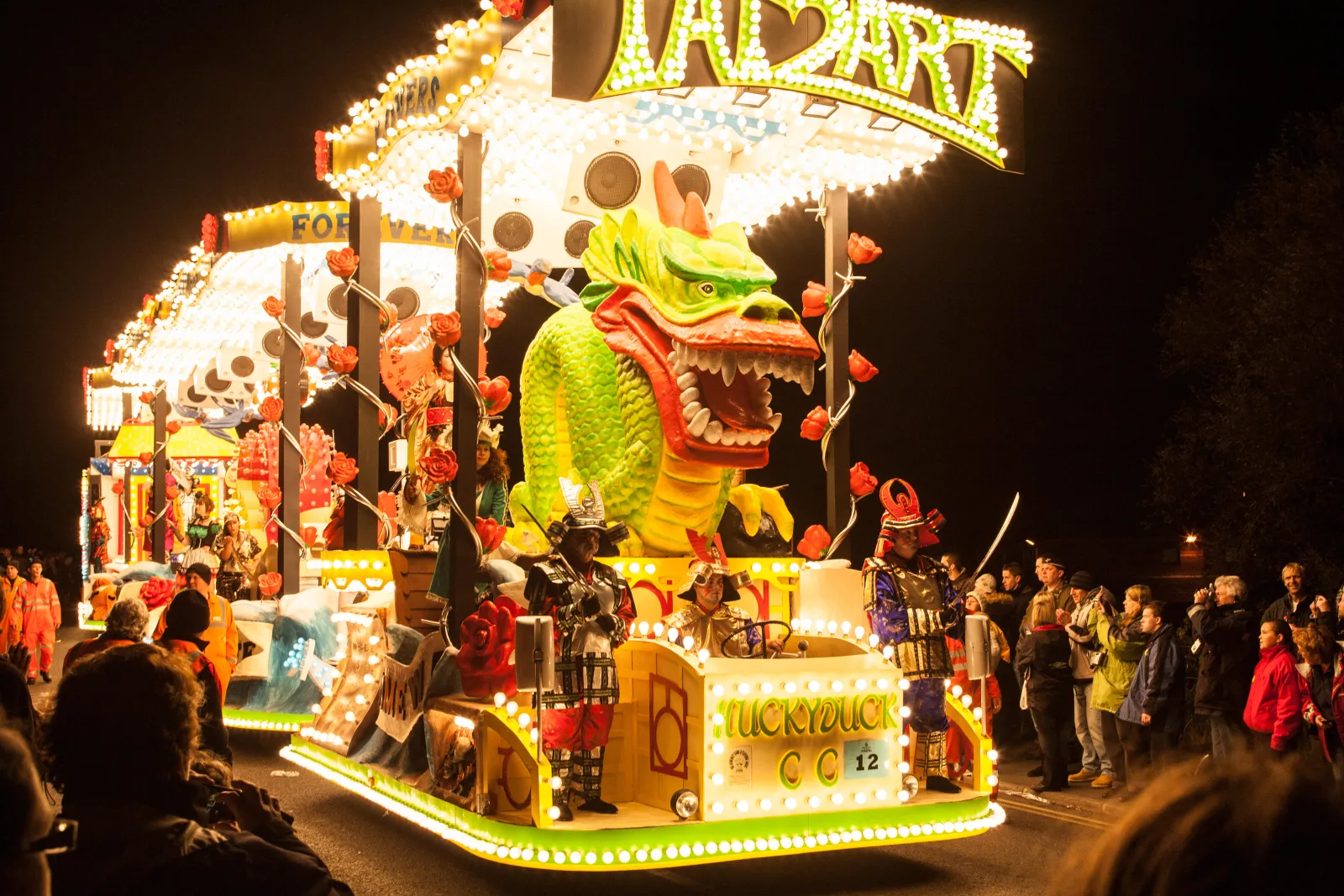
Following the conclusion of the daytime performances at 6pm, the atmosphere shifts as the main event gets underway. The procession lasts for two hours, featuring enormous parades moving down the main streets of Bridgwater where local participants showcase their brightly lit and elaborately constructed floats. These mobile works of art are accompanied by energetic marching bands that provide a soundtrack for the thousands of onlookers lining the route.
The scale of the procession rivals similar celebrations across Europe, earning the event a reputation for having one of the biggest float processions on the continent. Visitors frequently praise the sheer magnitude of the visual display. One visitor who previously attended noted that all the Somerset carnivals are magical, though Bridgwater stands out as the largest and most spectacular. Another observer remarked on the high quality of the production, stating a wish that their own home town could put on such a display.
The Tradition of Squibbing in Bridgwater
The grand finale of the Bridgwater Carnival is a unique local tradition known as squibbing, which takes place after the main procession concludes. Approximately 150 people line up along the roads carrying long wooden poles, each holding a large firework specifically crafted for this ceremony. All at once, these devices are ignited, creating a wall of fire and sparks that illuminates the night sky above the town.
This fiery spectacle represents a direct link to the historical roots of the festival, combining elements of the ancient Bonfire Night commemorations with Victorian engineering. The synchronised firing requires precise coordination among the participants, who train to manage the powerful homemade fireworks safely in front of massive crowds. The visual impact of the simultaneous detonation leaves a lasting impression on first-time visitors and veteran attendees alike.
Practical Information for Attendees
Planning a trip to the Bridgwater Carnival requires some preparation given the sheer volume of people expected to descend on the town. With 150,000 visitors anticipated, public transport and local parking facilities experience high demand throughout the day and evening. Arriving early allows spectators to secure good viewing spots for both the daytime entertainment spots and the evening procession route.
While admission to the event is entirely free, organisers actively encourage attendees to make financial contributions into the collection buckets marshaled by volunteers. Because the entire production relies on community fundraising and volunteer labour, these donations directly fund the infrastructure, safety measures, and logistics required to stage the massive event year after year.
Broader Context of Somerset Carnivals
The Bridgwater event serves as the flagship celebration within the wider Somerset County Guy Fawkes Carnival circuit, a series of autumn parades that light up different towns week after week. These interconnected events share floats, participants, and organizational expertise, forming a distinct regional culture that has been preserved for generations. The cooperative nature of these carnivals ensures high production values for each participating town.
For travellers looking to experience the wider calendar of autumn events, the surrounding weeks offer additional spectacles across the region. As noted by event schedules, the world's largest bonfire night starts tomorrow in a nearby location, drawing an additional 40,000 visitors and proving even more popular this year as the autumn festival season reaches its peak.