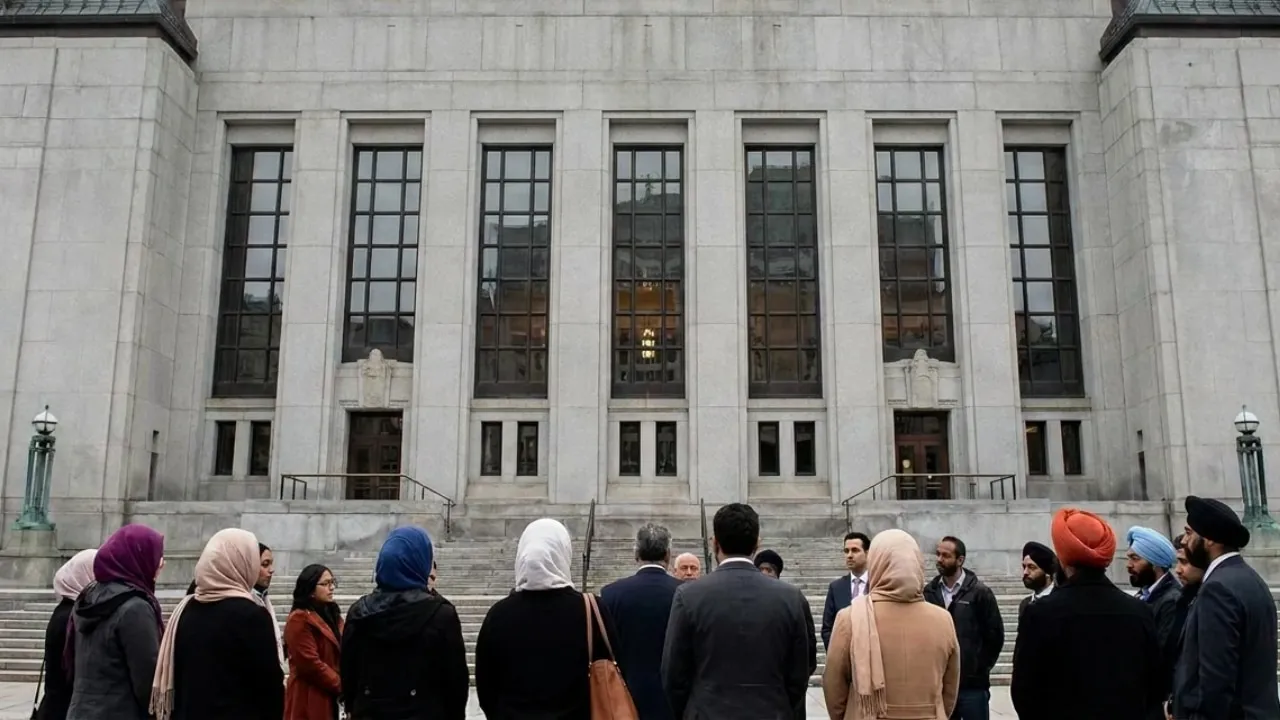
Canada Supreme Court Agrees to Review Quebec Bill 21
Canada's Supreme Court has agreed to hear a landmark challenge to Quebec's controversial Bill 21, which bans some public sector workers from wearing religious symbols, including hijabs, while on the job. The decision brings the contentious provincial legislation before the nation's highest judicial authority, where justices will determine its compatibility with the federal constitution.
The law, formally known as the Act respecting the laicity of the State, prohibits police officers, judges, teachers, and other public servants in positions of authority from wearing visible religious symbols such as the hijab, kippah, turban, and cross. This legal battle represents a critical intersection of provincial legislative autonomy and national civil liberties guarantees.
Understanding Quebec Bill 21 and State Secularism
The legislative measure stems from long-standing debates within Quebec regarding laicity, or state secularism. Proponents within the provincial government argue that public servants must project absolute religious neutrality while exercising state power. This philosophy separates religious expression from official government functions, mirroring traditions found in other Western democracies.
However, the practical application of the statute has transformed employment conditions for numerous public sector workers. Individuals who have served in schools, courtrooms, and municipal departments for years suddenly faced a stark choice between abandoning their articles of faith or leaving their professions. The policy reshapes the composition of public institutions across the province.
The Core Conflict With the Canadian Charter of Rights and Freedoms
At the heart of the dispute lies a fundamental clash: Quebec's assertion that state secularism justifies the restrictions, versus the Charter's guarantees of religious freedom and equality. Critics argue the law disproportionately targets Muslim women who wear the hijab and other religious minorities, effectively barring them from public sector careers.
Teachers and lawyers have described the law as discriminatory, warning that it excludes qualified professionals from serving their communities. Civil rights advocates contend that the constitutional protection of equality and religious freedom should shield citizens from state-imposed dress codes in the workplace. The upcoming judicial review will evaluate whether the provincial objective outweighs these individual rights.
The Role of the Notwithstanding Clause
Quebec's government has defended the measure, invoking the province's notwithstanding clause to shield the legislation from constitutional challenges, a constitutional override that allows Parliament or provincial legislatures to temporarily bypass certain Charter rights. Section 33 of the Constitution Act of 1982 permits governments to enact laws that operate notwithstanding specific sections of the Charter, including freedom of conscience and equality rights.
The use of this mechanism has fueled a broader national debate about the limits of legislative power. Legal scholars and politicians across Canada frequently debate the intended scope of the override clause. By deploying it to protect the secularism law, Quebec effectively insulated the statute from standard judicial review for a renewable five-year period, though the Supreme Court must still untangle complex procedural and constitutional questions surrounding its application.
Impact on Public Sector Workers and Minorities
The practical consequences of the legislation are borne daily by public servants across Quebec. Educators, legal professionals, and municipal workers have faced professional disruption since the passage of the statute. Affected individuals report feeling alienated by a system that conditions public employment on the suppression of personal religious identity.
Community organizations serving religious minorities report rising anxiety among youth who wonder if public service careers remain open to them. The restriction creates tangible barriers to professional advancement for observant individuals. Educational institutions and public agencies also grapple with recruitment challenges as potential candidates look outside the province for employment.
Broader Implications for Canadian Jurisprudence
The Supreme Court's ruling could set a defining precedent for how Canada balances religious freedoms, minority rights, and provincial autonomy. Legal observers note the outcome will resonate far beyond Quebec, potentially shaping Charter jurisprudence for decades. Other provinces monitoring the litigation may consider similar legislative steps depending on the final judicial verdict.
As the court prepares to hear arguments, civil liberties groups and religious communities across the country are watching closely, with many calling the case the most significant test of religious freedom in a generation. The decisions rendered by the justices will clarify the extent to which provincial legislatures can use constitutional overrides to restrict fundamental freedoms.