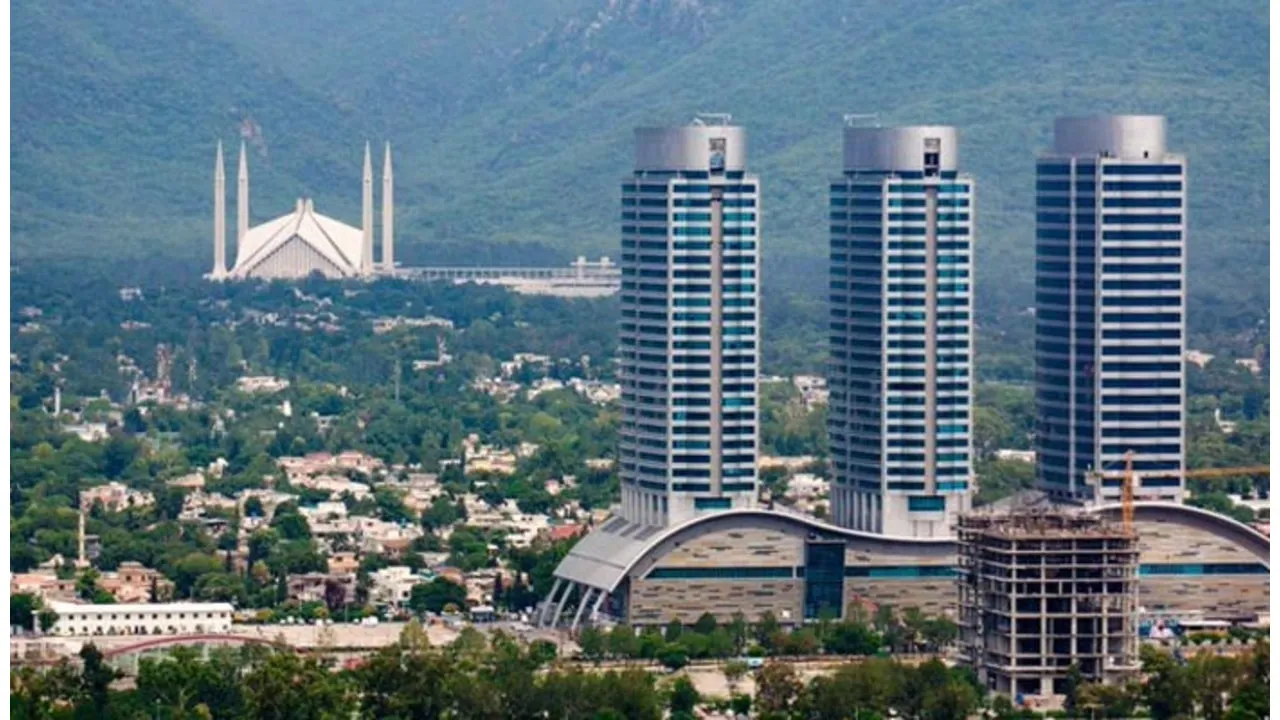
The Capital Development Authority (CDA) has directed real estate portals, including Zameen.com and Agency-21, to avoid misleading advertisements for illegal housing schemes in Islamabad and display approved layout plans.
The directive came in a public notice that listed 143 unauthorized private housing schemes across the capital's five zones.
Why the CDA Issued the Directive
The CDA's Planning Wing said some private developers and cooperative housing societies marketed plots without obtaining approved layout plans or the required No Objection Certificates (NOCs). Without those approvals, the projects are illegal under Islamabad's master plan and can be halted at any stage.
Illegal advertising has been a persistent problem in Pakistan's real-estate market. Buyers often rely on online portals to verify a scheme's legitimacy, and misleading ads have led to financial loss, stalled construction and legal disputes. The CDA's notice is the latest enforcement action aimed at protecting consumers and preserving orderly urban development.
What the Notice Requires From Portals
According to the CDA, every portal that lists a housing scheme must:
- Show the officially approved layout plan for the project;
- Include a clear statement that the scheme has a valid NOC;
- Remove any advertisement that does not meet those criteria immediately.
Portals that fail to comply risk penalties, including removal of their listings from the CDA's official directory and possible legal action under the Capital Development Authority Act.
Scope of the Unauthorized Schemes
The public notice identified 143 schemes that lack proper approval. These schemes are spread across the five zones of Islamabad: Zone I (the central area), Zone II (the northern suburbs), Zone III (the southern expansion), Zone IV (the western hills) and Zone V (the eastern fringe). The list includes both standalone private developments and cooperative housing societies.
In addition, the CDA flagged unauthorized extensions at 13 previously approved schemes. The authority clarified that approval for the original project does not automatically cover any later phase or expansion. Developers must submit fresh layout plans and obtain a new NOC for each extension.
How the Order Affects Buyers and Developers
Buyers are now instructed to verify a scheme's legal status on the CDA's official website or contact the relevant directorate before investing. The notice specifically advises checking whether the specific phase being considered falls within the approved boundaries.
Developers whose projects are listed among the 143 will have to cease all advertising, stop taking bookings, halt plot sales and suspend construction until they secure the required approvals. This could delay project timelines, affect cash flow and increase costs for developers who must redesign layouts or submit additional documentation.
Legal Framework Behind the CDA's Action
The Capital Development Authority operates under the Capital Development Authority Act, which grants it authority to regulate land use, approve layouts and issue NOCs for all development within the Islamabad Capital Territory. The Act also empowers the CDA to enforce compliance through notices, fines and, where necessary, demolition of illegal structures.
Under the Islamabad Master Plan, any private housing scheme must obtain a layout plan that conforms to zoning regulations, environmental standards and infrastructure requirements. The NOC confirms that the scheme meets those criteria and that utilities such as water, electricity and sewage will be provided.
Historical Context of Illegal Housing Advertising
Illegal housing advertisements have been reported in Pakistan for over a decade. In 2015, the Pakistan Real Estate Regulatory Authority (PRESA) warned that up to 30 % of advertised schemes in major cities lacked proper approvals. Subsequent investigations revealed that many buyers lost deposits when developers could not deliver promised infrastructure.
In Islamabad, the issue resurfaced in 2020 when the CDA reported a surge in "phase-2" extensions that were marketed without fresh NOCs. Those extensions later faced legal challenges, and buyers were forced to seek refunds through the courts.
What Comes Next: Enforcement and Monitoring
The CDA has set a 15-day deadline for portals to remove non-compliant ads. After that period, the Planning Wing will conduct spot checks on listed schemes to verify that only approved layouts are displayed.
Buyers who have already invested in a scheme now listed as unauthorized are advised to contact the CDA's Consumer Protection Directorate. The directorate will maintain a register of grievances and may mediate between buyers and developers to reach settlements.
Developers seeking to regularise their projects must submit revised layout plans, obtain fresh NOCs and provide evidence of compliance with the Islamabad Master Plan. The CDA will review each submission on a case-by-case basis and publish the outcome on its website.
Practical Takeaways for Prospective Homebuyers
1. Always cross-check a scheme's status on the CDA website before making any payment.
2. Request a copy of the approved layout plan and NOC from the developer; legitimate projects will provide these documents without hesitation.
3. Verify that the specific phase or extension you are interested in is covered by the approved plan.
4. Keep records of all communications and receipts; they will be essential if a dispute arises.
5. Consider consulting a real-estate lawyer who is familiar with Islamabad's zoning regulations before signing any agreement.
Broader Impact on the Real-Estate Market
The CDA's crackdown is expected to increase transparency across online property portals. By forcing portals to display only approved layouts, buyers will have a clearer picture of which projects are legally viable.
In the longer term, the measure could encourage developers to adhere more strictly to planning regulations, reducing the number of illegal extensions and protecting the capital's planned growth trajectory.
Industry observers note that while the immediate effect may be a slowdown in sales for some developers, the overall health of the market could improve as consumer confidence returns.
International Perspective
Similar regulatory steps have been taken in other rapidly urbanising countries. In India, for example, the Real Estate (Regulation and Development) Act of 2016 requires developers to register projects on a public portal and obtain a completion certificate before marketing. The CDA's approach mirrors those best practices, aligning Islamabad with global standards for transparent real-estate advertising.
As the capital continues to expand, robust oversight will be essential to balance growth with legal compliance, ensuring that new housing meets both demand and regulatory standards.