Federal Constitutional Court Clarifies Legal Status of Land Mutations
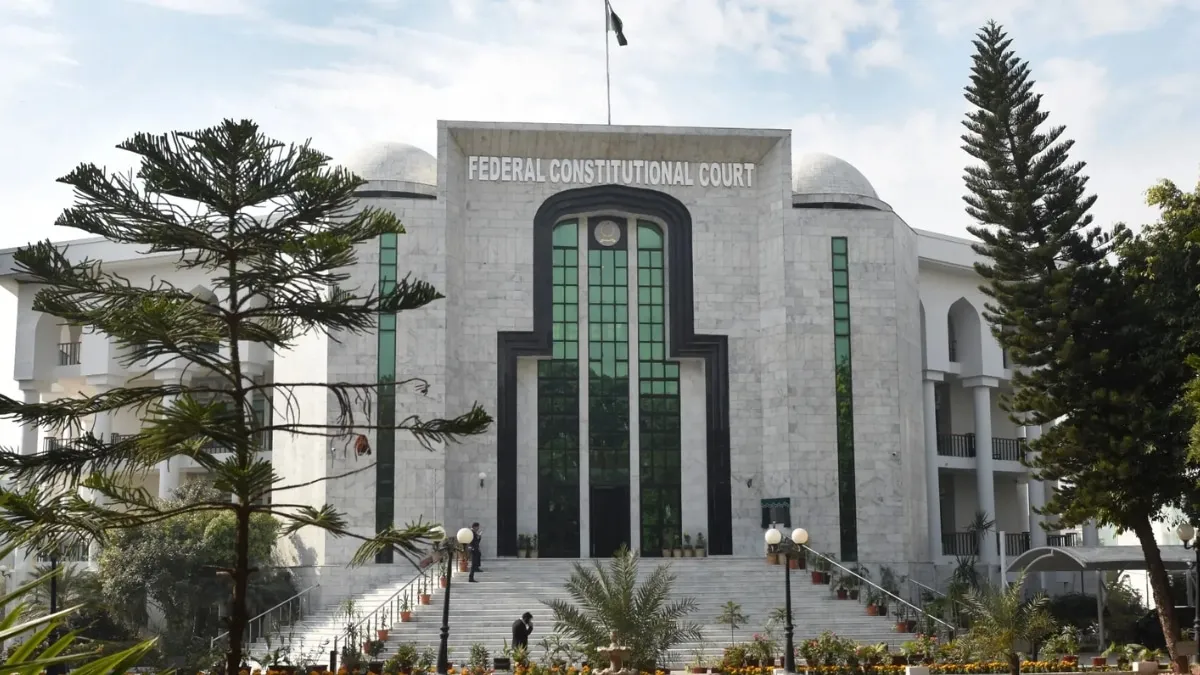
The Federal Constitutional Court of Pakistan has ruled that a land mutation by itself does not confer ownership, observing that a mutation merely serves as evidence of an underlying transaction. The ruling delivered clarity on property rights during a hearing involving inheritance disputes and fraudulent transfers. A two-member bench comprising Justice Syed Hasan Azhar Rizvi and Justice Muhammad Karim Khan Agha dismissed a petition filed by Maqbool Ahmad and others, upholding a Lahore High Court decision in favour of a woman whose inherited land in Toba Tek Singh was allegedly transferred through a fraudulent oral sale.
The court held that a party claiming an oral sale bears the legal burden of proving payment of the sale consideration. Legal analysts point out that property transactions require stringent verification, especially when oral agreements are claimed over documented inheritances. This judgment reinforces the protection of legal heirs against unauthorized claims and administrative shortcuts in revenue offices.
Details of the Toba Tek Singh Property Dispute
In this case, the woman had neither sold the land nor received any payment. The concerned Naib Tehsildar testified that his signatures on the mutation were forged, and that the parties had never appeared before him. According to the judgment, the petitioners, tenants of land owned by the deceased Mureed Abbas, allegedly colluded with revenue officials to get mutation No. 1576 sanctioned in their favor on July 28, 2013, after the land had been inherited by his daughters.
The court noted that no sale consideration was paid, the mutation was never entered in the daily diary, and the prescribed government fee was not deposited. These procedural lapses formed the bedrock of the legal challenge mounted by the rightful heirs. Revenue record tampering remains a persistent challenge in rural administration, requiring judicial intervention to rectify fraudulent entries.
Legal Framework Governing Property Sales and Transfers
It held that under the Contract Act, 1872, and the Transfer of Property Act, 1882, payment or a promise to pay consideration is an essential requirement of a sale. Without these foundational legal elements, any purported transfer of immovable property lacks legal standing. The statutory provisions protect property owners from arbitrary dispossession and unauthorized administrative actions.
Oral sales require strict evidentiary standards in courts of law. Claimants must demonstrate clear proof of financial exchange and mutual consent. The absence of documentation places a heavy burden of proof on those asserting ownership through verbal agreements.
Judicial Protection Against Forgery and Administrative Collusion
The court further observed that requiring the woman to initiate separate civil proceedings despite clear evidence of forgery would effectively protect an attempt to deprive her of inherited property. Direct judicial intervention prevents prolonged litigation for victims of administrative fraud. Courts have repeatedly emphasized that revenue officials must follow mandatory procedures before recording any change in ownership status.
When signatures are proven forged and statutory fees remain unpaid, administrative entries lose all legal validity. The latest ruling ensures that victims of forged mutations receive swift justice through appellate hierarchies without being forced into fresh civil trials.
Final Orders and Restoration of Inheritance Rights
Consequently, the Federal Constitutional Court of Pakistan set aside the Board of Revenue's February 16, 2022 order, restored the decisions of the Assistant Commissioner and Additional Commissioner in the woman's favour, and declined leave to appeal. This final decision closes avenues for the petitioners who sought to claim property through disputed administrative channels. Legal heirs retain their rightful shares when administrative mutations lack substantive legal backing.
Property owners across the country watch such rulings closely to understand the limits of revenue department actions. The strict stance against fraudulent oral sales safeguards ancestral land from unlawful acquisition by tenants or third parties.