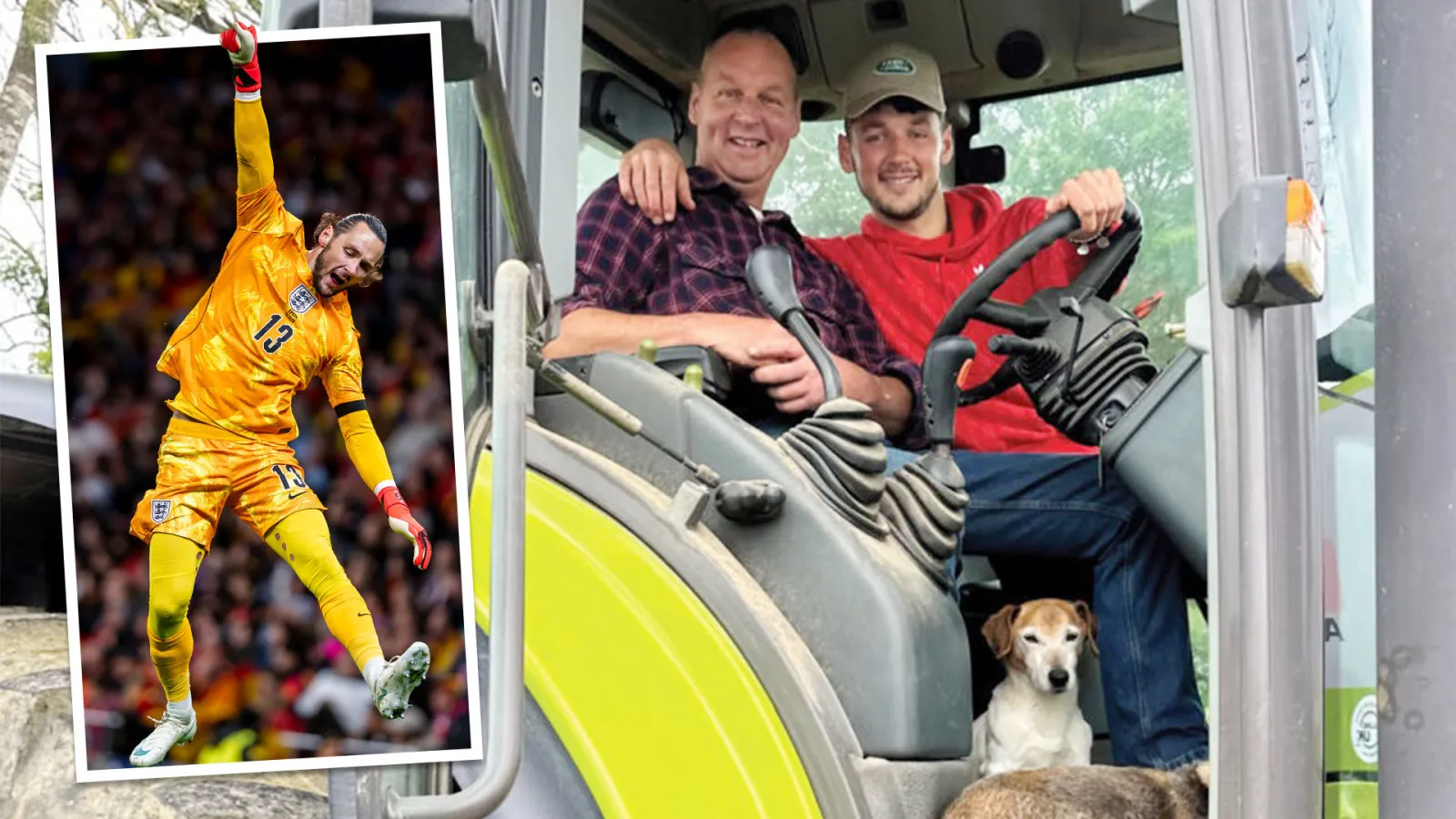
James Trafford, the 24-year-old Leeds United goalkeeper who delivered a heroic performance in England's 3-2 Nations League win over Spain, grew up on a family farm in North Cumbria, learning to care for lambs and mix manure with lime before he ever put on a pair of gloves.
Trafford's early life on the farm gave him a work ethic and resilience that have become hallmarks of his football career, a fact he repeatedly cites when describing his path from the fields of the Lake District to the international stage.
How Farming Shaped a Future Goalkeeper
Born and raised in Cockermouth, the same Cumbrian town that produced England cricket star Ben Stokes, Trafford spent his childhood assisting his father David on their farm. He helped with lambing at age 11, describing the experience as "far too disgusting" but noting that it taught him to handle unpleasant tasks without complaint. He also mixed manure with lime to adjust soil pH and worked in the slurry pit, describing the stench as "horrible".
These chores required physical stamina, attention to detail and a willingness to perform repetitive, often thankless work, qualities that translate directly to the demands of goalkeeping, where concentration and consistency are paramount.
From Farmyard to Football Academy
Trafford attended Cockermouth School briefly before leaving in Year 7 to join Manchester City's youth academy at age 12. The £40 million-valued keeper never forgot his roots, and he credits the farm for instilling a "strong work ethic" that helped him navigate the competitive world of professional football.
Loan spells at Accrington Stanley and Bolton Wanderers, where he helped Bolton win the 2023 EFL Trophy, showcased his development. Burnley then paid Manchester City £19 million for his services, and he played a pivotal role in Burnley's 2024 promotion, conceding just 16 goals in 45 Championship games, a Football League record.
After Burnley's 2025 relegation from the Premier League, Manchester City re-signed Trafford for £31 million, setting a British goalkeeper transfer record. However, the arrival of Gianluigi Donnarumma under Pep Guardiola left Trafford on the bench, prompting a move to Leeds United.
Mental Health Challenges at a Top Club
In a November interview with Football Daily's The Football Interview, Trafford opened up about the mental strain of being sidelined at City. He described the feeling as "horrendous, horrendous" and explained that he coped by calling family, his wife, and friends for support. He emphasized that regular playing time was essential for his mental wellbeing, saying, "You just lose yourself not playing."
His candidness highlights the growing awareness of mental-health issues in elite sport, especially for players who find themselves out of the starting XI despite high transfer fees.
Staying Grounded: Life Outside the Pitch
When his schedule allows, Trafford returns to Cumbria to visit his family, enjoy his mother's roast dinners, and spend time with his best friend Spencer Fulton, an aspiring rugby league player. Two weeks after representing England at Wembley, he was spotted playing darts at the Black Bull on Cockermouth's Main Street, underscoring his down-to-earth nature.
Trafford has said that if he had not become a footballer, he likely would have stayed on the farm, even returning during summer breaks to clip sheep and wrap fleeces. In 2024 he appeared in Farmers Weekly alongside his father, discussing how farming prepared him for the pressures of professional sport.
Farm Lessons Applied to Goalkeeping
He told Farmers Weekly, "You draw on it the most in the tough times. When it's nailing down outside and you really can't be bothered... Every farmer knows that regardless of the weather, you still have to go out. You still have to work all day. You just have to do your job and do it as best as you can."
Trafford also likens the goalkeeper's role to farming: "Being a goalkeeper is tough. You're the only one who wears a different coloured kit... Like farming, goalkeeping can be a really lonely place. But it's also a really good position on the pitch because you have that sense of importance and you try and keep everything together."
Family Expectations and Career Choices
Trafford's grandfather Bill had hoped his grandson would continue the family farming legacy or become a jockey. Trafford recalled, "Grandpa always said, 'he has to be a farmer' but he really wanted one of us to be a jockey, but we were all too tall!"
Instead, football became the path that allowed him to honor his family's work ethic while forging his own identity. His rise has positioned him as a contender for England's No 1 spot, challenging incumbent Jordan Pickford.
What This Means for England's Goalkeeping Future
England boss Thomas Tuchel praised Trafford's performance in Madrid, suggesting a "changing of the guard in the nets." If Trafford secures the starting role, his farm-honed resilience could influence England's defensive stability in upcoming tournaments.
His story also provides a template for young athletes from rural backgrounds, showing that the discipline learned in agriculture can translate into elite sport.
Looking Ahead
Trafford's immediate focus is to cement his place at Leeds United and continue delivering for England. With the next international window approaching, his performances will be under close scrutiny from fans and pundits alike.
Off the field, he remains committed to his family farm, promising to return during off-seasons to help with lambing and other chores. This ongoing connection ensures that the values that shaped his early life will continue to influence his professional mindset.
James Trafford's journey from the lamb pens of North Cumbria to the international stage exemplifies how hard work, mental resilience, and a grounded upbringing can propel a young athlete to the pinnacle of his sport.





