OpenAI unveiled solutions to three major mathematical problems yesterday, including a surprising refutation of the Exponential Time Hypothesis (ETH), a long-standing assumption in computer science about computational difficulty.
The scientific community reacted with both excitement and concern. Anthropic mathematician Levent Alpöge suggested OpenAI may have built on existing work, and later Anthropic released its own ETH refutation.
OpenAI altered its release strategy this time: mathematicians received the work on GitHub; computer scientists were invited to form a working group, demand public proof sharing, and request OpenAI fund a conference; physicists created a separate group to decide on their release method.
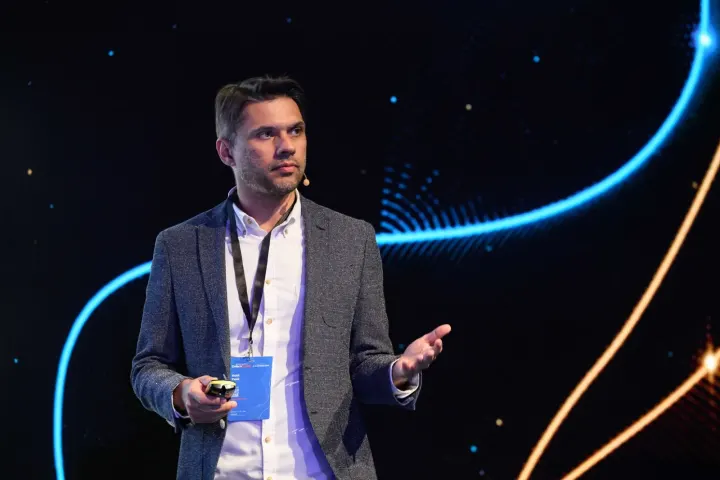
MIT Professor Ryan Williams, who leads the computer-science response, has previously criticized OpenAI's proof releases, calling an October dump a "DDOS attack on mathematicians." He agreed to work with the frontier labs to guide ideas crucial to the field, according to TechCrunch. Williams, along with UC San Diego researchers Russell Impagliazzo and Ramamohan Paturi, who first described ETH in 1999, were asked to help interpret the solution.
Their initial action was an open letter seeking feedback from scientists and discussing norms for AI contributions.
"Some parts [of OpenAI's proof] are, maybe you could say routine, but then yes, there are two or three alien-looking parts, and it's exactly these parts that that I saw that made me think, wow, this is something that the whole community needs to work on together," Williams told TechCrunch.
Are you down with P vs NP?
ETH belongs to the broader P vs NP class of problems that has driven computer science for decades. In simple terms, researchers ask whether problems that are easy to verify (NP) can also be solved easily (P).
For example, Sudoku solutions can be quickly checked, but finding them is time-consuming. This gap underlies many cryptographic systems: knowing a key lets you decode a message, yet cracking the key remains impractical.
Scientists have not proved the equivalence. "P = NP is saying that, not only can you verify Sudoku solutions when they exist, you can just generate them," Williams said. "P = NP is asserting that this is true for every single problem you can verify quickly, if you can verify it quickly, you can solve it quickly. So this just seems that just seems too good to be true."
Most assume P ≠ NP, and ETH supports that view by stating that the fastest algorithm needs exponential time as variables increase in certain logic puzzles.
OpenAI and Anthropic claim their models have produced algorithms that solve these puzzles in "sub-exponential" time, faster than previously believed. If verified, they would refute ETH and potentially open a path toward algorithms that achieve P = NP.
"Every computer scientist should probably put a a little more weight on the plausibility of P = NP, but one's weight may vary," Williams said. "I do think that it kind of calls into question a lot of the intuitions that we thought we had about ... how tractable [hard NP problems] are. I also think that this is probably not the final answer either. I don't think that OpenAI's algorithm could possibly be the best algorithm you can get."
The work ahead for computer scientists
ETH's durability has led to its inclusion in many papers that may need revision if the AI labs' claims hold, Williams noted.
"This is partly why I was asking or pushing OpenAI to support a conference on this, it's going to affect many researchers' works, and we need to figure out, okay, what happens next besides understanding the algorithms, we need to understand, what should the foundations be that we had before?" he said.
Beyond scientific concerns, cybersecurity implications arise. An improved algorithm could threaten cryptographic systems that rely on certain key sizes. Williams asked OpenAI science lead Dan Roberts whether any crypto systems were now insecure; Roberts replied they had checked and were reasonably confident no breaks resulted.
This emerging AI-driven scientific discovery model is still evolving, but Williams remains optimistic despite worries about training future scientists. He finds the transition easier as a computer scientist who does high-level math compared to pure mathematicians.
He adds that AI is "forcing people to be a little more ambitious about the kind of work that they do, and to think more deeply about okay, if all the things I used to work on are now low hanging fruit for AI, how can I raise the bar for the the kind of scientific questions I want to ask?"