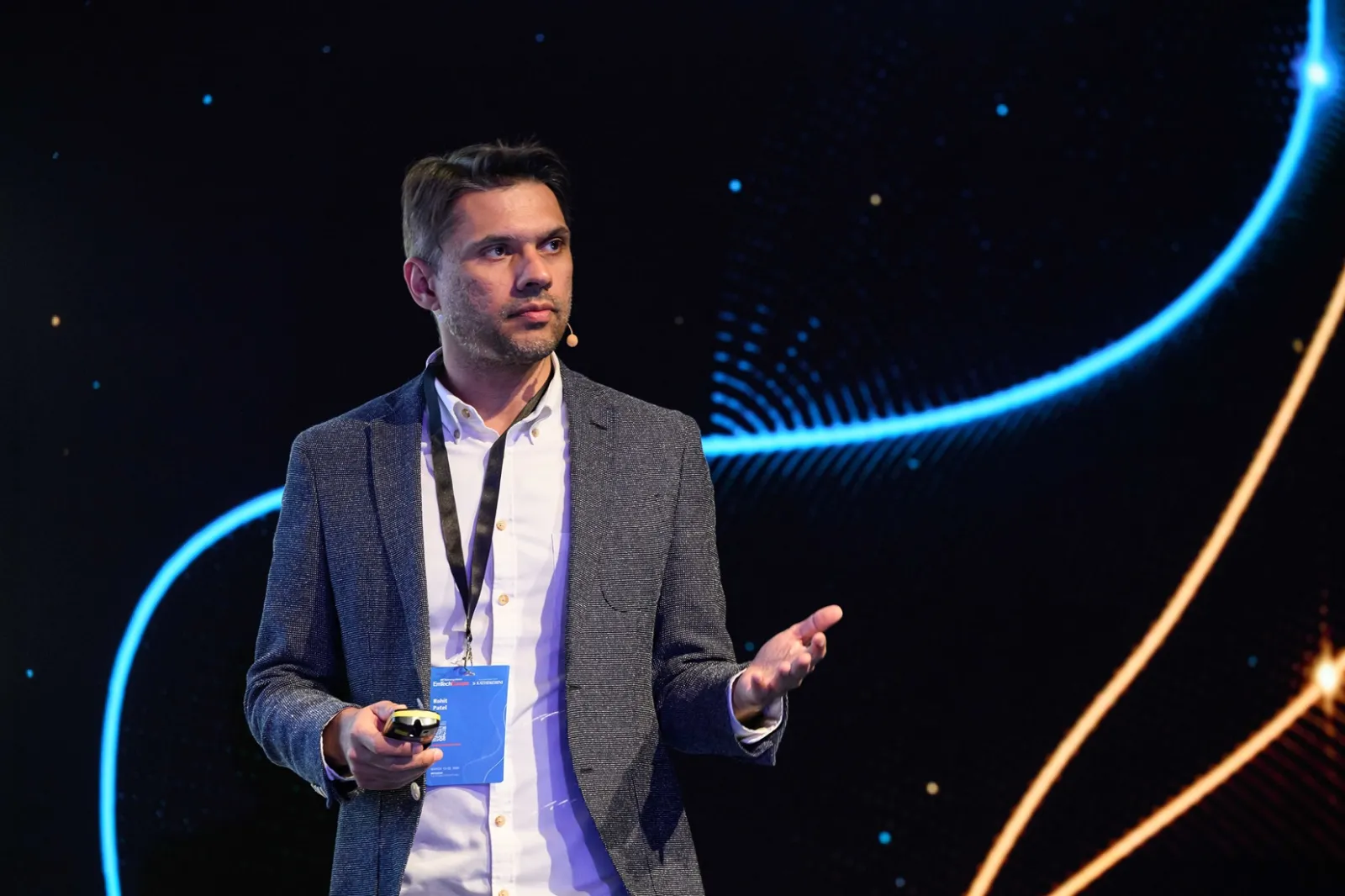
After spending eight years developing artificial intelligence for Meta, director Rohit Patel is leaving the company. The former leader at Meta Superintelligence Labs started Ndoc, a new venture he describes as an artificial intelligence native substitute for Google Workspace or the Microsoft Office suite.
Patel represents the most recent high profile departure from Meta, following exits by Chief Global Affairs Officer Joel Kaplan, AI researcher Andrew Tulloch, and Head of Product for AI for Work Emily Dalton Smith.
Patel built Ndoc to avoid the fragmented method people use across programs like Word, Excel, PowerPoint, Tableau, Replit, and chat tools. The objective is a single shared workspace accessible to all colleagues, even without an Ndoc account.
The layout combines three elements. The Stage tab houses slide decks, dashboards, simulations, and mini apps. The Narrative tab contains analyses, numbered citations, generated figures, and the rationale behind figures. The Model tab holds underlying datasets and Python scripts.
This design stems from Patel's background in reinforcement learning and output evaluation at Meta. Patel believes users must be able to check artificial intelligence work when software builds company spreadsheets and slide decks. Users can check the Python scripts used to generate documents.
"Even if you don't know any Python, you can ask [the AI chat] to explain, 'Hey, what does this script do? Which line has my formula?' And you can verify that formula," Patel said. "There's nothing hidden behind the curtain here."
Users can upload datasets, request analysis, and generate narratives. They can also add context regarding audience, tone, and memory.
"It maintains a memory across your person, that particular document, your team, and your company," Patel said.
Ndoc uses mixed open source models and was built from scratch, reducing operating costs compared to alternatives relying on frontier artificial intelligence models.
"I thought that's what people would be excited about, but people don't care about that," he said regarding early users. "What people are excited about is that they love seeing all their end-to-end in one place."
Patel aims to reinvent files by allowing documents to export as a single html file viewable in any browser. He plans to open source this format so other developers can build compatible applications without platform lock-in.
Desiring to move quickly without waiting for consensus from hundreds of people at a major corporation contributed to Patel's decision to leave Meta.
"Humans can only move at human pace, whereas...I can move at the pace of what AI can do," Patel said.
Operating with a three person team and no funding, Patel is making a major bet to capture enterprise work, competing with labs like OpenAI, Anthropic, Meta, SpaceXAI, and Google that offer enterprise tools connected to Microsoft 365 and Google Workspace.
OpenAI recently introduced Space, a shared workspace inside ChatGPT. Patel views Space as a threat but believes labs misunderstand enterprise needs.
"Companies are basically attaching AI to spreadsheets and it fills your cells for you," he said. "It just sort of kills my soul. This is like if you just figured out electricity, and then you decided the best use case is to put lights on my bulls that till my soil. No. Get a tractor."
Recognizing the difficulty of changing user habits, Patel included connectors for importing existing data from current tools.
"My bar was that I'm not going to release anything I don't love using," he said. "I have very optimized AI workflows for everything I do. If I start using this tool, and I keep going back to my workflows, I haven't built a good enough tool...I have a graveyard of tools that did not meet that bar."
Patel delayed seeking funding until proving product demand.
As of Tuesday, Ndoc runs an enterprise pilot and offers an alpha version to a limited group of customers on a wait list. Signup is free, but users pay for usage and tokens. A beta version is expected in upcoming weeks, followed by a full launch next year.
Speed remains Patel's primary focus over immediate perfection.
"Execution is extremely cheap...so go execute on a suboptimal plan and worry about it later," he said. "By the time you make the best plan, the execution will be done by somebody else."