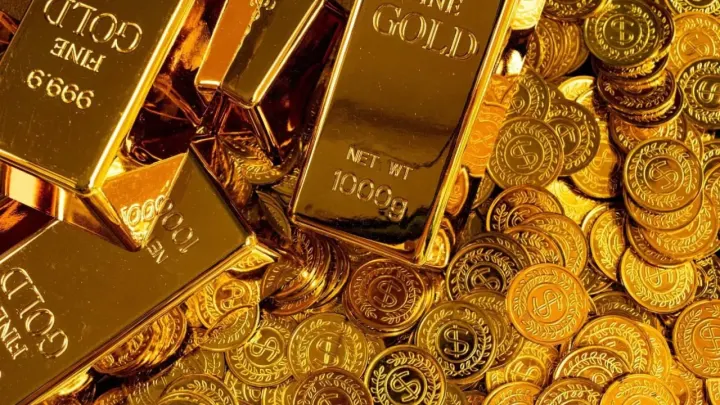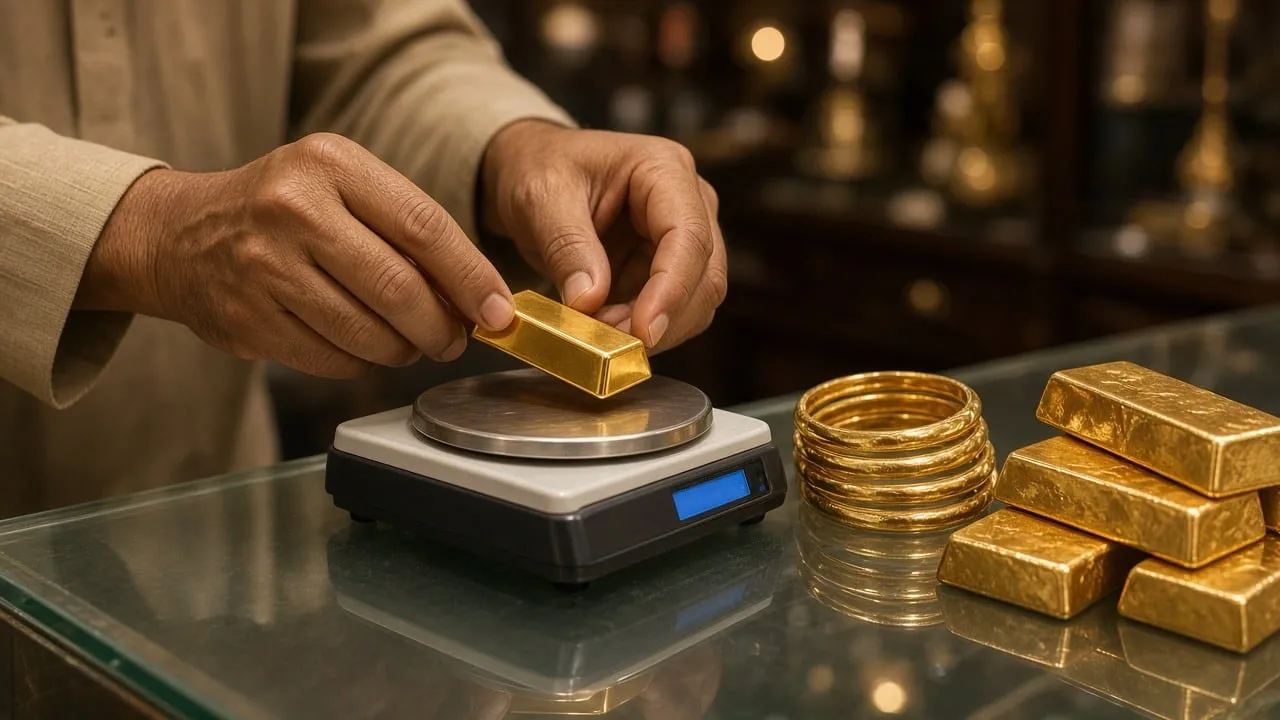
Gold prices in Pakistan fell on Saturday, with 24-karat gold dropping by Rs. 2,300 to Rs. 387,836 per tola, a day after a massive Rs. 11,500 jump.
According to rates shared by the All-Pakistan Gems and Jewellers Sarafa Association (APGJSA), 10-gram gold also decreased by Rs. 1,972 to Rs. 332,506.
Even after Saturday's drop, gold remains Rs. 9,200 higher than Thursday's close of Rs. 378,636.
What Caused the Sudden Shift in Gold Prices?
Pakistan's gold market is closely tied to international spot prices, which moved lower on Saturday. The global spot price of gold fell by $23 to $3,653 per ounce, a movement that translated into a rupee-denominated decline for local dealers.
Several factors contributed to the global dip. The U.S. dollar index gained modestly against a basket of currencies, making gold - priced in dollars - more expensive for holders of other currencies. At the same time, U.S. Treasury yields edged higher, offering investors an alternative to non-yielding gold. These macro-economic signals often trigger short-term corrections in the precious-metal market.
How the All-Pakistan Gems and Jewellers Sarafa Association Sets Rates
The APGJSA is the principal body that aggregates wholesale gold rates from major sarafas (jewellery markets) across Pakistan. Each morning, the association publishes a benchmark price for 24-karat gold per tola and for 10-gram bars. These rates serve as a reference for retailers, investors, and the general public.
While the APGJSA rates represent the pure metal price, final consumer costs include making charges, taxes, and dealer margins. Making charges vary by city and by the craftsmanship involved, often adding 5-10 % to the base price.
International Gold and Silver Movements
The local decline followed the global market, where gold fell by $23 to $3,653 per ounce. Silver also slipped, falling by Rs. 55 to Rs. 4,851 per tola.
Silver's price movement often mirrors gold but with greater volatility because of its industrial demand. The modest Rs. 55 decline suggests a broader risk-off sentiment in commodity markets.
A Volatile Week for Gold in Pakistan
Gold has swung sharply this week. Prices crashed by nearly Rs. 12,000 earlier in the week before climbing back by Rs. 16,200 over Thursday and Friday.
The week began with a sharp sell-off as investors reacted to a stronger dollar and rising yields. By Thursday, local traders reported a rebound driven by domestic buying pressure, especially from investors seeking a hedge against inflation.
Such volatility is not unusual for gold in emerging markets, where price changes are amplified by currency fluctuations and local demand cycles.
What the New Rate Means for Buyers
For buyers, Saturday's rate means:
- One tola of 24-karat gold costs Rs. 387,836, Rs. 2,300 less than on Friday.
- Two tolas cost about Rs. 775,672, around Rs. 4,600 cheaper than a day earlier.
These are APGJSA rates for pure 24-karat gold; jewellery buyers also pay making charges on top.
Practical Takeaway for Small Investors
Small investors who purchase gold in 10-gram bars will see the price at Rs. 332,506, a reduction of Rs. 1,972 from the previous day. The lower price may encourage new purchases, but investors should also consider storage costs and the short-term nature of price swings.
Impact on Jewellery Retailers
Retailers must adjust their selling prices to reflect the new wholesale rate while maintaining profit margins after accounting for making charges. Some may choose to hold inventory, anticipating another price movement, while others may pass the lower cost to customers to stimulate sales.
Historical Context: Gold Prices in Pakistan
Gold has long been a preferred store of value in Pakistan, especially during periods of economic uncertainty. Over the past decade, the price of a tola of 24-karat gold has risen from roughly Rs. 250,000 in 2014 to above Rs. 380,000 in 2024, reflecting both global price trends and the depreciation of the Pakistani rupee.
Historically, spikes in gold prices have coincided with political instability, high inflation, or sharp currency devaluation. Conversely, periods of relative stability and a strong rupee have seen modest price growth.
What to Watch Next
The next APGJSA rates will be published on Monday, reflecting any further changes in the global market over the weekend. Analysts suggest watching the following indicators:
- U.S. dollar index movements - a stronger dollar typically pressures gold lower.
- Pakistan's exchange rate - rupee depreciation can lift local gold prices even if the global spot price is stable.
- Domestic demand trends - festival seasons and wedding periods often boost buying.
There is no official forecast from the APGJSA, but market participants will react to these macro-economic cues.
How Consumers Can Safely Purchase Gold
Consumers should verify that the gold they purchase is certified by the Pakistan Standards and Quality Control Authority (PSQCA) or carries a reputable hallmark. Buying from licensed sarafas and requesting a receipt with the APGJSA rate printed helps ensure transparency.
For those considering gold as an investment, diversification across gold bars, coins, and jewellery can mitigate the impact of short-term price volatility.
Conclusion
Saturday's dip to Rs. 387,836 per tola reflects a synchronized move between Pakistan's local market and the global gold price. While the decline offers a brief reprieve for buyers, the broader trend remains upward over the past year, driven by inflationary pressures and currency weakness. Stakeholders, from small investors to large jewellery houses, must stay alert to both international cues and domestic economic signals as they navigate the next price cycle.