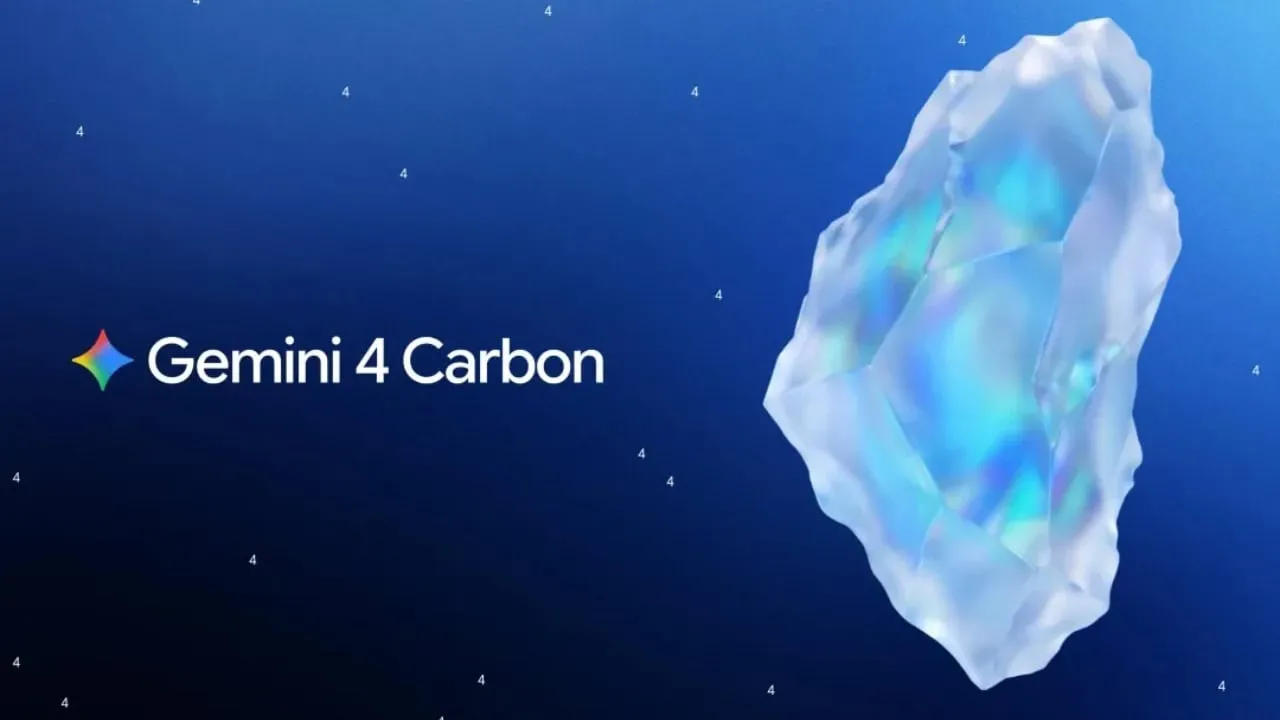
Google Launches Gemini 4 Carbon for AI Ultra Subscribers
Google has started rolling out Gemini 4 Carbon to the Gemini app, making its most powerful AI model available to consumers for the first time. The rollout follows the same phased pattern that Gemini 4 Argon used in October. AI Ultra subscribers, who pay $99.99 per month, get access first. Meanwhile, Gemini 4 Argon remains the default model for AI Pro subscribers at $20 per month.
Carbon brings significant performance improvements over previous systems, targeting high-end professional and technical workloads. The release strategy prioritizes users willing to invest in the highest subscription tier, keeping advanced capabilities away from casual users for now. This deployment follows a careful testing phase designed to ensure system safety and reliability under heavy operational demands.
Background of the Gemini 4 Carbon Rollout
Carbon's public arrival comes roughly two weeks after its announcement on October 28. When Google first revealed Carbon, it restricted access to a small group of cyber defenders through its Fairwind Program. The company cited a voluntary US government safety review as the reason for holding back broader access.
That delay matched the Argon playbook exactly. Google announced Argon on September 30, limited it to cyber defenders, and opened it to paying subscribers 13 days later on October 13. Carbon followed the same timeline almost to the day, showing a consistent deployment strategy across top-tier releases.
How Gemini 4 Carbon Benchmarks Compare
For users who get access, Carbon represents a meaningful upgrade over Argon. Google's own benchmarks show Carbon outperforming Argon across multiple categories.
In cybersecurity, Carbon scored 88.2% on SEC-bench Pro for vulnerability detection, 54.8% on ExploitGym compared to Argon's 42%, and 71% on CWE-bench for patching. Google also claims the model generates secure code at more than double Argon's rate. On long-context tasks, Carbon scored 96.2% on GraphWalks compared to Argon's 84.2%. In the Artificial Analysis Intelligence Index v5.0, Carbon ranked first overall, outperforming both OpenAI's GPT-6 Astra and Anthropic's Claude Opus 5.5.
Pricing Structure and API Rates for Carbon
The pricing structure mirrors what Google established with Argon. The introductory API rate is $2 per million input tokens and $10 per million output tokens. After the introductory period, prices double to $4 and $20 respectively.
However, Google has not announced when Carbon's introductory period ends. Argon's introductory pricing expires on November 30. Developers and enterprise clients must factor these rate structures into their long-term operational budgets.
Competitive Impact on the Artificial Intelligence Market
For the broader AI market, Carbon's public launch matters beyond Google's subscriber base. The model arrives during a period of intense competition among frontier AI labs. OpenAI launched GPT-6 Astra, Anthropic released Claude Opus 5.5, and Google initially fell behind with Argon because of its cautious rollout strategy.
Carbon closes that gap. Google claims it beats Claude Opus 5.5 on 14 out of 16 comparable benchmarks and GPT-6 Astra on 16 out of 17.
Access Limits and Future Availability
However, the restricted tier structure limits Carbon's immediate impact. Free Gemini users get nothing. AI Pro subscribers at $20 per month still use Argon. Only AI Ultra subscribers at roughly $100 per month access Carbon through the Gemini app. Google Antigravity and AI Studio also require AI Ultra. This pricing wall means most casual users will not experience Carbon's improvements anytime soon.
Google has not announced when or whether Carbon will eventually reach AI Pro subscribers. If Argon's trajectory provides any signal, that expansion could come, but on Google's own timeline.