HMD has officially launched the HMD Rise smartphone, pairing modern software with an unexpected piece of hardware history. The device runs Android 16 Go Edition while using a Unisoc processor that originally debuted in November 2018. Aimed at the budget-conscious consumer, the affordable 4G smartphone costs approximately $108 during its first-day sale. It combines this unusual hardware pairing with a large battery and a modest feature set designed for entry-level markets.
Budget smartphones often rely on older components to cut production costs, but pairing a modern operating system release with a processor from nearly eight years ago marks a distinct engineering choice. Understanding how this device fits into the broader mobile market requires looking at the components, the software ecosystem, and the specific compromises made to achieve the $108 price point.
Overview of the HMD Rise and Its Target Market
The HMD Rise targets buyers looking for a low-cost communication tool without sacrificing basic modern conveniences. Priced at about $108 during its initial promotional window, the phone competes directly in the ultra-budget 4G segment. Manufacturers in this category focus on delivering essential functions such as reliable battery life, basic photography, and access to standard communication apps.
Entry-level devices often see high demand in developing regions where affordability dictates purchasing decisions. By keeping the price low, HMD aims to attract first-time smartphone buyers or users seeking a secondary device. However, the inclusion of a very old processor raises questions about long-term performance and how the hardware will handle demanding modern applications.
The Unisoc SC9863A Processor and Hardware Performance
The biggest surprise of the release is the inclusion of the Unisoc SC9863A chipset, which was introduced on November 27, 2018. This processor uses eight ARM Cortex-A55 cores running at up to 1.6GHz, alongside a PowerVR GE8322 GPU. It is an entry-level 4G processor originally developed for affordable smartphones many years ago.
Because the chipset relies on older architecture, users should not expect high-end gaming or intensive multitasking capabilities. The processor is paired with 4GB of RAM and 64GB of internal storage. For users who need extra room for media and files, the storage is expandable by up to 128GB through a microSD card slot.
Software Experience With Android 16 Go Edition
Despite the older chipset, the Rise runs Android 16 Go Edition, Google's Android variant designed specifically for entry-level devices. Go Edition software strips away resource-heavy background processes and uses lightweight applications to ensure smoother performance on constrained hardware.
HMD promises two years of quarterly security updates for the device. However, the company has not announced a commitment to major Android version upgrades. The phone also includes the Indus AI assistant by Sarvam AI, supporting 22 languages to cater to a diverse user base. Connectivity features include 4G LTE, USB Type-C, and a traditional 3.5mm headphone jack.
Design, Display, and Color Options
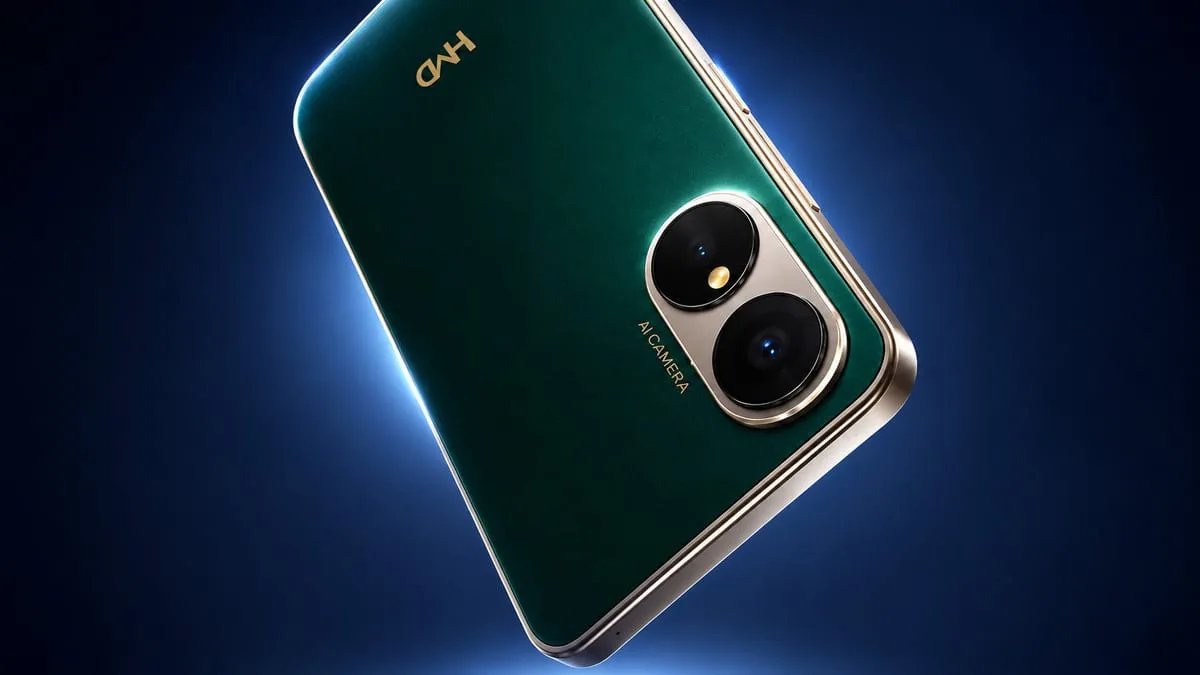
The HMD Rise features a 6.517-inch LCD with a waterdrop notch housing the front-facing camera. HMD has not disclosed the screen resolution, refresh rate, or maximum brightness. The phone has a dual-tone rear design with a vertically arranged camera module.
Buyers can choose from three distinct color variants, which include Emerald Gold, Indigo Silver, and Midnight Gold. Its physical dimensions, exact weight, and official durability ratings have not been disclosed by the manufacturer.
Camera Capabilities and Photography Specs
The HMD Rise features a 13MP primary rear camera accompanied by an LED flash. Launch coverage describes a dual rear-camera setup, though HMD has not provided specifications for a possible secondary sensor.
For selfies and video calls, the device relies on a 5MP front-facing camera. Detailed camera features and video recording specifications have not been disclosed by the company, meaning users can expect basic point-and-shoot functionality typical of this price bracket.
Battery Life, Charging, and In-Box Accessories
The smartphone packs a 5,000mAh battery, which should easily deliver a full day of use or more given the low-power processor and modest display specs. The device comes with a charger included in the box, a welcome addition as many manufacturers now omit power adapters.
Charging is handled through a USB Type-C port, but HMD has not specified the charging wattage. The Rise is available in a single configuration featuring 4GB of RAM and 64GB of storage for the price of about $108.