Lugano were playing fifth-tier football after filing for bankruptcy in 2003, now they are fighting for the Swiss league title fuelled by David Beckham.
Not many football fans outside of Switzerland have heard of Lugano before, given their lack of European pedigree and relative minnow status.
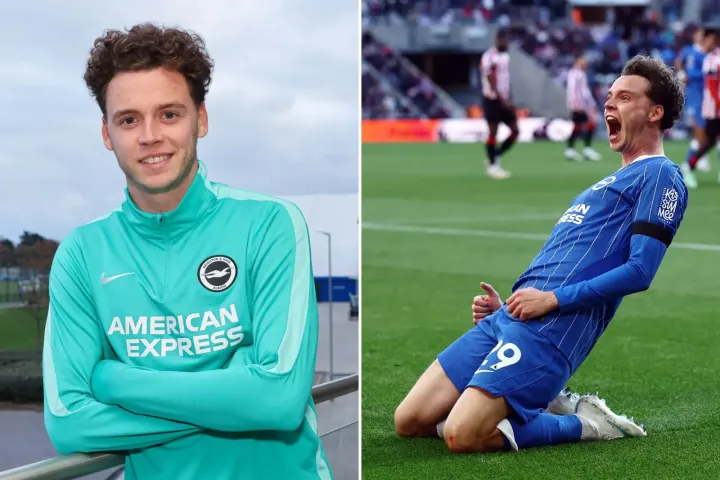
But the club's red-hot form both domestically and in Europe has put their name on the map this season with new signing Beckham David Castro Espinosa at the heart of it.
Who Is Beckham David Castro and Why Does His Name Matter?
The Colombian attacker is named after England and Manchester United legend David, 51, because his father was a fan of Real Madrid. He was born in September 2003 - just months after then Three Lions captain Beckham moved to Spain for £24.5million to join the Galacticos.
In 2022, Beckham Castro explained the origin of his name. He told the official CONMEBOL website during the 2022 Under-20 Copa Libertadores: "The truth is, my dad was a huge Real Madrid fan when Beckham played at that time, and to avoid having the same name, he named me Beckham David."
While Beckham was a midfielder - renowned for his world-class right foot - the 23-year-old is a left winger and has impressed with six goals and four assists in 15 matches in all competitions since his summer move from Millonarios.
How Lugano Recovered From Bankruptcy to the Swiss Super League
Lugano are six points clear at the top of the Swiss Super League, having lost just one game so far domestically. After last season's third-placed league finish secured European football, they are also sixth in the Conference League, winning their opening three games before Thursday's 2-0 loss to Jablonec.
Lugano were previously considered a top team in their homeland, winning the league three times between 1938 and 1949, but their success has dried up since.
Financial troubles plunged them into bankruptcy in 2003 and they were booted down to the fifth-tier of Swiss football - rebuilding using their Under-21 squad.
They finally returned to the top flight in 2015 after a 2004 merger with Malcantone Agno helped the club rise up to the second-tier.
Joe Mansueto's Takeover and the Multi-Club Model
But now they are finally back fighting for titles, this time bankrolled by an American billionaire. Joe Mansueto snapped up the club in 2021, pouncing to purchase Lugano as they faced another potential bankruptcy scare.
The Italian-American businessman also owns MLS club Chicago Fire and has created a multi-club model with his two sides.
Lugano have benefited hugely from that model, using Fire as a breeding ground for young talent and a shopping window for future stars. Since the 2021 takeover, seven players have swapped hands between the two clubs. Mansueto's cash has also helped sign some recognisable stars, such as former Leeds ace Ezgjan Alioski.
And it took less than 12 months for Lugano to return to glory after Mansueto took over, lifting the Swiss Cup in 2022 for the first time since 1993.
But he has stated from day one that his goal is to make Lugano champions of Switzerland once again. They are on track to do just that this season, hoping to lift the league title for the first time in 78 YEARS.
Manager Mattia Croci-Torti's Role in the Turnaround
They have been doing it under the guidance of manager Mattia Croci-Torti too, a former Lugano player. Croci-Torti took over in 2021 when Mansueto completed his purchase of the club, earning a promotion after previously acting as an assistant.
The retired right-back made almost 100 appearances for Lugano as a player during their spell in the second tier, but is now spearheading their return to success at the top.
Infrastructure Investment: The New AIL Arena
Mansueto's influence has gone beyond helping fund results too. The financial entrepreneur facilitated the construction of a new 8,000-seat stadium, the AIL Arena, which Lugano moved into this season.
Suddenly Lugano look like they belong on top of the tree, despite some corners of Swiss football fans being unhappy that they are challenging the established clubs like Young Boys and Basel through their new-found financial might - and Beckham.
For Swiss football, Lugano's rapid rise raises questions about competitive balance, the role of foreign investment and the sustainability of a model that relies heavily on a single owner's cash flow. The Swiss Football League (SFL) has no formal salary-cap or ownership-limit rules, meaning clubs like Lugano can legally outspend rivals as long as they meet UEFA licensing criteria.
Fans of traditional clubs worry that a billionaire-driven model could erode the community-owned ethos that has defined Swiss football for decades. Critics point to the example of English clubs where wealthy owners have both revived fortunes and created volatility when cash dries up.
From a sporting perspective, Lugano's success provides a case study for how strategic player recruitment, a clear tactical identity and modern facilities can combine to accelerate a club's competitive trajectory.
What This Means for Swiss and European Competition
Domestically, Lugano's challenge to Young Boys, Basel and Servette could reshape the title race for the next five years. Their current six-point cushion suggests they will be the team to beat, and their defensive record - conceding only three goals in the first ten league matches - underlines a balanced approach.
In Europe, Lugano's participation in the UEFA Conference League offers exposure to higher-level opposition and additional revenue streams. Their 2-0 loss to Jablonec, a Czech side, shows that while they have progressed, they still need experience to compete consistently against clubs from larger leagues.
Should Lugano qualify for the Europa League or even the Champions League in future seasons, the financial windfall could reinforce Mansueto's investment, creating a virtuous cycle of growth.
Practical Takeaways for Fans and Stakeholders
- Tickets for AIL Arena matches are now sold through the club's official website; early-bird pricing ends on 15 December.
- Local businesses report a 12 % increase in foot traffic on match days, indicating economic benefits for the Ticino region.
- Young players at Chicago Fire now have a clear pathway to European football via Lugano, expanding scouting networks.
- Swiss broadcasters have secured a new rights deal that includes more live Lugano fixtures, reflecting heightened viewer interest.
As the season progresses, observers will watch Lugano's transfer activity in the January window, the club's compliance with UEFA Financial Fair Play, and any potential pushback from rival supporters groups.