Federal Interior Minister Demands Immediate Action on Margalla Road Extension
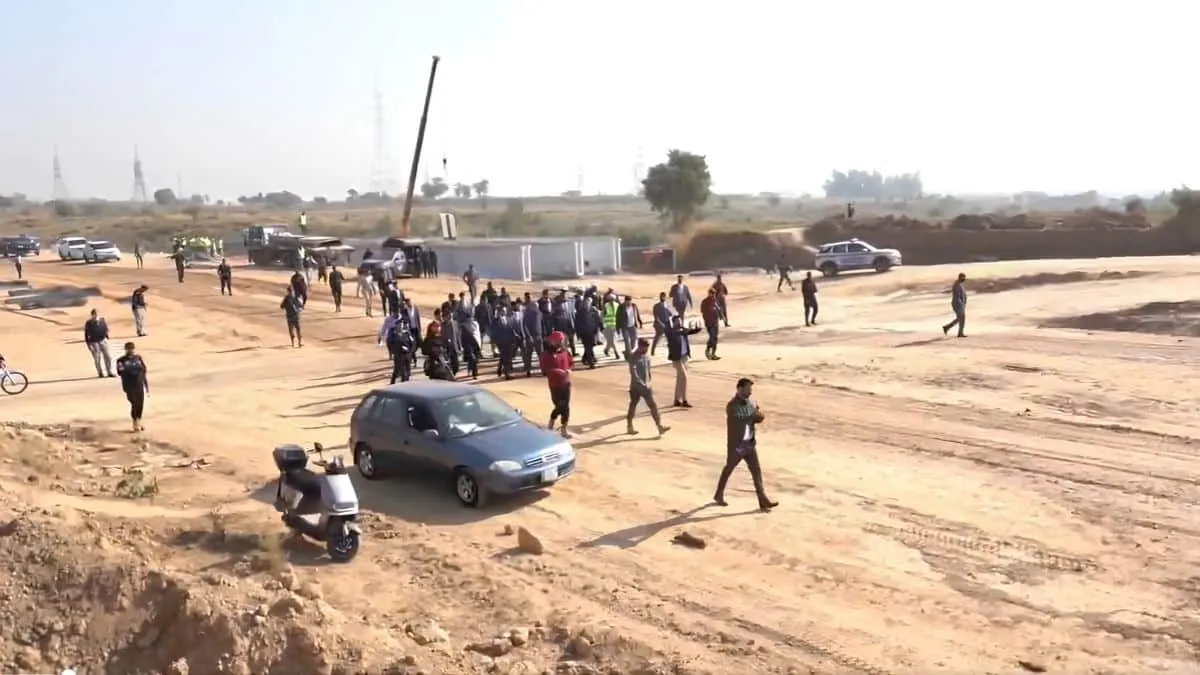
Federal Interior Minister Mohsin Naqvi expressed anger over slow construction during a visit to the Margalla Avenue extension and Sangjani Interchange project. He ordered crews on the spot to bring in more workers and machinery to speed up the delayed development.
The intervention by the federal minister highlights the critical nature of the infrastructure project, which aims to ease traffic congestion in the capital territory. Officials are now under immense pressure to meet strict deadlines while maintaining construction standards.
وفاقی وزیر داخلہ محسن نقوی کا مارگلہ روڈ کی موٹروے تک توسیع اور سنگجانی انٹرچینج پراجیکٹ کا دورہ
وفاقی وزیر داخلہ منصوبے پر کام کی سست روی دیکھ کر سخت برہم
وفاقی وزیرداخلہ نے موقع پر ہی افرادی قوت اور مشینری کی تعداد بڑھانے کے احکامات دیئے pic.twitter.com/O0wrQOySP3— Ministry of Interior GoP (@MOIofficialGoP) November 26, 2026
Capital Development Authority Response to Minister Orders
The Capital Development Authority said it has accelerated work on the extension from N-5 to M-1 and the Sangjani Interchange. Crews are working around the clock across several sections on CDA Chairman Sohail Ashraf's orders. The authority said the overall project is 43 percent complete.
The civic agency mobilized extra resources following the high-level reprimand. Workers are operating in multiple shifts to push the civil works forward and recover lost time on the schedule.
Current Construction Status of Margalla Avenue and Sangjani Interchange
Work continues on the roughly 2.7-kilometer main road extension within Islamabad Capital Territory and on a service road that will connect to it. All loops and ramps are in the final stages of construction.
Crews have completed the underpass structure, including its concrete walls and footing slabs. At Sangjani Interchange, they have finished piling and girder work. Steel reinforcement is underway, and the CDA expects excavation to finish soon.
At the N-5 bridge, crews have completed piling and excavation for the abutments on both sides. They have also finished four culverts and are building the fifth.
Strategic Importance for Travelers Entering Islamabad
Ashraf told project teams to meet the deadline without compromising construction quality. He said the extension would give travelers from other cities, especially those coming from Khyber Pakhtunkhwa, an important route into Islamabad.
He added that it would improve access to Islamabad International Airport for commuters traveling from within and outside the capital. The route serves as a vital artery for regional connectivity, reducing travel time significantly once fully operational.
Urban Growth and Infrastructure Development in the Capital
The expansion of Margalla Avenue has long been discussed as a solution to heavy traffic influxes from the north and west. Urban planners note that connecting major national highways directly to the capital's internal road network minimizes bottlenecks.
The Capital Development Authority manages numerous infrastructure upgrades across Islamabad to accommodate rising vehicle ownership. Coordination between federal ministries and municipal agencies remains essential for delivering large-scale public works on time.
Engineering Challenges and Technical Specifications
Constructing multi-level interchanges and bridge abutments requires precise engineering and uninterrupted material supplies. The integration of the N-5 bridge and service roads demands careful synchronization with existing traffic flows.
Engineers on site continue to monitor structural integrity tests for concrete walls, footing slabs, and girder placements. Adherence to safety standards ensures the infrastructure will withstand heavy commercial traffic for decades.