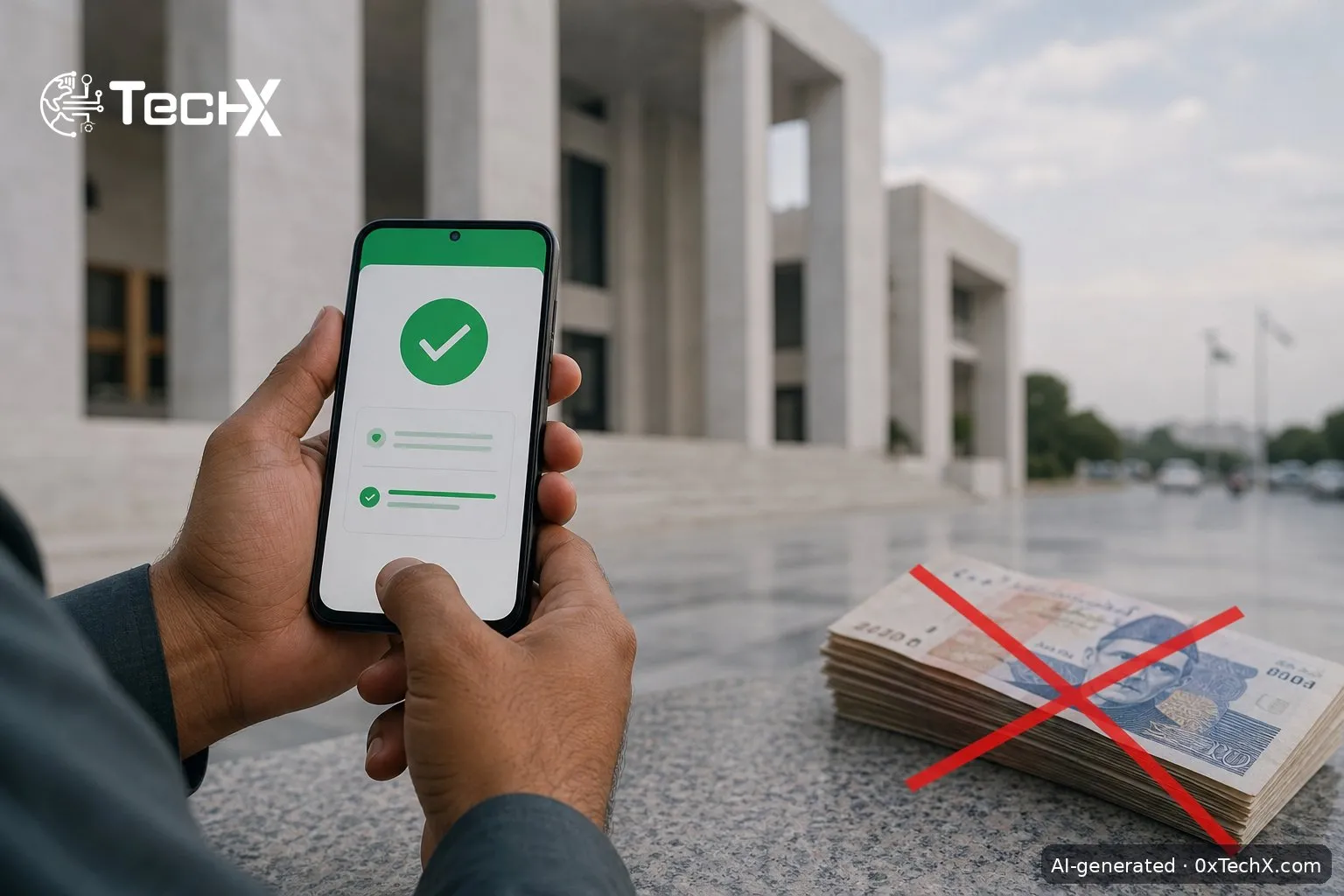
Islamabad Bans Cash Payments from December 1 in Major Digital Shift
Islamabad bans cash payments at all Metropolitan Corporation Islamabad offices starting December 1, 2026, under a formal notification signed on November 25 by MCI Chief Officer Captain (Retd) Awais Afzal. This is not a pilot scheme or a suggestion, it is a hard deadline. If you have ever paid a property tax bill, a trade licence fee, or a utility fine at an MCI counter, the way you do it is about to change completely, and you have very little time to prepare.
The move is part of the government's Cashless Islamabad initiative, which carries the backing of Prime Minister Shehbaz Sharif. The goal is to remove physical currency from all public-sector transactions in the capital and create a fully auditable, digital money trail. The district administration issued the directive first, and MCI has now put it into a binding office order.
Understanding the Scope of the MCI Cash Ban
The notification is specific, stating that no MCI office, directorate, wing or branch may accept cash after November 30. All MCI cash counters are to be physically closed by that date, and all manual receipt books are to be sealed and deposited with the relevant accounts office. This means there is no fallback option at the counter window for citizens arriving without digital means.
What makes this order unusually firm is the accountability clause. Any officer or employee who accepts cash after December 1 faces strict departmental action. The director and head of each office are also held personally responsible if a violation happens under their watch. Directors must submit an implementation report to the Chief Officer within seven days of the deadline.
The ban covers every category of money that the public pays to MCI. This includes property and other taxes, service fees and rents, fines and penalty charges, and trade and business licence fees. Critically, the ban does not stop at cash. Cheques, pay orders and demand drafts are also off the table from December 1, leaving electronic channels as the exclusive path forward.
Background and Policy Drivers of Cashless Islamabad
The transition toward electronic transactions in the federal capital did not happen overnight. Over the past several years, federal authorities have explored ways to curb fiscal leakage, improve revenue collection transparency, and reduce the heavy administrative costs associated with handling physical currency notes. Cash transactions in public departments often present reconciliation challenges and audit delays.
By shifting to automated clearing houses and mobile wallets, municipal bodies aim to modernise their accounting infrastructure. International financial institutions have frequently urged developing economies to expand digital public infrastructure to boost financial inclusion and tax compliance. This regional mandate aligns with broader federal strategies to integrate citizens into formal banking channels.
Prime Minister Shehbaz Sharif has championed administrative digitisation as a core pillar of public sector reform. The administration views municipal fee collection as a vital testing ground for wider reforms. If local government offices can successfully eliminate paper money, similar rules can cascade into larger provincial and federal departments across the country.
How Digital Payments Work for Municipal Dues
Citizens accustomed to visiting municipal windows with currency notes must now adapt to electronic banking channels. Mobile banking applications provided by commercial institutions allow users to pay utility bills, municipal taxes, and government challans directly from smartphones. The State Bank of Pakistan promotes instant payment systems like Raast to facilitate frictionless person-to-government transfers.
To use these systems, a resident requires an active bank account linked to a verified mobile number and a Computerised National Identity Card. Once logged into a banking application, users select the government payments or bill payment menu, enter the consumer reference number or challan ID, and authorise the transfer securely.
MCI offices have been instructed to display public awareness notices detailing these procedures. These notices guide residents through the electronic payment process to prevent confusion at service desks. Bank branches operating within municipal limits also anticipate increased foot traffic from citizens seeking assistance with mobile app setup.
Impact on Residents and Small Business Owners
The policy directly affects anyone interacting with municipal administration in the capital territory. Small business owners who regularly renew trade licences or settle commercial fines must establish reliable internet banking routines. Failing to secure a digital payment channel before the deadline risks delayed licence renewals and potential operational penalties for local enterprises.
A notable concern for vulnerable segments of the population is the technological barrier. Elderly residents or individuals without smartphones may find the sudden transition challenging. While family members or community networks can assist, public officials face the task of ensuring that citizens without digital literacy are not entirely cut off from municipal services.
Furthermore, informal intermediaries or unauthorized agents pose a risk. When cash windows close, individuals offering to pay bills on behalf of citizens in exchange for physical cash could emerge near municipal offices. Because MCI will not issue valid digital receipts for cash handed to third parties, residents must avoid relying on informal agents to protect themselves against fraud.
Broader Implications for Pakistan Financial Sector
This policy extension reaches beyond the Metropolitan Corporation. The Islamabad Capital Territory administration and the Capital Development Authority are also scheduled to cease cash acceptance on the same date. The government target extends further, with expectations that all merchants across the capital will adopt digital payment acceptance before the end of December 2026.
For the national fintech ecosystem, municipal mandates drive massive user acquisition. When public bodies mandate electronic payments, commercial banks, payment gateways, and mobile wallet operators experience a surge in active daily transactions. Financial institutions attending recent policy briefings have confirmed readiness to support the capital administration.
As regulatory bodies refine digital banking frameworks, institutional alignment becomes crucial. The push toward a cashless public sector strengthens the overall financial architecture, encouraging transparency and reducing reliance on physical currency printing and distribution logistics.
What to Watch For in the Coming Weeks
As the December 1 deadline approaches, observers will monitor how smoothly municipal offices execute the transition. Key indicators of success include the availability of technical support desks at MCI facilities, the volume of digital transactions processed during the first week, and the responsiveness of commercial banks to technical queries from newly onboarded users.
Residents should verify their mobile banking credentials immediately and complete trial transactions for any pending municipal dues. Checking account status ahead of time ensures that administrative deadlines are met without administrative friction.