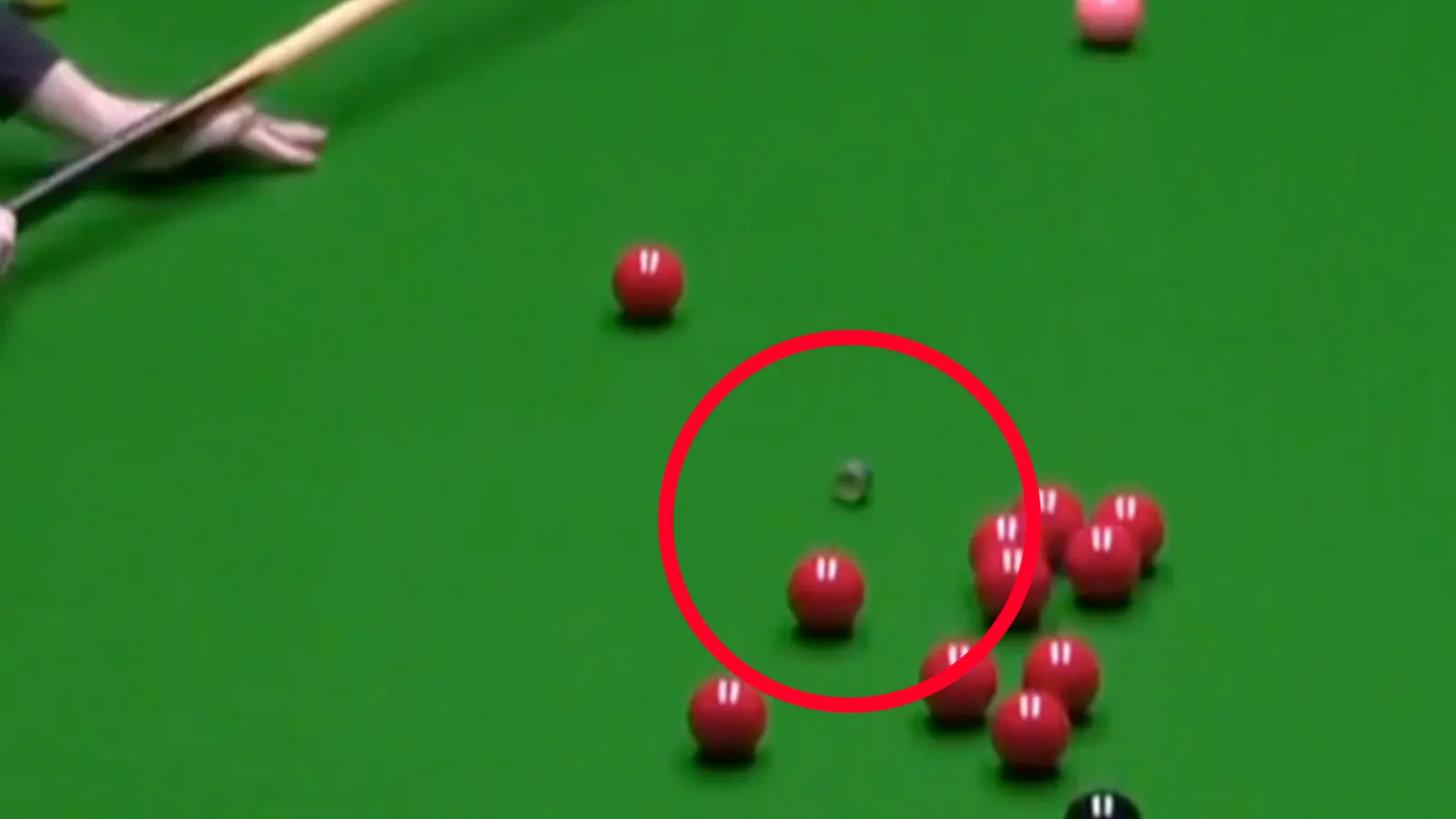
Welsh snooker professional Jak Jones caused a rare on-table incident when a piece of chalk fell from his pocket and rolled into the balls during his UK Championship qualifier at Leicester's Mattioli Arena, prompting a commentator to gasp, "Unbelievable."
The incident occurred in the final round of qualifying against England's Matthew Selt, a match that decides who advances to the main draw at York's Barbican. Jones, the 2024 World Championship finalist, was attempting a shot when the chalk slipped, creating an automatic foul under World Snooker Tour rules.
What Exactly Happened on the Baize?
During a routine safety shot, Jones reached into his pocket to retrieve a piece of chalk - a standard practice for maintaining cue tip contact. The chalk slipped, fell onto the cloth, and rolled directly into the pack of reds and coloured balls. Under the official rulebook, any foreign object that comes to rest on the playing surface constitutes a foul, and the offending player loses penalty points.
World Snooker Tour's official account posted the clip on social media with the caption, "Crazy fould alert! Jak Jones somehow fouls with his chalk!" The post quickly amassed thousands of views and comments, many echoing the commentator's astonishment.
Why Is a Chalk Foul So Unusual?
Chalk is used to prevent miscues by increasing friction between cue tip and cue ball. Players keep small sticks of chalk in a pocket or on a cue holder. The rules state that if any equipment, including chalk, is unintentionally left on the table, it is a foul worth at least seven points, and the opponent may request the balls be replaced to their positions before the foul.
While players occasionally drop a cue or a ball, a chalk piece rolling into the pack is extremely rare. The rarity stems from the small size of chalk and the fact that most players store it securely. When it does happen, it creates a memorable moment that highlights the precision required in professional snooker.
How the Incident Affected the Match
Jones was already under pressure, having missed automatic qualification for the UK Championship by finishing 17th in the world rankings. The foul added a seven-point penalty to his score and gave Selt a strategic advantage. The match continued after the referee cleared the chalk and reset the balls, but the momentum shift was evident.
Jones entered the final qualifying round after a dominant 6-0 victory over Joshua Thomond, showing he was in good form. The chalk incident, however, introduced an unexpected variable that could influence his chances of reaching the main event, where the champion's prize stands at £312,500.
Background: Jak Jones and the UK Championship
Jak Jones, a Welsh professional, rose to prominence after reaching the final of the 2024 World Snooker Championship, where he lost to the eventual champion. His performance earned him a reputation as a steady, high-scoring player. The UK Championship, one of snooker's Triple Crown events, offers significant ranking points and a substantial prize pool, making qualification fiercely competitive.
The UK Championship's qualifying structure involves multiple rounds held at venues like the Mattioli Arena in Leicester. Players ranked outside the top 16 must navigate these rounds to earn a spot in the main draw at the Barbican in York. Jones, sitting just outside the automatic qualification zone, needed a win over Selt to keep his campaign alive.
What the Rules Say About Equipment Fouls
World Snooker's rulebook defines an "equipment foul" as any instance where a player's cue, chalk, or other personal items touch the balls or the cloth unintentionally. The penalty is a minimum of seven points, and the offending player must forfeit their turn. The referee may also require the balls to be replaced to their positions before the foul, preserving the integrity of the frame.
In Jones's case, the chalk's accidental movement satisfied the definition of an equipment foul. The referee called the foul, awarded seven points to Selt, and cleared the chalk before play resumed.
Impact on Rankings and Future Tournaments
Every match in the UK Championship qualifier contributes to a player's world ranking, which determines seeding for future events and eligibility for automatic qualification. A loss to Selt would mean Jones remains 17th, continuing to rely on qualifiers for major tournaments.
Conversely, a win would have propelled him into the top-16 bracket, granting direct entry into the main draw and reducing the physical and mental strain of additional qualifying matches. The chalk foul, therefore, has implications beyond the immediate frame, it could affect his ranking trajectory for the remainder of the season.
What to Watch for Next
Snooker fans and analysts will be monitoring the remainder of Jones's qualifying match, the final result, and any subsequent commentary from the World Snooker Tour regarding the incident. The governing body typically reviews unusual fouls for potential rule clarifications, though no change is expected for a straightforward equipment foul.
Should Jones advance, he will join the main tournament in York, where the champion's prize of £312,500 awaits. If he falls short, he will need to regroup for upcoming ranking events such as the German Masters and the Shanghai Masters, where points can still lift him into the automatic qualification zone.
Beyond the immediate match, the incident serves as a reminder to players at all levels to secure their equipment. Coaches may use the clip as a teaching moment, emphasizing pocket management and the importance of minimizing distractions during high-pressure shots.
For spectators, the chalk foul adds a quirky footnote to an otherwise serious sport, illustrating that even elite professionals can be undone by the smallest of objects.