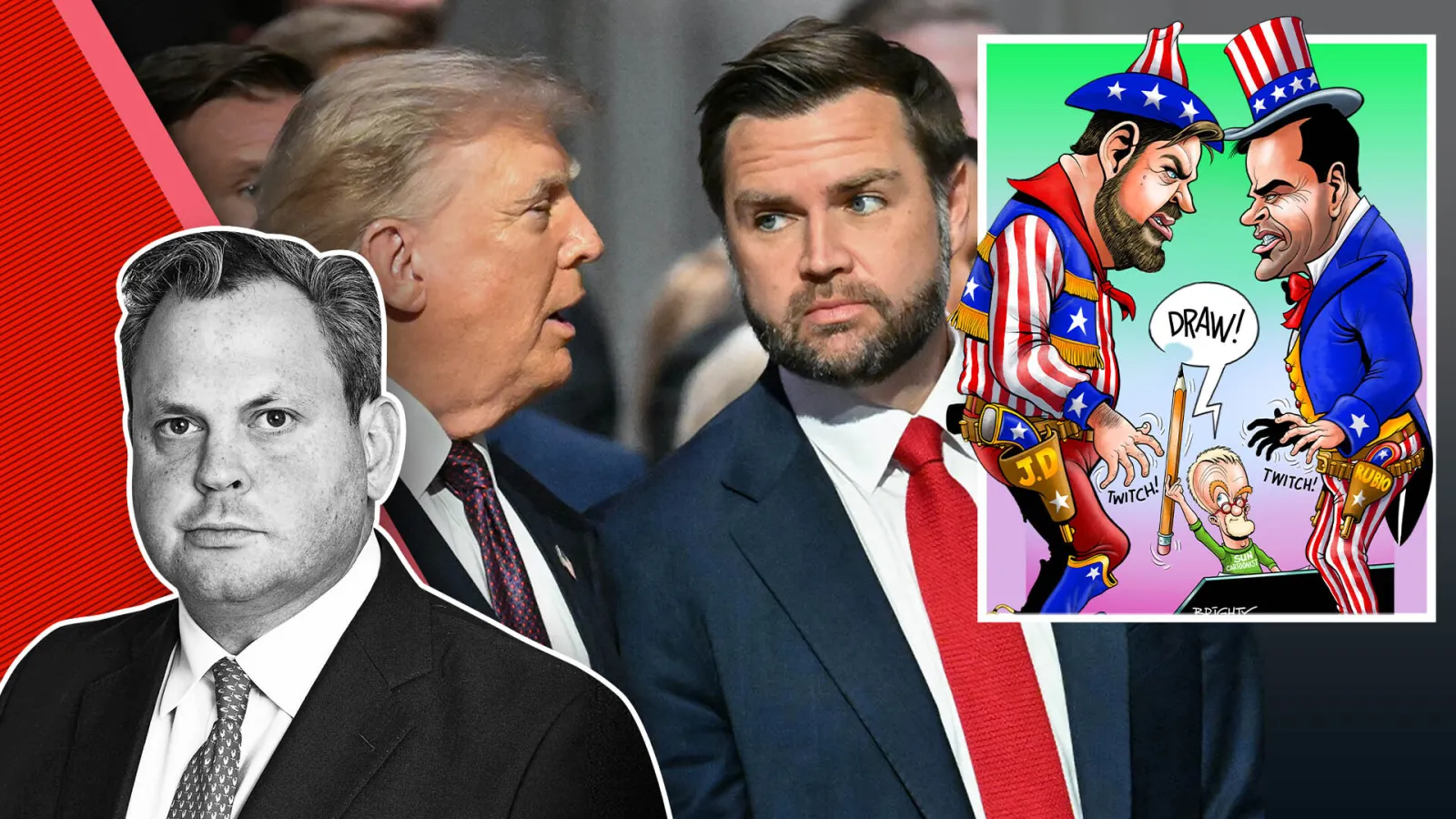
The race to succeed President Donald Trump has officially begun following a difficult midterm election cycle for the administration. Vice President JD Vance quickly broke cover after the nationwide ballot box setbacks to blame his own administration's war in Iran for the losses, positioning himself early as the front-runner for the 2028 presidential contest. His long statement, which was not cleared by the White House, signaled a calculated gamble that the loyalty of the MAGA base would outweigh the endorsement of Donald Trump himself.
Meanwhile, Secretary of State Marco Rubio adopted a different strategy by pledging loyalty and refusing to rule out a future bid for the top job. Donald Trump previously suggested that Vance and Rubio would form an unstoppable team or that party leaders should arrange a backroom agreement to choose his successor, but he later acknowledged that a primary contest will likely be necessary. This impending primary represents a profound ideological schism within the Republican Party that extends far beyond individual personalities and touches on the fundamental direction of American foreign policy and the Western alliance.
What Sparked the 2028 Republican Primary Race So Early?
The sudden eruption of the 2028 presidential campaign stems directly from the aftermath of the midterm elections, which delivered severe losses for the ruling administration. JD Vance moved immediately to distance himself from the electoral fallout, directing public anger toward the administration's military actions in the Middle East. By releasing an unapproved statement blaming the war in Iran for the nationwide thwacking, the Vice President sought to cement his standing with working-class populists who feel betrayed by foreign entanglements.
Donald Trump plucked Vance from relative obscurity, promoting the junior senator from Ohio to a heartbeat from the presidency and allowing him to spend two years cultivating the MAGA movement. However, Vance calculated that the political cost of the war in Iran had damaged the current leadership enough to make a break from the administration advantageous. Don Jr publicly stated he agreed with every word of Vance's statement, fueling longstanding rumors that the president's son envisions a spot on a future Vance presidential ticket. Democrats have vowed to use their newfound congressional powers to investigate family affairs, casting a shadow over potential candidates as public scrutiny intensifies.
How Marco Rubio Differs on Foreign Policy and Global Leadership
While JD Vance leaned into hardline isolationism, Secretary of State Marco Rubio took a measured approach to DC rumors before opening the door to a presidential run. Rubio previously stated he would never run against his friend JD, but he recently told the New York Times that he will not talk about 2028 any more, keeping his options open while maintaining a disciplined public posture. The stark contrast between the two men lies in their vision of America's role in the world.
Rubio continues to view the United States as an indispensable global leader in a dangerous geopolitical environment. During a speech in Athens, standing in the cradle of democracy, he warned that the world is at an inflection point and urged the West to rediscover its ambition, courage, and pride through active leadership. This worldview stands in direct opposition to the isolationist sentiment growing among populist factions, setting up a fierce debate over national security and international alliances.
The Ideological Schism Over Israel and the Horseshoe Theory
The war in Iran has sent long-simmering tensions within the conservative movement into a full-scale confrontation regarding foreign policy and support for Israel. For months, podcasters and online influencers have traded accusations about foreign influence and Middle Eastern policy, reflecting deep divisions on the political right. Fringe figures have increasingly blamed Israel for domestic economic woes, using rhetoric that mirrors extreme elements on the political left.
This dynamic illustrates the horseshoe theory of politics, where the far-left and far-right extremes wrap around to meet in their opposition to traditional alliances. Traditional conservatives have fought a losing battle to distance the Republican Party from these fringe voices, but the conflict in Iran has brought the row to a boiling point. JD Vance signaled a decisive shift in his alignment by including five specific words in his mission statement calling to change our relationship to Israel. This declaration puts him on a direct collision course with Marco Rubio, who recently stated in Jerusalem that if there were more countries like Israel, the world would be a safer and better place.
The Broader Impact on the Western Alliance and Future Elections
The impending Republican primary is shaping up to be a battle for the heart and soul of not just the party, but the entire Western alliance. If Rubio truly believes what he says about stemming Western decline, political analysts note it will be difficult for him to sit out the upcoming contest. The debate over whether the United States should retreat into isolationism or maintain its global security commitments will define the next era of conservative politics.
At the same time, the opposition field is shifting as the Democratic Party assesses its own potential contenders for the White House. California Governor Gavin Newsom faces growing political liabilities due to persistent governance challenges in his home state, while Georgia Senator Jon Ossoff has emerged as a formidable alternative after winning re-election in a crucial swing state with a significant margin. At just 39 years old, Ossoff could become the youngest president since Theodore Roosevelt in 1901, though JD Vance is only a couple of years older. Meanwhile, progressive figures like Alexandria Ocasio-Cortez are declining to rule out presidential aspirations, ensuring that both major parties will face intense internal debates as the American political landscape reorganizes.