Why Karachi Needs the K-IV Water Supply Project
Karachi stands as the economic heartbeat and most populous urban center of Pakistan, facing an intense and persistent shortage of clean drinking water for decades. The metropolitan area relies heavily on supplies from the Indus River through canals and a complex network of pumping stations that struggle to keep pace with rapid population growth and urban sprawl. Municipal authorities and water utility operators face a daily challenge in meeting the immense demand of residential, commercial, and industrial zones across the sprawling city. Without a major expansion in intake and delivery infrastructure, the supply deficit continues to widen, forcing many households to depend on costly tanker deliveries or unreliable local groundwater sources that often carry health risks. The greater Karachi bulk water supply scheme, commonly known as K-IV, was designed specifically to bridge this severe supply gap and secure a stable, long-term source of potable water for millions of residents.
Parliamentary Scrutiny Over Repeated Setbacks
Lawmakers voiced sharp criticism and sought strict accountability regarding the continuous delays plaguing the vital infrastructure initiative during a recent parliamentary session. A sub-committee of the National Assembly Standing Committee on Water Resources held a detailed review meeting to examine the implementation status, design complications, planning hurdles, and reasons for the slow progress. Muhammad Idrees chaired the committee session, where members pressed officials for answers on why the construction schedule had slipped so dramatically over the years. Parliamentarians expressed deep concern over the prolonged execution timeline, emphasizing that the venture remains critical to meeting the municipal needs of the city. They demanded formal reports on the actions taken to fix responsibility for the setbacks, pointing out that both federal and provincial administrations had attached high importance to the initiative. The meeting drew participation from several key political figures and high-ranking civil servants, including MNAs Waseem Hussain, Javed Ali Shah Jilani, Mian Khan Bugti, and Amin-ul-Haque, alongside Additional Secretary Water Resources Mehar Ali Shah, K-IV Adviser Engineer Amir Mughal, and Project Director Gul Mir Khan.
A Detailed Timeline of Two Decades of Delays
The journey of the K-IV undertaking spans over twenty years of shifting responsibilities, design revisions, and missed deadlines. WAPDA officials briefed the parliamentary sub-committee that the Sindh government originally conceived the plan back in 2003 to address the rising demand for potable water and alleviate the acute supply deficit. Civil works finally began in July 2016 after a contract was awarded to the Frontier Works Organization, raising hopes for a swift resolution to the water crisis. However, the original completion deadline of December 2018 was quickly missed after serious design-related problems emerged during the early construction phases. A third-party investigation commissioned by the provincial government subsequently identified significant shortcomings in the original engineering designs, necessitating a complete overhaul of the technical parameters. The federal government stepped in to take over the undertaking in 2020 under the broader Karachi Transformation Plan, shifting administrative and technical oversight to the Water and Power Development Authority in April 2021. Field mobilization began in September 2022 under the new federal mandate, with an initial schedule pointing to an October 2023 completion date. That target also proved unachievable, leading to the latest official revision presented to the lawmakers, which places the expected completion date in June 2027. Officials confirmed that the revised design and planning documents have now been formally submitted to the Planning Commission and the federal government for final review and approval.
Understanding the 650 Million Gallons Per Day Supply Plan
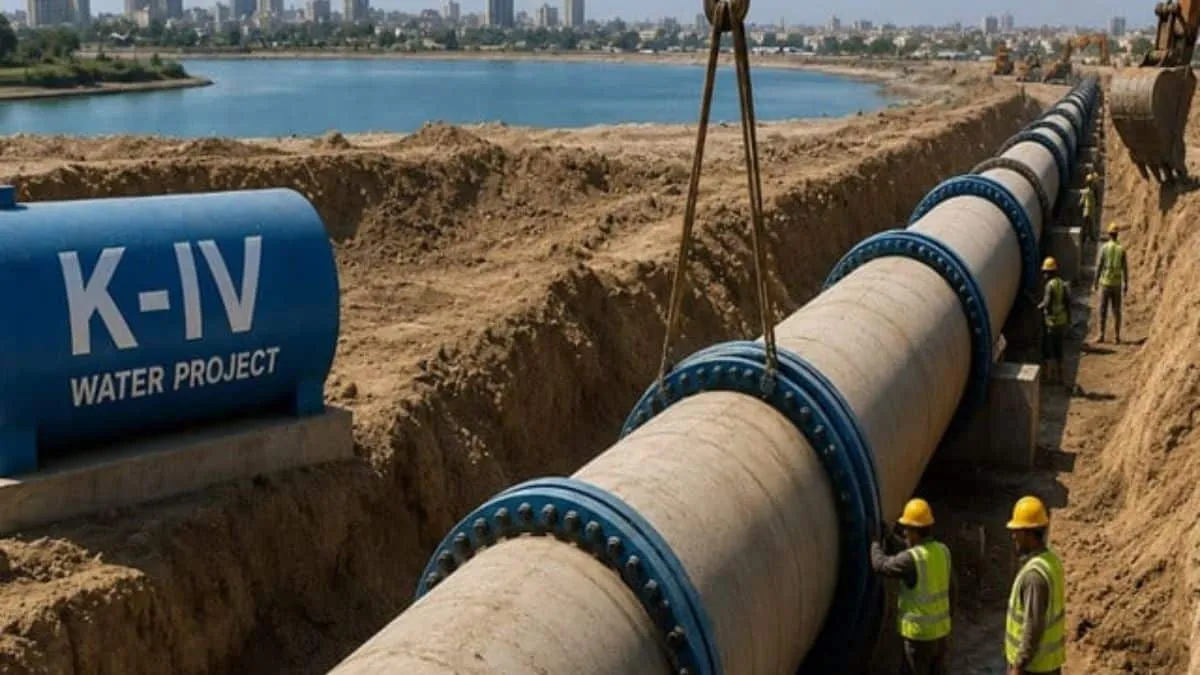
The engineering blueprint of the scheme centers on sourcing a massive volume of water from Keenjhar Lake in Thatta and transporting it across difficult terrain to the urban distribution network. Originally planned to deliver a total of 650 million gallons per day to Karachi, the construction strategy was divided into three distinct phases. Phase-I is engineered to supply 260 MGD, Phase-II will add another 260 MGD, and Phase-III is designed to provide the remaining 130 MGD. The first phase, which falls under the direct execution of WAPDA and the Ministry of Water Resources, incorporates three primary termination points situated at Pipri, North East Karachi, and Manghopir. The physical infrastructure required for this massive undertaking includes a dedicated intake structure at Keenjhar Lake, a long gravity channel, specialized pumping facilities, a high-pressure pipeline network, three major reservoirs, and advanced filtration plants to ensure water safety. Division of responsibilities requires the Sindh government to handle the local distribution and augmentation network, arrange necessary power supplies, acquire the required land, and clear the entire right-of-way for pipeline installation.
Closing the Supply Gap for Karachi Residents
Current assessments presented by WAPDA officials indicate that the daily water requirement for Karachi stands at approximately 1,200 MGD, illustrating the immense scale of the deficit that the new infrastructure aims to resolve. The current supply falls far short of this figure, leaving neighborhoods across the metropolis vulnerable to erratic supply schedules and water rationing. Once the first phase of the scheme reaches completion, administrative control will transfer to the Karachi Water and Sewerage Corporation, which will oversee ongoing operation and maintenance duties. For the millions of citizens living in the city, the successful realization of this infrastructure means a reliable flow of clean water directly to municipal taps, reducing reliance on informal and expensive water vendors. Local businesses, industrial units, and residential communities all stand to benefit from a secure water source that can support economic activity and improve public health standards across the urban landscape.