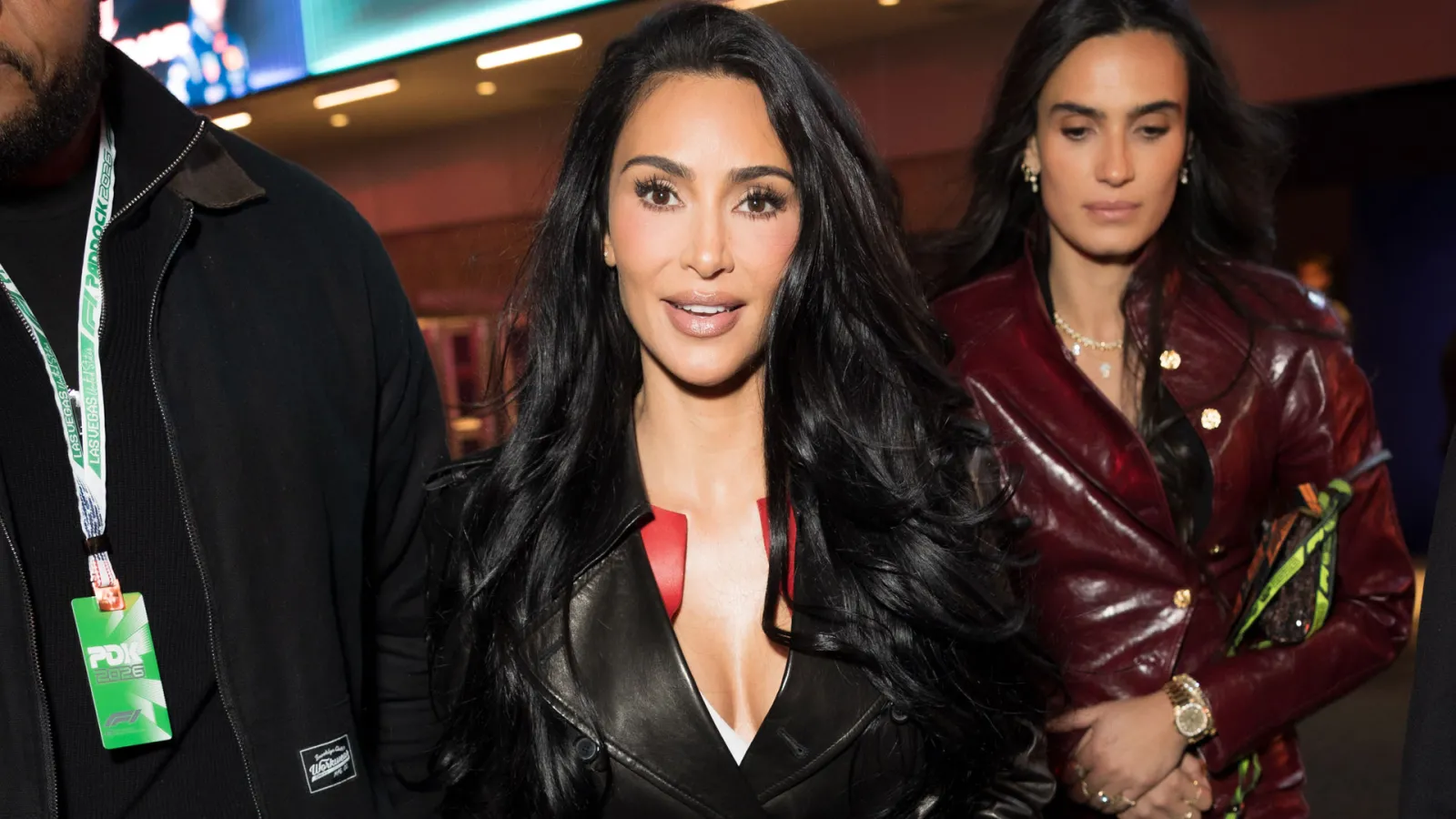
Kim Kardashian Stuns in Leather Outfit at Las Vegas Grand Prix Qualifying
Reality television star Kim Kardashian drew attention at the track by wearing a full-length, black leather trench coat and knee-high red boots. The 46-year-old added to her striking appearance with thigh high boots in Ferrari red color that laced all the way to the top. She completed her garage ensemble by wearing sunglasses inside the team area. Her presence in the paddock marked her third appearance at a race this season, following earlier visits to Monaco in June and Singapore in October.
During her time inside the Ferrari garage, Kardashian was seen alongside Star Wars creator George Lucas and American business woman Mellody Hobson. Her attendance drew significant media interest, continuing a trend of high-profile celebrity sightings at Formula One events across the globe. However, her presence did not bring immediate sporting fortune to the team or its drivers during the competitive sessions on the track. Both main drivers faced unexpected difficulties during the knockout phases of the weekend schedule.
What Happened During the Las Vegas Grand Prix Qualifying Nightmare
Lewis Hamilton and his teammate Charles Leclerc suffered a shock early exit from qualifying during the event. Both drivers were eliminated during the second knockout phase, known as Q2, leaving the team scrambling for answers. Leclerc took 11th place in the classification, with Hamilton slotting in directly a position behind him. They will each move a single position forward on the starting grid due to a penalty handed to McLaren driver Oscar Piastri.
Hamilton lacked competitive pace throughout the session, a performance drop he attributed to damage sustained by his car in the early stages. He explained that his car hit something on the floor, which damaged the underside and caused a loss of downforce amounting to a few tenths of a lap time. The driver expressed extreme disappointment with the outcome after working hard to prepare for the weekend. Despite knowing the car would struggle with the long straight sections of the circuit, he had remained optimistic before the competitive running began.
Driver Reactions to the Early Elimination
The elimination generated intense frustration within the team garage as drivers assessed what went wrong during the session. Leclerc appeared to have sufficient speed to reach the final top-ten shootout phase, known as Q3, but made a critical mistake on his final flying lap. The Monegasque driver directed his anger toward the team strategy regarding the timing of his runs, stating that execution was poor and that inadequate time was left to attempt another lap after an error occurred. He noted that he was very angry and preferred not to speak too much until the team reviewed the data thoroughly.
Leclerc remarked, Yes, for sure Q3 was on the cards, but we didn't do a good job. I did a mistake the only lap I was given, basically. And at the same time, the execution has been very poor. I don't know. We'll review. I'm very angry now, so I would rather not speak too much. But I think there were plenty of things we could have done much better. Hamilton similarly described his emotional state following the setback, noting his devastation at the result.
The Context of Celebrity Presence in Formula One
The presence of high-profile figures like Kim Kardashian reflects the growing convergence of entertainment, fashion, and motorsport. Formula One has seen a massive surge in popularity, particularly in the United States, drawing musicians, actors, and business icons to the starting grid. Events held in prominent American cities like Las Vegas blend high-end entertainment with elite sporting competition, turning the paddock into a red carpet. Celebrity appearances have become a staple of the modern Grand Prix weekend, generating widespread media coverage outside traditional sports reporting.
This integration of lifestyle culture and racing appeals to broader demographics, shifting how audiences consume motorsport content. Star-studded paddocks are now common at multiple rounds of the global calendar, with media outlets tracking both the on-track action and off-track fashion choices. The involvement of personalities from film, television, and business underscores the commercial expansion of the sport into new cultural spheres. Despite the glamour, drivers and teams remain focused on performance, meaning that high-profile guests witness both the triumphs and the dramatic failures of race weekends.
Understanding the Technical Challenges of the Las Vegas Circuit
The Las Vegas street circuit presents unique engineering challenges for Formula One teams, particularly regarding straight-line speed and tire temperature management. Long acceleration zones require setups that minimize aerodynamic drag while maintaining enough downforce for braking zones and slow corners. Damage to the floor of a modern ground-effect race car, such as the incident reported by Hamilton, severely disrupts the aerodynamic tunnels underneath the chassis. This loss of underfloor suction leads to an immediate and noticeable drop in lap time potential, making recovery during a short qualifying session nearly impossible.
Furthermore, execution and session management play a crucial role when track evolution is rapid during night races on temporary asphalt. Teams must carefully time their garage exits to avoid traffic, find clean air, and ensure tires are in the optimal temperature window. When strategic errors occur, such as failing to leave a margin for error or a second fast lap, drivers are left exposed to unexpected eliminations. The complex nature of these machines means that even minor disruptions can cascade into significant competitive disadvantages on the timing sheets.