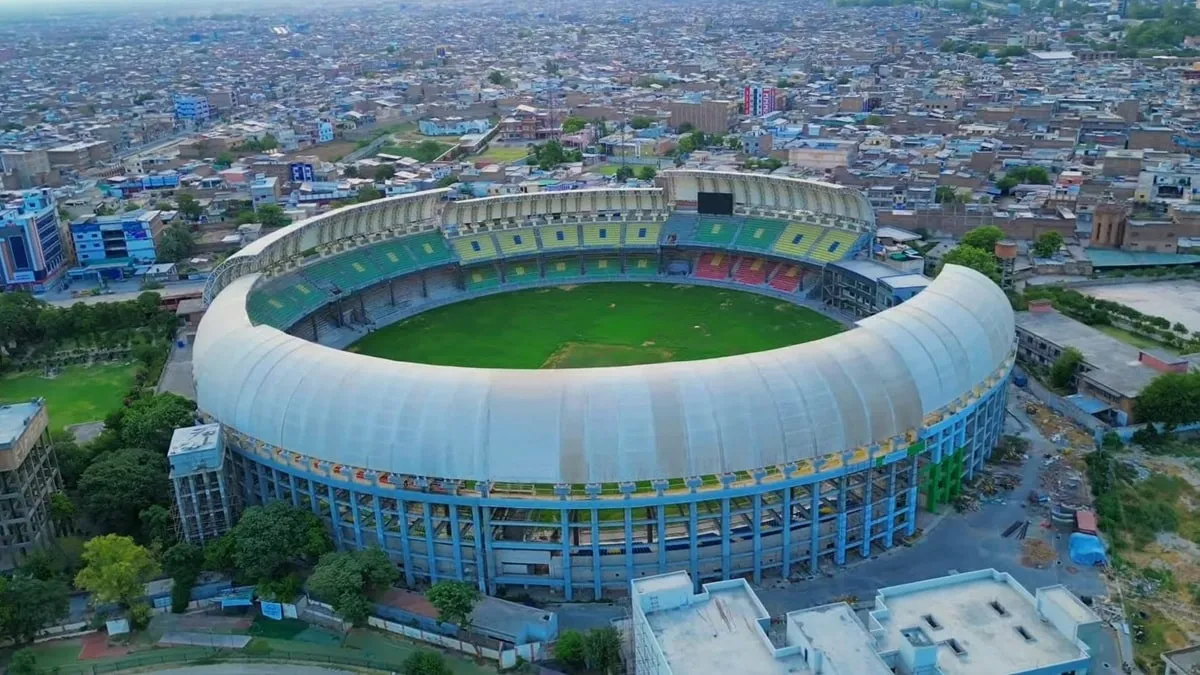
Khyber Pakhtunkhwa Government Considers Renaming Imran Khan Cricket Stadium
The existing Khyber Pakhtunkhwa government has reportedly decided to rename Imran Khan Cricket Stadium in Peshawar, with its former name, Arbab Niaz Cricket Stadium, under consideration. This potential change marks a significant shift in how public sports infrastructure is named in the region, drawing attention from sports fans and political observers alike.
The stadium was previously known as Arbab Niaz Cricket Stadium before it was renamed Imran Khan Cricket Stadium during the Pakistan Tehreek-e-Insaf government tenure. The name change was also approved by the provincial cabinet at the time.
According to reports, authorities have instructed the Sports Department to proceed with the renaming process following the imposition of governor rule in KP. The venue is expected to be renamed before the start of the Pakistan Super League.
History of Arbab Niaz Cricket Stadium in Peshawar
Arbab Niaz Cricket Stadium has long served as a central hub for sporting events in Peshawar and the wider Khyber Pakhtunkhwa province. Named originally in honor of a notable local figure, the ground has hosted numerous domestic matches and international fixtures over the decades.
Facilities like this one play an essential role in nurturing local athletic talent and providing spaces for community engagement. Upgrades and renovations have taken place at the grounds over the years to meet modern international standards for cricket matches.
Public sports venues often carry names that reflect the political climate or influential figures of the era in which decisions are made. The earlier transition to honor a prominent sports and political figure occurred when specific leadership held power in the provincial administration.
The Legacy of Imran Khan in Cricket and Politics
Imran Khan is a former Pakistan cricket captain who led the national team to its historic 1992 Cricket World Cup victory before entering politics. His leadership during the tournament in Australia is remembered as a defining moment for the country sporting history.
After retiring from international sport, he transitioned into public life and founded the Pakistan Tehreek-e-Insaf political party. His subsequent political career culminated in serving as the prime minister of the country, leaving a polarizing yet profound impact on national affairs.
Naming public assets after living or politically active figures often generates debate regarding the appropriateness of tying infrastructure to specific political legacies. Authorities frequently review these designations as political control shifts across provincial and federal levels.
Understanding Governor Rule and Administrative Decisions
The instructions given to the Sports Department to proceed with the renaming process followed the imposition of governor rule in KP. This administrative mechanism allows the federal government to assume direct control of a province during specific constitutional or political crises.
During periods of governor rule, routine governance and specific policy directives are handled by appointed administrators rather than elected provincial ministers. Civil servants and departmental heads receive direct instructions to execute administrative adjustments.
This institutional setup explains how decisions regarding public properties and official names can change rapidly without going through the usual legislative debates in a provincial assembly.
Impact on the Pakistan Super League and Local Fans
The stadium is expected to be renamed before the start of the Pakistan Super League. The league attracts massive television audiences and packed stadiums across the country, making venue branding a matter of high public visibility.
Cricket enthusiasts in Peshawar look forward to hosting matches and seeing international players compete at the venue. Clear signage and official designations matter for broadcasters, ticket holders, and visiting teams as preparations for the tournament get underway.
Local businesses and tourism also benefit when major cricket events come to the city, bringing economic activity and media attention to the region. The readiness of the infrastructure remains a priority for tournament organizers working alongside provincial sports authorities.