How Bank Loan Documents Exposed Nvidia Hardware in China
Nvidia advanced Blackwell artificial intelligence chips have been identified at a Chinese data center through bank loan documents, raising fresh questions about how some of the company most powerful hardware reached China despite United States export restrictions. According to an investigation published on November 27, a company named Shanghai Shuoyao pledged an Nvidia GB300 NVL72 server rack as collateral for a 96 million yuan, which equals $14 million, loan from Shanghai Innovation Bank. The equipment was identified using a serial number contained in documents submitted to Chinese regulators earlier in the month.
The discovery brings renewed attention to the effectiveness of international trade controls designed to keep advanced computing systems out of restricted jurisdictions. While financial disclosures provide a clear paper trail of the physical assets held by companies, they rarely explain the complex supply chains and intermediaries that facilitate the movement of high-value electronics across international borders. The reported 96 million yuan represents the loan amount, rather than a verified sale price or an independent valuation of the Nvidia equipment itself.
Details of the Pledged Nvidia GB300 NVL72 System
The GB300 NVL72 system was listed among the assets used to secure financing for Shanghai Shuoyao in the regulatory filings. Investigators traced the serial number through a publicly accessible warranty database and identified the hardware as a server rack manufactured by Taiwan based Gigabyte Technology. This system was associated with the Yangtze River Delta Project, which is a large data center development located in Shanghai.
Investigators contacted Gigabyte to establish who originally purchased the rack and when the transaction took place. However, the manufacturer declined to disclose those details, citing company policy. Gigabyte stated that its transactions comply with all applicable regulations. The hardware remains linked to a major regional infrastructure development, but the exact path it took to arrive at the facility continues to be a subject of intense scrutiny.
Specifications of the Advanced AI Computing Hardware
The GB300 NVL72 stands as one of Nvidia most advanced computing systems designed specifically for artificial intelligence training and inference workloads. According to official specifications provided by Nvidia, a single rack contains 72 Blackwell Ultra graphics processing units alongside 36 Grace central processing units. The liquid-cooled system stands approximately two meters tall and can weigh more than 1,500 kilograms.
Nvidia Chief Executive Officer Jensen Huang previously argued that equipment of this physical size and weight would prove exceptionally difficult to smuggle past customs and trade checkpoints. Despite those logistical hurdles, the recent findings establish that such a massive system was successfully identified at a Chinese data center through official financial records. The records confirm the physical presence of the hardware, though they do not establish how the heavy rack crossed international borders.
Second Chinese Company Discloses Nvidia Servers
Beyond the initial discovery, investigators identified another Chinese firm, Shanghai Kezhan, which disclosed an Nvidia GB200 server at the exact same facility. This second company listed the equipment in documents relating to a separate 90 million yuan loan obtained in late 2025. The lender in this transaction was a finance-leasing company owned directly by a local Shanghai government agency.
Furthermore, documents from Shanghai Kezhan reportedly identified 32 separate servers containing Nvidia H200 processors. Unlike the GB300 system, those servers were listed without serial numbers, making their specific origins significantly more difficult to trace. The presence of multiple advanced systems points toward a broader pattern of high-end hardware deployment within the facility.
Understanding United States Export Restrictions on AI Chips
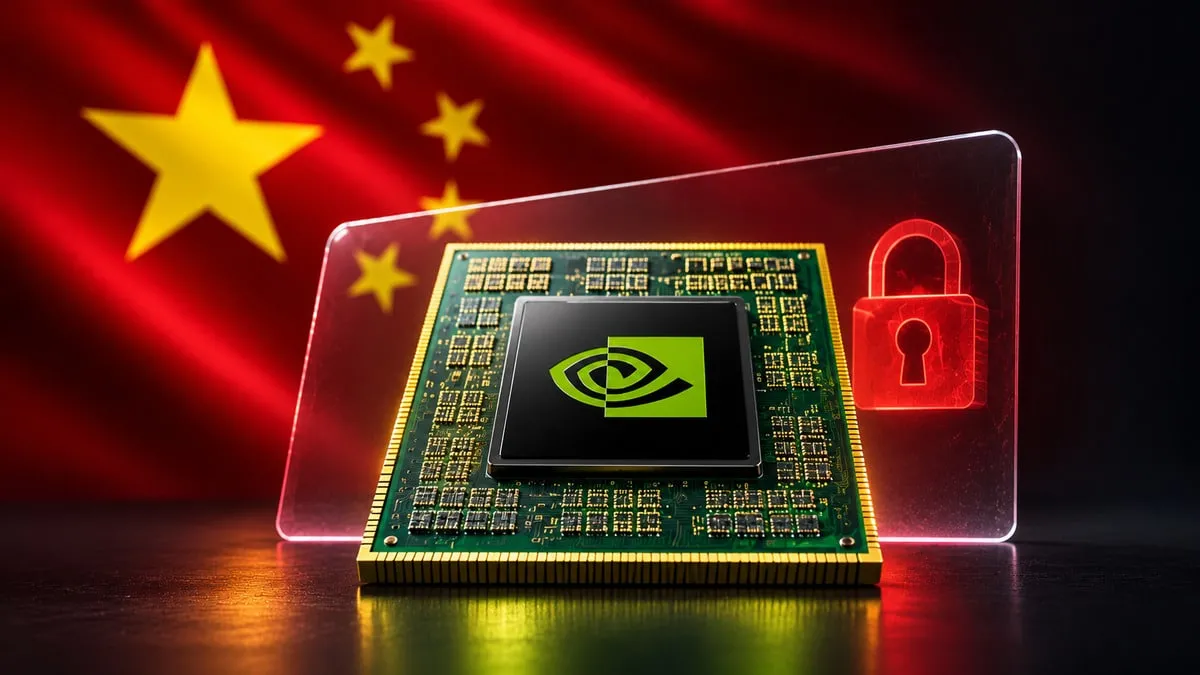
Nvidia Blackwell processors require explicit United States authorization before they can be exported to China or other restricted destinations. These export restrictions are intended to limit foreign access to advanced computing hardware that could support sensitive artificial intelligence applications and high-performance computing tasks. The regulatory framework aims to maintain technological advantages in critical sectors.
The data center housing these systems maintains business connections to Singapore-based Megaspeed, an Nvidia customer currently under investigation over suspected chip diversion. Shanghai Shuoyao has acknowledged providing services to Megaspeed but described the relationship as ordinary commercial cooperation. Investigators reported no direct evidence proving that Megaspeed itself transferred the identified Blackwell equipment to the Chinese facility.
What Remains Unknown About the Supply Chain
Nvidia did not respond to requests for comment regarding the appearance of its hardware in the Chinese regulatory filings. The original buyers, exact shipment routes, and official export authorization status of the identified hardware remain entirely unknown. Authorities continue to examine how the equipment bypassed regulatory hurdles.
As regulatory bodies review the financial disclosures, industry observers watch for potential enforcement actions or tightening of verification rules. The case highlights the challenges of monitoring high-value technology items after they leave the manufacturing floor. Financial transparency laws in regional markets may continue to uncover restricted hardware that remains hidden from traditional trade monitors.