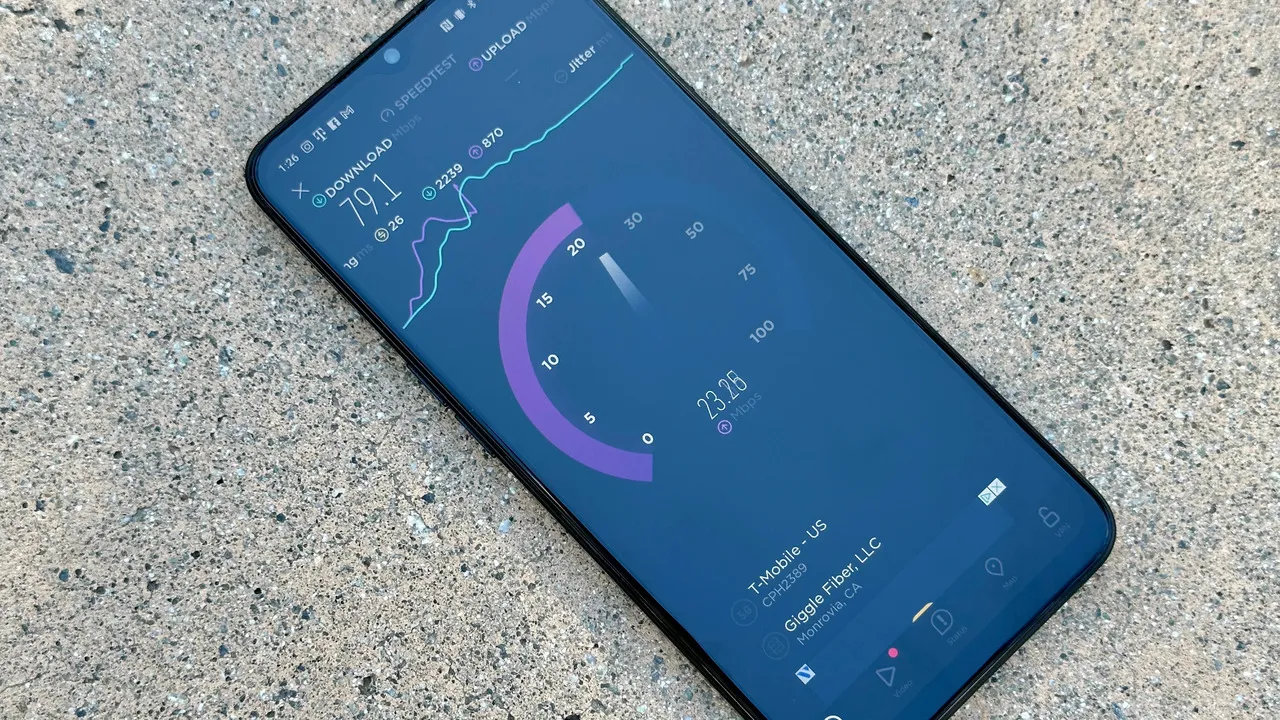
Federal Minister for IT and Telecommunication Shaza Fatima Khawaja announced on November 30, 2026 that Pakistan's internet capacity has been restored following a disruption in the South East Asia–Middle East–Western Europe 5 (SEA-ME-WE 5) submarine cable.
Internet users across the country should now begin to see improvements in browsing speeds, downloads, streaming, and other online services that were affected by the recent slowdown.
What Caused the Internet Slowdown?
On November 18, 2026 the Pakistan Telecommunication Authority (PTA) confirmed that a fault had developed in the SMW5 submarine cable approximately 11 kilometres off Pakistan's coast. The fault reduced the cable's ability to carry traffic, resulting in slower internet speeds and intermittent connectivity for both residential and business users.
Transworld Associates (TWA), the Pakistani operator of the cable, immediately began coordinating with the international SMW5 consortium to locate the fault and restore service. While repairs were under way, TWA redirected internet traffic through alternative international cables, including SEA-ME-WE 3, SEA-ME-WE 4 and the newly commissioned Pakistan-Europe Fiber (PEF) system, in order to minimise disruption.
Global internet monitoring organisation NetBlocks confirmed a measurable decline in connectivity across Pakistan, and Cloudflare Radar reported a drop of up to 36 percent in HTTP traffic volume following the cable disruption. The combined effect was a noticeable lag in loading times for popular websites, reduced quality for video streams, and longer download times for large files.
How the Repair Process Was Planned
Transworld Associates had previously informed its customers that repairs to the affected segment of the SEA-ME-WE 5 cable were tentatively scheduled for completion by December 6, 2026. The repair plan involved deploying a specialist vessel equipped with splice-repair equipment to the fault location, followed by testing to verify signal integrity.
In parallel, the company reported that 80 percent of the traffic previously carried by the damaged cable had already been shifted to alternative submarine cable systems. However, the PTA warned that internet speeds could remain slower during peak usage hours because the remaining cables were operating closer to capacity.
The IT minister's latest announcement indicates that the country's internet capacity has now been restored ahead of the previously announced cable repair deadline. The statement did not specify whether the damaged segment of SEA-ME-WE 5 has been fully repaired or whether additional capacity has simply been arranged through alternative routes. Both scenarios are technically possible; a full splice repair would restore the original bandwidth, while rerouting through other cables can provide comparable capacity if sufficient bandwidth is available.
Second SMW5 Disruption This Year
This incident marks the second reported fault in the SEA-ME-WE 5 submarine cable in 2026. A similar disruption occurred in July 2026, also causing a slowdown in internet speeds across Pakistan before services were restored. Repeated faults on the same cable raise questions about the cable's ageing infrastructure and the environmental risks faced by under-sea assets, such as seismic activity and fishing-gear interference.
Pakistan relies on seven international submarine cable systems for global connectivity: SEA-ME-WE 5, SEA-ME-WE 3, SEA-ME-WE 4, the Pakistan-Europe Fiber (PEF), the South Asia Submarine Cable (SAS-C), the Bay of Bengal Cable (BBC) and the East Africa-Middle East (EAME) system. Damage to any one of these cables can increase pressure on the remaining networks, especially during peak usage hours when residential streaming, e-commerce and remote-work traffic surge.
Why Submarine Cables Matter for Pakistan
Submarine cables carry more than 95 percent of the world's inter-continental data traffic. For Pakistan, these cables are the backbone of the digital economy, enabling everything from online banking and education to cloud services and international trade. The country's broadband penetration stood at roughly 55 percent in 2025, and the government's Vision 2025 plan targets 80 percent by 2030. Reliable undersea capacity is therefore essential for meeting growth targets.
When a cable is damaged, the immediate impact is felt by end-users in the form of slower speeds and higher latency. For businesses, the cost is measured in lost productivity, delayed transactions and potential revenue loss. The telecom sector also faces increased operational costs as operators lease extra capacity on alternative routes to keep services running.
Regulatory and Industry Response
The PTA has a statutory mandate to ensure continuity of service and to oversee the resilience of Pakistan's international connectivity. Following the November fault, the authority issued an advisory urging ISPs to manage traffic loads and to inform customers about expected service levels. The PTA also opened a formal inquiry into the cause of the fault, requesting technical reports from Transworld Associates and the SMW5 consortium.
Industry bodies, including the Pakistan Software Export Board (PSEB), issued statements emphasizing the need for diversified routing and investment in additional cable capacity. The PSEB highlighted that reliance on a limited number of cables makes the digital ecosystem vulnerable to single-point failures.
What Comes Next?
While the minister's announcement signals that capacity has been restored, the PTA has not yet released a final technical report confirming the status of the physical repair. Stakeholders are watching for a detailed update from Transworld Associates on whether the splice work on the SEA-ME-WE 5 segment was completed.
Looking ahead, the government has indicated plans to accelerate the deployment of the Pakistan-Europe Fiber system, which will provide an additional high-capacity route to Europe and reduce dependence on any single cable. The Ministry of IT also announced a review of existing contracts with cable operators to include stricter service-level agreements (SLAs) for restoration times.
Consumers can expect incremental improvements in speed as traffic continues to be balanced across the seven cables. However, experts advise that occasional slowdowns may persist during peak periods until the full redundancy of the network is achieved.
Practical Takeaways for Users
- Check your ISP's speed test portal for real-time data on download and upload rates; many providers have updated dashboards after the restoration.
- If you experience persistent lag, clear browser caches and restart routers, as local network congestion can compound broader capacity issues.
- Businesses reliant on high-volume data transfers should consider multi-carrier solutions to mitigate future disruptions.
- Stay informed through PTA advisories, which are posted on the authority's official website and social media channels.
Overall, the restoration of internet capacity marks a positive step for Pakistan's digital ecosystem, but the episode underscores the strategic importance of resilient undersea infrastructure.