An important meeting of the Muttahida Madaris Council Pakistan was held with the participation of leaders of various religious education organisations and federations from across the country, focusing on the educational, administrative, and social role of religious seminaries, challenges facing madrassas, promotion of modern sciences, religious and contemporary education for female students, and the development of an integrated, organised, and effective educational system for religious seminaries nationwide.
The meeting was attended by prominent religious and academic personalities, including Hafiz Muhammad Tahir Mehmood Ashrafi, President of Wafaq-ul-Madaris wal Jamiaat-ud-Dinia Pakistan; Allama Dr. Mehr Asif Akbar, Nazim-e-Aala of Nizam-ul-Madaris Pakistan; Maulana Muhammad Zubair Faheem, Central President of Ittehad-ul-Madaris Al-Arabia Pakistan; and representatives of other major madrassa boards and federations across the country.
Why the Council's Call Matters Now
Pakistan's madrassa network, estimated to serve over 1.5 million students, has long been a cornerstone of religious instruction. Yet critics and policymakers have repeatedly highlighted gaps in curriculum relevance, especially in science, technology, engineering and mathematics (STEM) subjects. The council's decision to formally discuss modern sciences marks a shift from ad-hoc initiatives to a coordinated, nationwide strategy.
Historically, madrassas were established during the colonial era to preserve Islamic scholarship and to provide free education to under-privileged communities. Over the decades, they have evolved into diverse institutions, ranging from small village schools to large urban complexes with boarding facilities. The current push reflects an effort to align that legacy with Pakistan's Vision 2025 development goals, which stress a knowledge-based economy.
What the Council Proposed for Science Education
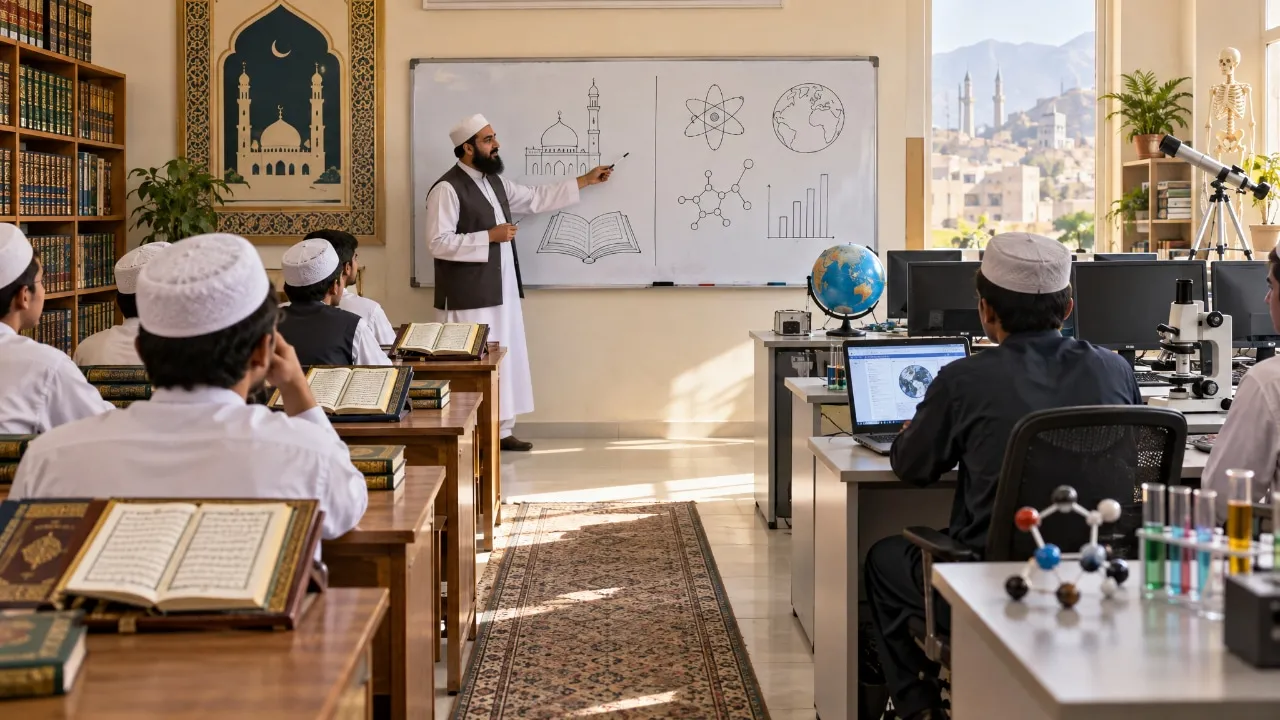
Under the heading "Modern Sciences Alongside Religious Education," participants stressed that madrassa students should be equipped not only with expertise in religious sciences but also with modern intellectual, academic and practical knowledge so that they can play an effective role in national development and progress.
Specific proposals included:
- Introducing basic physics, chemistry and biology modules in the secondary level curriculum.
- Providing access to computer labs and internet resources through partnerships with public universities.
- Training madrassa teachers in contemporary pedagogical methods via short-term certification courses.
- Establishing a standardized examination board for science subjects to ensure uniform assessment.
These steps aim to create a dual-track system where students can pursue advanced religious studies while also qualifying for university admission in science-related fields.
How Female Education Is Being Prioritised
In the segment titled "Focus on Female Education," the council highlighted the importance of expanding opportunities for women to acquire both religious and contemporary education, improving quality educational facilities and providing a conducive academic and training environment.
Key actions discussed were:
- Setting up separate science classrooms for female students to respect cultural norms while delivering the same curriculum as male peers.
- Offering scholarships for women to attend higher-level technical institutes.
- Creating mentorship programmes linking female madrassa graduates with professional women in medicine, engineering and education.
- Improving safety and transportation for girls travelling to madrassa campuses.
Participants described female education as fundamental to the positive development of families and society, echoing national statistics that show higher female literacy correlates with lower child mortality and greater household income.
Coordination Between Madrassa Federations
The council agreed on strengthening mutual cooperation, academic linkages and a joint strategy among different madrassa federations and organisations across the country. Participants stressed the need for better coordination in educational systems, examinations, certifications, registration and administrative affairs of seminaries to improve their academic standards and create wider educational and professional development opportunities for male and female students.
To operationalise this, a central secretariat will be established in Islamabad to collate curriculum proposals, manage a digital registration platform, and act as the liaison with the Higher Education Commission. The secretariat will also maintain a database of qualified teachers willing to deliver science modules, facilitating rapid deployment where gaps exist.
Government Support and Recent Reforms
The meeting appreciated the efforts of Prime Minister Muhammad Shehbaz Sharif, Chief of Army Staff and Chief of Defence Forces Field Marshal Syed Asim Munir, and Chief Minister Punjab Maryam Nawaz Sharif regarding madrassa registration, access to banking facilities and the resolution of other administrative issues.
Since early 2024, the government has introduced a streamlined registration process that requires madrassas to submit audited financial statements and curriculum outlines to a newly created Madrassa Regulatory Authority. This has resulted in a 30 % increase in registered institutions within six months, according to the Ministry of Religious Affairs.
Participants expressed hope that these processes would be further simplified and made more effective, enabling religious seminaries to continue their educational and religious activities more efficiently.
The meeting also appreciated the efforts of the National Paigham-e-Aman Committee in promoting coordination, mutual trust and effective consultation between religious seminaries and the government, calling it an important step towards resolving the issues faced by religious seminaries.
Broader Social Context: Unity, Law and Order
The council discussed the prevailing national situation, law and order, unity among Muslims, interfaith harmony and the promotion of religious tolerance. Participants agreed that religious scholars, seminaries and religious organisations would continue playing their role in promoting peace, tolerance, brotherhood and national cohesion, describing unity and mutual respect among all schools of thought as essential for Pakistan's security, stability and progress.
These statements align with the government's National Action Plan on Religious Harmony, which seeks to reduce sectarian violence through community dialogue and joint educational initiatives.
What Comes Next for Madrassa Reform
The council reaffirmed that Muttahida Madaris Council Pakistan would continue its collective role in resolving common challenges facing religious seminaries, improving educational standards, promoting religious and contemporary education, expanding educational opportunities for female students and strengthening unity among Muslims.
In the next three months, the council plans to pilot the science curriculum in 25 madrassas across Punjab, Sindh and Khyber Pakhtunkhwa. Results will be evaluated by an independent academic board before a nationwide rollout. Simultaneously, a grant of Rs. 1.6 billion has been earmarked by the federal treasury to upgrade facilities for female students, including laboratory equipment and digital libraries.
Stakeholders are watching for the first batch of certification exams, scheduled for early 2025, which will determine whether the new curriculum meets the standards set by the Higher Education Commission. Success could pave the way for madrassa graduates to enter mainstream universities without additional bridging courses.
Overall, the council's resolutions aim to preserve the historic identity of Pakistan's madrassas while equipping them for the demands of the modern era, a balance that could reshape the country's educational landscape for decades to come.