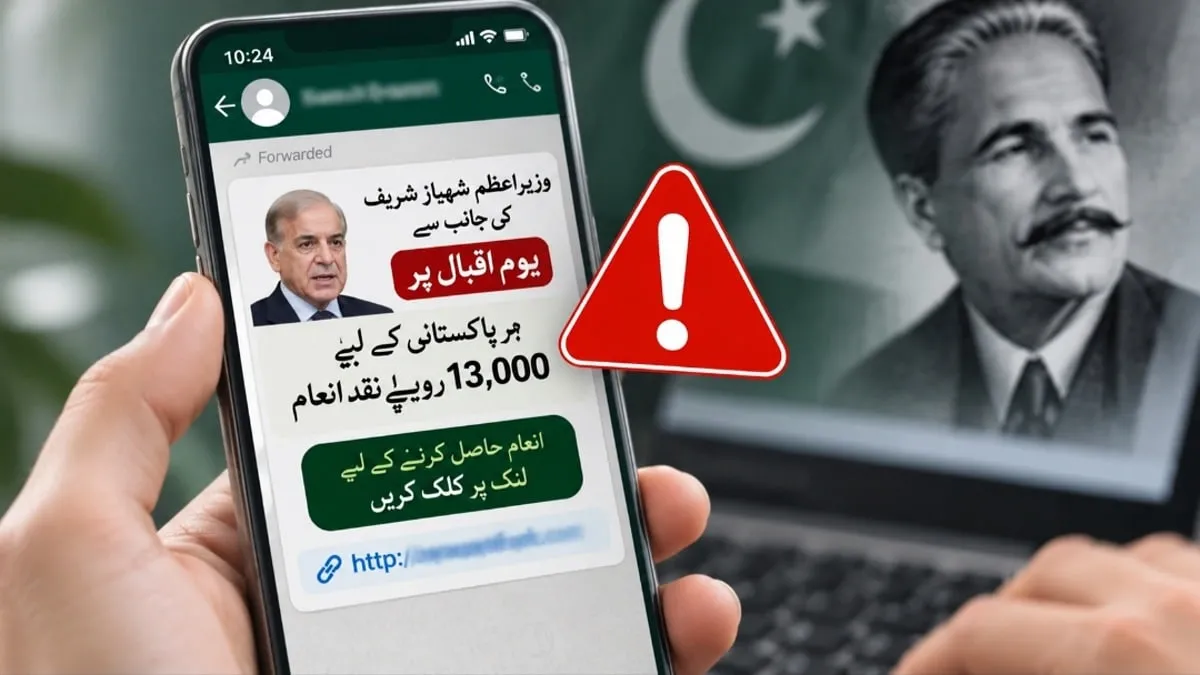
Understanding the Rs. 13,000 Iqbal Day Prize Scam in Pakistan
A fraudulent message circulating widely on social media claims that Prime Minister Shehbaz Sharif is offering a Rs. 13,000 cash reward to Pakistanis in connection with Iqbal Day, observed on November 9. The message asks recipients to click on a link to claim the amount. The message also includes a link that supposedly allows people to receive the cash reward. However, the National Cyber Crime Investigation Agency (NCCIA) has warned citizens against trusting the announcement, describing it as fraudulent.
Online scams targeting citizens through festive or commemorative announcements have become common in recent years. Fraudsters frequently exploit national holidays, cultural events, and government initiatives to lure unsuspecting victims into traps. By promising quick financial assistance or cash rewards, malicious actors create a false sense of urgency and excitement. This tactic lowers the guard of ordinary people, making them more likely to click on unverified links and share sensitive data without second thought.
The specific mention of a prominent political figure, such as Prime Minister Shehbaz Sharif, is a deliberate strategy to lend false credibility to the hoax. Citizens often assume that announcements tied to high-ranking officials or national celebrations carry official weight. Cybercriminals rely on this psychological bias to bypass standard skepticism. Recognizing these warning signs is essential for maintaining digital safety in an increasingly connected society where online threats constantly evolve.
NCCIA Warns Against Suspicious Links and Phishing Tactics
The agency said scammers are circulating these messages to obtain people's personal and financial information. It urged citizens not to click on unverified links or forward such messages to others. The NCCIA also warned people against sharing personal details or banking information through suspicious websites and links.
Phishing is a method where attackers impersonate trustworthy entities to steal sensitive data such as login credentials, credit card numbers, and bank account details. When a user clicks the malicious link provided in the Iqbal Day scam message, they are typically directed to a replica of an official government portal or a banking website. Once on this fraudulent site, victims are prompted to enter their confidential information under the guise of verifying their identity to claim the Rs. 13,000 reward.
Forwarding these unverified messages compounds the problem by helping scammers expand their reach across social networks. When friends or family members receive the link from someone they trust, they are significantly more likely to fall victim to the trap. Authorities emphasize that breaking the chain of transmission by refusing to share such posts is just as important as refusing to click the links themselves.
How Cybercriminals Exploit National Holidays and Events
Special days in the national calendar, such as Iqbal Day, Independence Day, or religious festivals, frequently attract fraudulent activity. Cybercriminals monitor public attention spans and cultural moments to time their attacks effectively. During periods of celebration or national reflection, people are often more receptive to news about government welfare, grants, or commemorative gifts.
The promise of Rs. 13,000 represents a meaningful amount of money for many households, particularly during challenging economic times. Fraudsters calculate that this specific figure is large enough to attract attention but small enough to sound plausible for a government distribution scheme. By targeting the financial needs of everyday citizens, these malicious actors manipulate public sentiment for personal gain.
Security experts note that official government grants or financial relief packages are never distributed through random social media links or WhatsApp forwards. Legitimate welfare programs operate through established institutional frameworks, verified web portals ending in official government domains, and formal announcements broadcast through state television and major news networks.
Public Advised to Verify Cash Prize Announcements
The agency advised citizens to verify announcements about cash rewards and financial assistance through official government channels before taking any action. It also urged the public to remain cautious of messages that promise financial benefits in exchange for clicking links or providing sensitive information.
Verification involves checking the official websites of relevant ministries or departments to confirm whether any such scheme actually exists. Citizens should also consult verified news outlets to see if major announcements regarding cash distributions have been reported. If an offer appears exclusively on social media feeds through unvetted accounts or forward messages, it should be treated as a scam by default.
Public awareness campaigns conducted by cybersecurity authorities play a vital role in educating the populace about emerging digital threats. Understanding how to spot red flags, such as generic sender addresses, grammatical errors in official communications, and demands for personal data, empowers citizens to protect themselves and their communities from financial fraud.
Steps to Take If You Encounter Cyber Fraud
When citizens encounter suspicious messages or fraudulent links online, taking immediate defensive action prevents further spread and minimizes potential damage. The primary rule is to sever all interaction with the suspicious content immediately. Do not reply to the sender, do not fill out any online forms, and do not download any files attached to the message.
If personal or banking information has already been shared through a fraudulent link, urgent remedial measures are necessary. Victims should contact their respective banks immediately to freeze accounts, block compromised credit or debit cards, and change online banking passwords. Prompt action can often prevent unauthorized transactions and secure remaining funds.
Reporting cybercrimes to the National Cyber Crime Investigation Agency helps law enforcement track down malicious operators and shut down fraudulent websites. Citizens can file formal complaints through official agency channels, providing screenshots, message logs, and link details to assist investigators in their work to secure the digital environment for all Pakistanis.