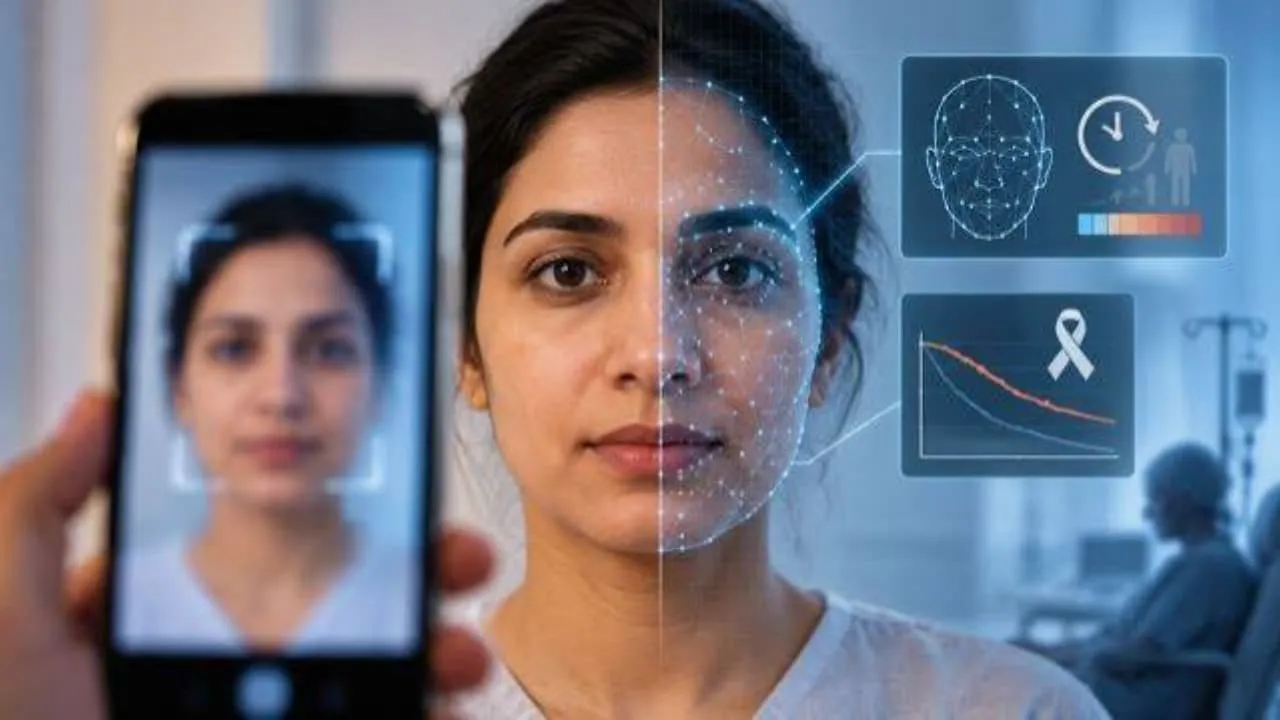
Scientists in the United States created an artificial intelligence program capable of forecasting survival probabilities for cancer patients using only one facial picture, based on research released in The Lancet Digital Health.
Specialists at Mass General Brigham in Massachusetts built the software, named FAHR-Face, to evaluate facial characteristics in order to calculate biological age and the risk of death, which may assist physicians in determining care choices.
The algorithm learned from over 40 million facial pictures and was split into two separate applications: FAHR-FaceAge to calculate biological age, and FAHR-FaceSurvival to forecast cancer survival outcomes directly from pictures without depending on age calculations.
Scientists discovered that the survival algorithm concentrated primarily on zones below the eyes and surrounding the nose, whereas the age-calculation algorithm looked at characteristics near the mouth and temples, indicating that the two applications detect distinct medical indicators.
The survival algorithm was trained using pictures from 34,363 patients and evaluated on an additional 3,820, with findings verified independently through information from 4,892 cancer patients located in the Netherlands.
Individuals placed in the maximum-risk category faced more than triple the death risk compared to individuals in the minimum-risk category, even after adjusting for medical variables.
Individuals whose faces looked a minimum of five years older than their chronological age likewise experienced a 21 percent increased death risk, whereas those appearing a minimum of five years younger experienced a 17 percent decreased risk. Merging the two applications enhanced the precision of survival forecasts further, as stated by the study.
Investigators stated the technology could assist physicians in evaluating patient health and directing treatment choices, though extra verification is necessary prior to widespread adoption in medical settings.