As the global shift toward clean energy accelerates, nations are racing to secure critical natural resources like copper, lithium, and rare earth elements. Pakistan is emerging as a prominent player in this landscape, boasting approximately $8 trillion in mineral wealth spread across 600,000 square kilometres. The country features 92 identified minerals, with 52 currently undergoing commercial extraction.
While geological potential is high, mining currently constitutes only about 3.2 percent of Pakistan's GDP, according to estimates from the US Department of Commerce. Furthermore, the nation encompasses part of the Tethyan Metallogenic Belt, a massive corridor known for significant copper and gold deposits that stretches from southeastern Europe through Turkiye, the Middle East, and the Himalayas.
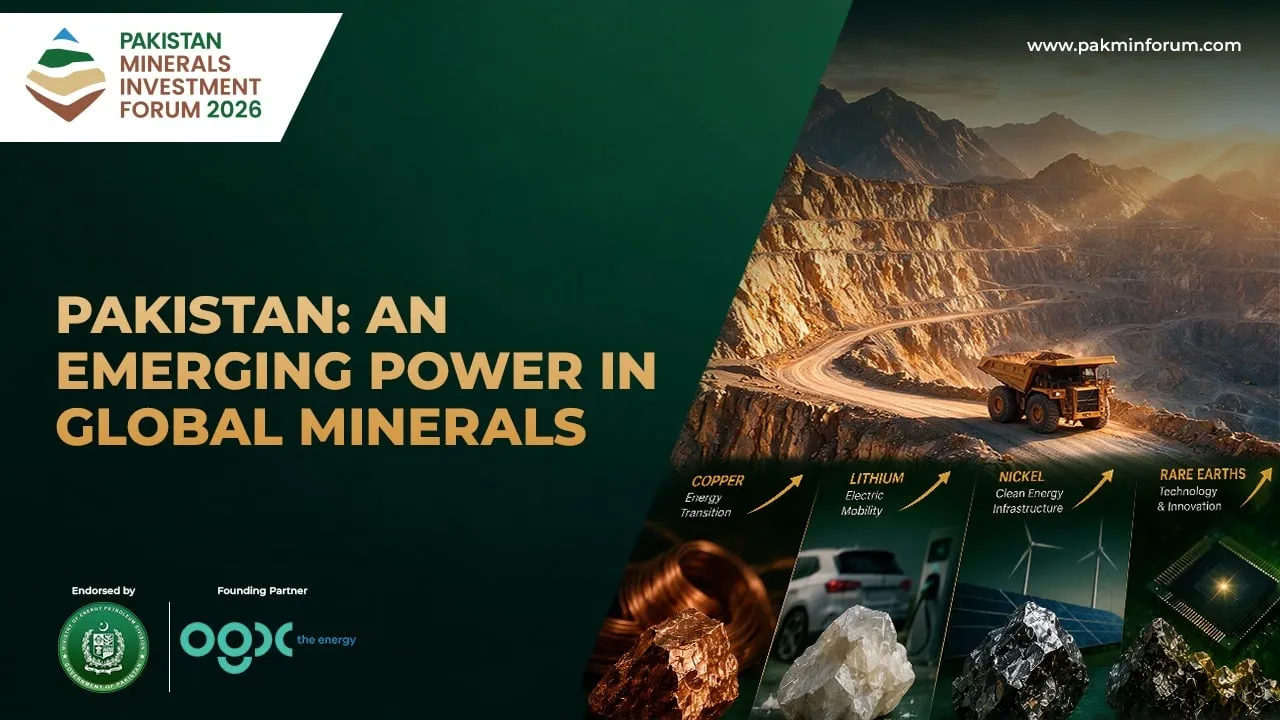
Global demand for energy minerals continued to grow strongly in 2026, driven by electric vehicles, batteries, renewable energy, and electricity grids, as noted by the International Energy Agency. To tap into this demand, Pakistan introduced the National Minerals Harmonisation Framework to standardise provincial mining rules and simplify licensing. Additionally, the government established the Pakistan Minerals Investment Forum.
Copper remains central to this transformation due to its necessity for electricity networks and electric vehicles. The Reko Diq copper-gold project in Balochistan's Chagai district stands as one of the world's largest undeveloped deposits. Barrick Mining Corporation holds a 50 percent stake, the Government of Balochistan owns 25 percent, and three Pakistani state-owned enterprises hold the remaining 25 percent.
In February 2025, Barrick released an updated feasibility study estimating a 37-year mine life, total capital investment of $8.83 billion, and first production by the end of 2028. Reko Diq contains probable mineral reserves of roughly 3 billion tonnes, with an estimated 15 million tonnes of copper and 26 million ounces of gold, which could generate $90 billion in operating cash flow and $70 billion in free cash flow.
Lithium has also emerged as a vital component for rechargeable batteries. In July 2026, Oil and Gas Development Company Limited discovered lithium in formation water from a high-temperature geothermal well in Sindh, marking a first for the country. The firm is currently conducting further technical work to evaluate the commercial viability of this geothermal brine resource.
The National Minerals Harmonisation Framework 2025 forms part of a broader reform effort that includes digitalising geological data and revitalising the Geological Survey of Pakistan. Beyond exporting raw ore, the government aims to foster domestic processing capacity and value-added manufacturing.
To connect with international capital, the Pakistan Minerals Investment Forum will host PMIF26 on November 12 to 13, 2026, at the Jinnah Convention Centre in Islamabad. The inaugural PMIF25 drew over 5,000 delegates from more than 50 countries, resulting in 18 panel discussions and 16 signed agreements.