Pakistan Leaders Connect With First Astronaut in Orbit
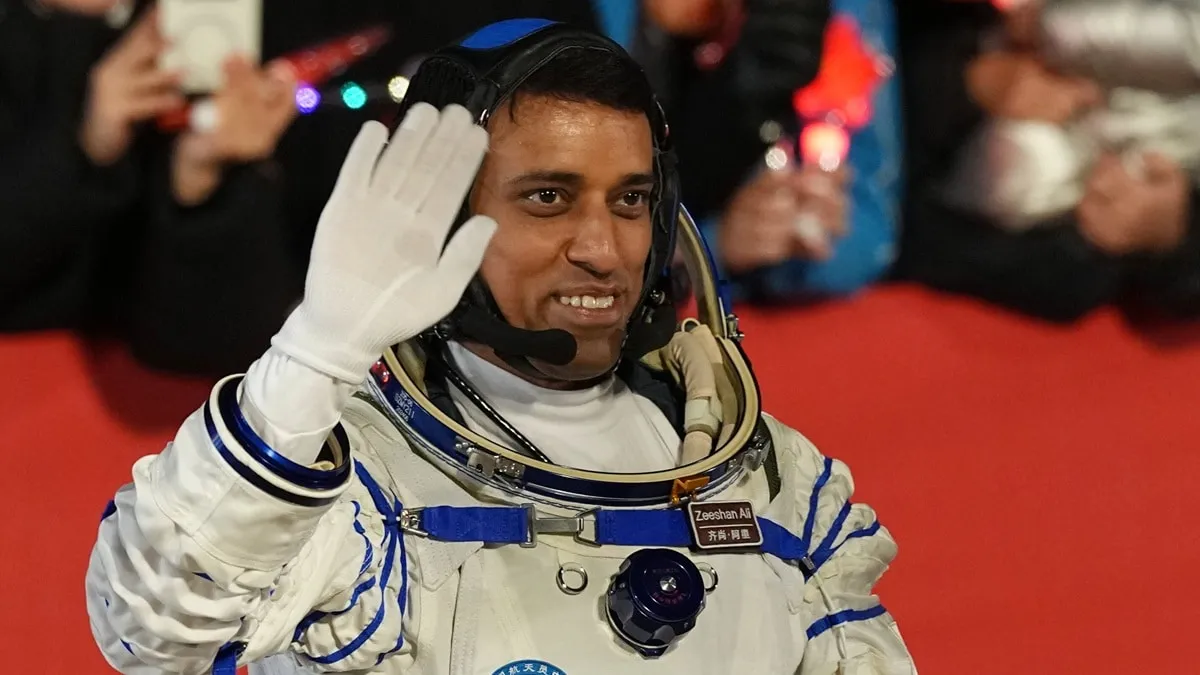
Prime Minister Shehbaz Sharif and Chief of Defence Forces Field Marshal Syed Asim Munir spoke with Pakistan's first astronaut, Wing Commander Muhammad Zeeshan Ali, aboard China's Tiangong space station. The high-profile conversation took place from the headquarters of the Space and Upper Atmosphere Research Commission. Ali made history on Wednesday by becoming the first Pakistani to enter orbit and the first foreign astronaut to board China's space station.
The milestone event marks a major leap forward for Pakistan in the field of space exploration and international scientific cooperation. Government and military leaders praised the achievement, viewing it as a symbol of national pride and technological progress. The successful mission is the result of years of strategic planning, institutional partnerships, and rigorous astronaut training programs conducted overseas.
Details of the Shenzhou-24 Mission and Launch
The 40-year-old pilot is serving as a payload specialist on the Shenzhou-24 mission alongside Chinese astronauts Tang Hongbo and Wu Yi. He is expected to spend five to 10 days aboard the space station. The spacecraft was launched aboard a Long March-2F rocket at 5:18 AM Pakistan time on Wednesday and successfully docked with the space station three hours and 38 minutes later. Upon arrival, the newly arrived astronauts were welcomed by the Shenzhou-23 crew, who had prepared a cake to mark their arrival.
The mission represents a complex logistical and technical feat, requiring precise coordination between ground control teams and orbital crews. Launching via the Long March-2F rocket, the crew entered orbit under strict safety and performance protocols. Docking with the Tiangong space station required advanced automated navigation systems, followed by manual checks to ensure a secure seal between the spacecraft and the orbital facility.
How Pakistan Secured Space Flight Participation
Ali's participation in the mission follows a cooperation agreement signed between the Space and Upper Atmosphere Research Commission and the China Manned Space Agency in February 2025. Ali and Khurram Daud were selected for astronaut training in China in April, with the former subsequently chosen for the Shenzhou-24 mission. This bilateral framework has opened new pathways for Pakistani scientists, engineers, and aviators to access advanced orbital facilities.
Training for spaceflight demands rigorous physical, psychological, and technical preparation. The selected candidates underwent months of demanding simulations, centrifuge training, and zero-gravity acclimatization sessions. Their preparation ensured they could handle the extreme forces of launch and adapt quickly to the microgravity environment of the Tiangong station.
Scientific Experiments Conducted Aboard Tiangong
As part of the mission, Pakistani scientific experiments will be conducted in the space station's Wentian and Mengtian laboratories. These include research into microalgae as a potential source of food and oxygen for future space missions and the effects of spaceflight on quinoa seeds. The Shenzhou-24 crew will conduct approximately 90 experiments during the mission, alongside routine station operations and maintenance.
These biological and agricultural tests hold immense value for future long-duration human spaceflight. Understanding how microalgae and seeds react to cosmic radiation and zero gravity helps scientists develop sustainable life support systems. The findings from these laboratories could influence both terrestrial agriculture and future deep-space exploration logistics.
Future Outlook for Pakistan Space Exploration
Speaking ahead of the launch, Ali expressed gratitude to China for supporting Pakistan's space exploration ambitions and hoped the mission would pave the way for further cooperation, including lunar and Martian exploration. Both Prime Minister Shehbaz and the military leadership had earlier congratulated the nation, the Space and Upper Atmosphere Research Commission, and the scientific community on the historic achievement.
As the mission progresses, ground teams monitor telemetry and experimental data continuously from Earth. The success of this flight establishes a precedent for future joint missions and positions the national space agency as an active participant in international orbital research.