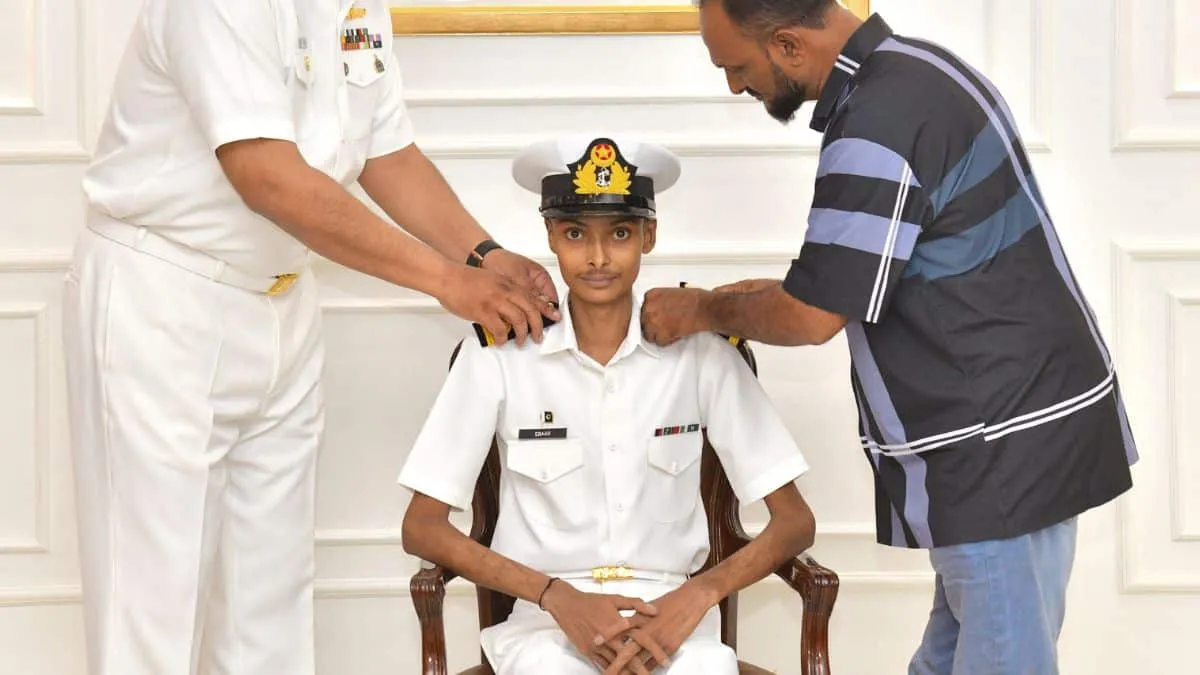
The Pakistan Navy has fulfilled the wish of Muhammad Ebaad Hussain, a 17-year-old from Rajanpur living with congenital heart disease, by granting him the honorary rank of Sub Lieutenant.
Why the Honorary Rank Matters
Honorary ranks are a long-standing tradition in many armed forces, used to recognize civilians who have rendered distinguished service or whose personal stories embody the spirit of the institution. In Pakistan, the practice dates back to the early years of the armed forces, when notable scholars, athletes and philanthropists were given ceremonial titles to strengthen civil-military ties. The rank of Sub Lieutenant, while junior, carries the same insignia and formal address as a regular officer, allowing the recipient to participate in certain ceremonial duties.
Who Is Muhammad Ebaad Hussain?
Ebaad Hussain was born in Rajanpur, a district in southern Punjab, and has lived with congenital heart disease since birth. Despite his medical condition, he nurtured a strong desire to serve his country through the navy. His dream was sparked by school visits to naval exhibitions and stories of maritime security that he followed on television. The opportunity to meet the Chief of the Naval Staff, Admiral Naveed Ashraf, came after a local community group highlighted his story to the navy's public affairs office.
How the Honorary Rank Was Approved
Chief of the Naval Staff Admiral Naveed Ashraf personally approved the honorary rank after reviewing Ebaad's request and medical reports. The decision was announced during a small ceremony at the navy's headquarters, where Ebaad, accompanied by his parents, received the official rank certificate and a ceremonial sword. Admiral Ashraf said the gesture was meant to "honour his wish and inspire other young Pakistanis facing health challenges to pursue their aspirations."
Visit to Pakistan Navy Ship KHAIBAR
Following the ceremony, Ebaad and his parents were escorted to Pakistan Navy Ship KHAIBAR, a modern frigate based at Karachi Naval Dockyard. On board, senior officers briefed the young guest on the ship's weapon systems, navigation equipment and daily routine of the crew. Ebaad was shown the bridge, the engine room and the mess hall, and he asked questions about life at sea, training schedules and the role of the navy in anti-piracy operations.
"I am grateful to the Pakistan Navy for this unforgettable experience," Ebaad said in a short statement. "Seeing the ship up close and learning about the dedication of the sailors has deepened my respect for the service."
Current Navy Recruitment Drive
While the honorary appointment captured headlines, the Pakistan Navy simultaneously opened registration for two major recruitment programmes: the Short Service Commission (SSC) Course 2027-A and the M Cadet Scheme 12th Batch. Both programmes accept applications from Pakistani citizens until 22 November 2026.
Short Service Commission Course 2027-A
The SSC Course is designed for candidates who wish to serve as officers for a limited period, typically five years, after which they may transition to civilian careers or seek permanent commissions. The 2027-A batch will recruit for a wide range of branches, including:
- Operations - deck officers, navigation and communication specialists.
- Engineering - marine, electrical and mechanical engineers.
- Supply - logistics, inventory management and procurement.
- Ordnance - weapons handling, maintenance and safety.
- Medicine - medical officers and dental surgeons.
- Teaching - instructors for naval academies.
- Law - legal advisors for military justice.
- Information Technology - cyber security, network administration and software development.
- Specialised roles - diving, hydrography and maritime reconnaissance.
Most branches accept only male applicants, but selected medical and specialist positions also welcome women, reflecting the navy's gradual integration of female officers.
M Cadet Scheme 12th Batch
The M Cadet Scheme targets medical students who will be in their fourth or fifth year of MBBS on 1 July 2027, studying at PMDC-recognised medical colleges. Candidates must have passed all previous semesters or academic years on the first attempt and must have secured at least 50 % marks. The scheme offers a pathway to become a naval medical officer, combining clinical training with naval service.
Qualifications, age limits and marital status requirements vary by category, and detailed eligibility tables are published on the navy's official recruitment portal.
Background: Honorary Ranks and Civil-Military Relations in Pakistan
Pakistan's armed forces have historically played a prominent role in national identity, disaster relief and diplomatic outreach. Granting honorary ranks to civilians serves multiple purposes: it acknowledges individual achievements, fosters goodwill, and showcases the military's commitment to inclusive values. Previous examples include honorary commissions to Olympic athletes, celebrated artists and humanitarian volunteers.
Explainer: How the Short Service Commission Works
Applicants who meet the age, educational and physical standards undergo a multi-stage selection process. First, they submit an online application with scanned copies of academic certificates, national identity card and a recent photograph. Next, a written test assesses general knowledge, English proficiency and basic mathematics. Those who pass proceed to a physical fitness test, which includes running, push-ups and a swimming assessment.
The final stage is a professional interview conducted by a board of senior officers. Successful candidates receive a training appointment at the Pakistan Naval Academy in Karachi, where they undergo a 28-week officer training programme covering leadership, maritime law, navigation and weapons handling.
Impact on Communities and Potential Benefits
Ebaad's story resonates strongly in Rajanpur, a region that faces limited access to advanced medical care and few role models in the armed forces. Local NGOs reported an increase in enquiries from families of children with chronic illnesses about possible honorary recognitions. The navy's outreach could inspire other young people with disabilities to pursue education and careers in defense, engineering or medicine.
The recruitment drive also offers a clear career pathway for thousands of Pakistani youth. With the navy expanding its fleet and modernising its assets, the demand for technically skilled officers is rising. Successful applicants can expect competitive salaries, pension benefits and opportunities for overseas training.
What Comes Next: Application Timelines and Next Steps
Prospective candidates for the SSC Course 2027-A and M Cadet Scheme must submit their applications by 22 November 2026. After the deadline, the navy will publish a shortlist for the written test, typically scheduled in December. Physical tests are expected in January 2027, followed by interviews in February. Final selections will be announced by March, with training beginning in April at the Naval Academy.
Applicants are advised to review the detailed eligibility criteria on the official navy recruitment website, ensure all documents are up to date, and maintain physical fitness to meet the standards.
Practical Takeaways for Readers
- If you are a Pakistani citizen interested in a naval career, verify your eligibility for the specific branch before applying.
- Prepare for the written test by studying basic mathematics, English grammar and current affairs related to maritime security.
- Maintain a regular fitness routine; the navy's physical standards are strict and include swimming.
- For families of children with health challenges, the navy's honorary program demonstrates a willingness to recognize inspirational stories.
The navy's dual focus on honoring a young heart-diseased citizen and expanding its officer corps underscores its commitment to both public engagement and operational readiness.