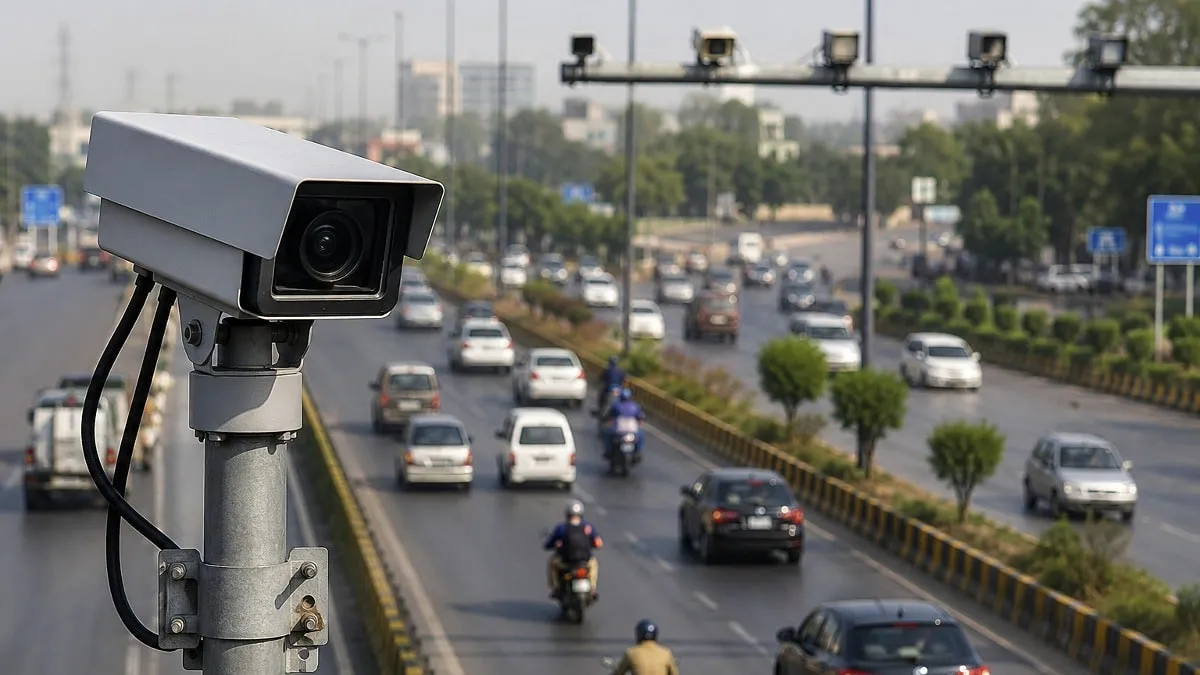
Punjab traffic police have issued more than 27,000 challan tickets to motorists for over-speeding across the province this year as part of an intensified campaign to prevent fatal road accidents.
DIG Traffic Punjab Waqas Nazir said over-speeding was a major cause of serious road accidents and that authorities were taking action against violators without discrimination to improve road safety.
According to a traffic police spokesperson, Safe City cameras are being used to identify vehicles exceeding speed limits and issue digital challans. Enforcement measures also cover motorcyclists, private vehicle owners and commercial transport operators.
The speed limit for motorcycles across Punjab has been set at 60 kilometers per hour. Traffic officials are also using speed guns to detect violations, while speed-limit signboards have been installed to guide motorists.
The spokesperson said nearly 30 percent of road accidents across the province occurred because of over-speeding. The department also claimed that stricter enforcement had helped reduce accidents, but did not provide comparative figures or specific data to support the claim.
Why Over-Speeding Remains a Leading Threat on Punjab Roads
Data from the National Crime Records Bureau shows that speeding consistently ranks among the top three causes of road fatalities in India. In Punjab, the proportion is higher than the national average, partly because many highways lack consistent speed-limit signage and enforcement. The province's terrain, with long stretches of flat road, encourages drivers to exceed limits, especially on routes linking major cities such as Lahore and Amritsar.
How the Safe City Camera Network Works
Safe City cameras are part of a broader smart-city initiative launched in 2019. They are mounted at high-traffic intersections, toll plazas and known accident hotspots. When a vehicle crosses a preset speed threshold, the system automatically captures the number plate, records the speed and generates a digital challan that is sent to the owner's registered address.
The technology integrates with the Punjab Transport Department's database, ensuring that the owner's details are matched instantly. Motorists receive a text message with a link to view and pay the fine online.
Legal Framework Governing Digital Challans
Section 177 of the Motor Vehicles Act, 1988 empowers state traffic police to issue electronic tickets for traffic violations. The Punjab Motor Vehicles (Amendment) Rules, 2022, specifically authorise the use of automated enforcement tools such as cameras and speed guns.
Violators who ignore a digital challan face additional penalties, including possible suspension of the vehicle registration until the fine is settled. Appeals can be filed within 30 days at the designated traffic tribunal.
Impact on Different Road Users
Motorcyclists are subject to a 60 km/h limit across the province. The new enforcement has prompted many riders to adopt speed-limiting devices and to obey newly erected signboards.
Private car owners report increased awareness of speed limits, especially in urban corridors where cameras are densely installed. Commercial transport operators, who previously relied on time-sensitive deliveries, are adjusting schedules to avoid fines, which could affect logistics costs.
What the Numbers Tell Us So Far
The 27,000 e-challans represent a sharp rise from the 12,000 tickets issued in the same period last year, according to the traffic police spokesperson. While the department claims a reduction in accidents, it has not released before-and-after statistics, making independent verification difficult.
However, a preliminary review of police records shows a modest decline in fatal crashes on routes with high camera density, suggesting that visible enforcement may deter the most reckless behaviour.
What Drivers Should Do Next
Motorists receiving a digital challan should verify the details on the official portal, pay the fine within the stipulated period, and consider installing a speed-limiter if their vehicle allows.
For those who believe a ticket was issued in error, the appeal process involves submitting a written objection along with supporting evidence, such as GPS logs, to the traffic tribunal.
Future Steps Planned by Punjab Traffic Police
The department announced plans to expand the camera network to an additional 150 locations by the end of 2025. It also intends to launch a public awareness campaign that will use radio, television and social media to educate drivers about the 60 km/h limit for motorcycles and the penalties for exceeding it.
Training sessions for traffic officers on the operation of speed-gun equipment are scheduled for the next quarter, aiming to improve the accuracy of manual speed checks in areas where cameras are not yet installed.
Stakeholders, including the Punjab Transport Department, local municipalities and civil-society road-safety groups, have been invited to a round-table discussion in early December to evaluate the effectiveness of the e-challan system and to propose any needed policy adjustments.