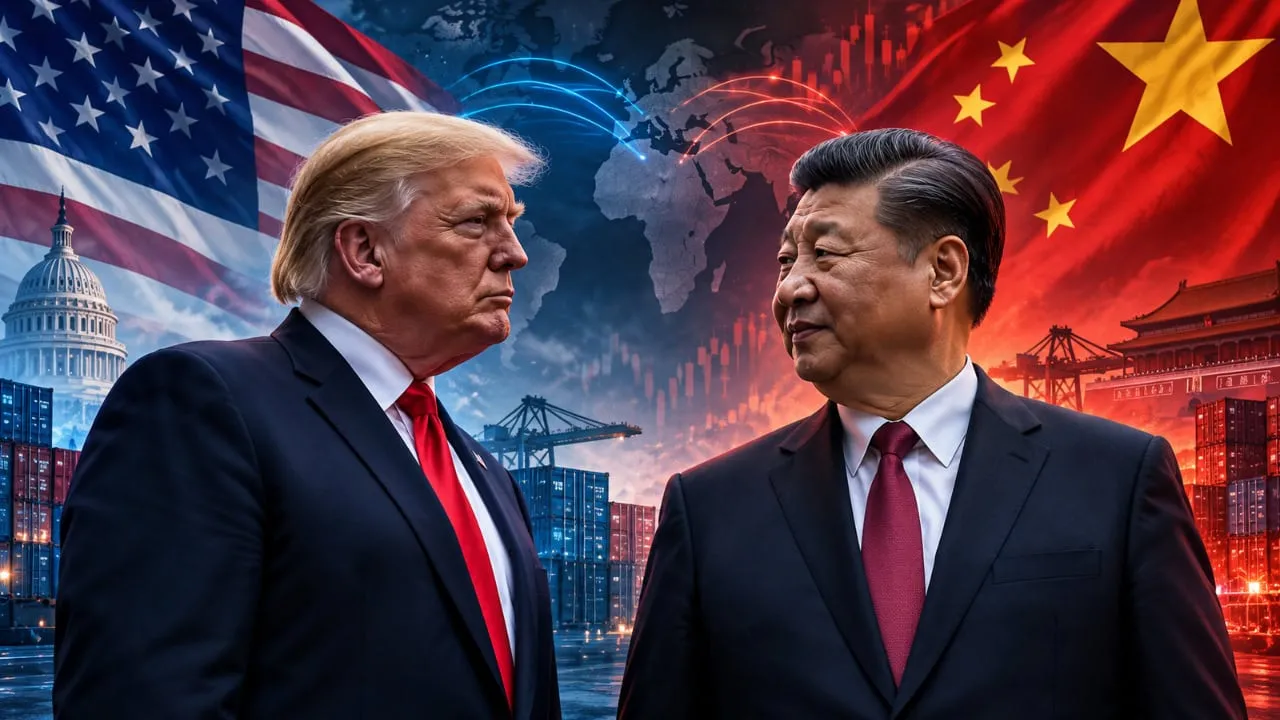
The United States and China have each created competing AI coalitions, forcing nations to choose a side or risk lagging behind. Pakistan has already aligned with China, becoming one of the 29 founding members of the World AI Cooperation Organization, known as WAICO.
The US-led alliance, Pax Silica, promises cutting-edge chips, AI tools and manufacturing ties, but Washington says it will only accept partners it trusts. The State Department recently warned that no country may join Pax Silica while supporting China's rival AI programmes.
China's WAICO, by contrast, portrays itself as open and inclusive. Its founding members include Pakistan, Kazakhstan, Russia and 26 other states. Beijing markets the group as focused on open-source AI and affordable tech for developing economies, and the Chinese embassy in Washington said major powers should not dominate AI.
Many nations are trying to hedge their bets. Kazakhstan entered Pax Silica in June and signed onto WAICO three weeks later in Shanghai, leveraging its mineral resources and cheap power for data centres, plus a $10B NVIDIA deal to build a data-center valley.
Indonesia has also joined WAICO while keeping US ties, and Singapore is weighing membership. Saudi Arabia's AI startup Humain launched a new platform in September that runs on a Chinese open-source model, even as the kingdom holds a chip agreement with NVIDIA.
The competition is intense. Former President Trump recently said the side that wins AI will win overall, and his administration uses the phrase "super intelligence" for advanced AI. US officials accuse China of extracting capabilities from American AI models through a method called distillation.
China has already financed AI projects in at least 77 low- and middle-income countries, with top recipients such as Nigeria, Zambia, Ghana, Bangladesh, Senegal and Kenya, continuing to grow its influence while the US narrows its circle of trusted allies.