How Pakistan Achieved Massive Energy Import Savings in FY26
Pakistan achieved substantial energy import savings during FY26 due to its ongoing solarization drive. According to a recent SBP estimate, gross annual energy import savings reached $5.9 billion to $6.9 billion. Even after accounting for solar equipment imports, net annual import savings stood between $4.5 billion and $5.5 billion.
This financial relief comes at a critical juncture for the national economy, which has long grappled with high external payment pressures driven by expensive fossil fuel purchases. The transition toward renewable energy sources has fundamentally altered the domestic electricity landscape, shifting power generation from imported hydrocarbons to localized photovoltaic systems.
Policymakers, financial analysts, and industrial stakeholders have monitored this transition closely, as the reduction in external fuel bills directly supports foreign exchange reserves. The shift highlights how decentralized renewable adoption can ease macroeconomic vulnerabilities in developing nations facing high energy costs.
Rapid Solarization Growth and Power Generation Statistics
Pakistan expanded its distributed solar deployment significantly between FY2025 and March 2026. Specifically, installed solar capacity rose from 38GW in FY2025 to 51GW by March 2026, according to the Pakistan Electricity Review Report 2026. Consequently, the average installed and operational solar capacity for FY26 reached 44.5GW, calculated as (38 + 51)/2 per the latest available PBS HS 8 data.
Furthermore, SBP staff assumed a capacity factor of 17 to 20 percent based on the five-year average from the Pakistan Electricity Review Report 2026. This solar capacity utilisation factor remains resource-driven and reflects daytime generation, bounded by solar irradiance and weather impacts. As a result, annual solar electricity generation reached between 66 TWh and 78 TWh, calculated as 44.5 multiplied by 8,760 hours multiplied by 17 to 20 percent.
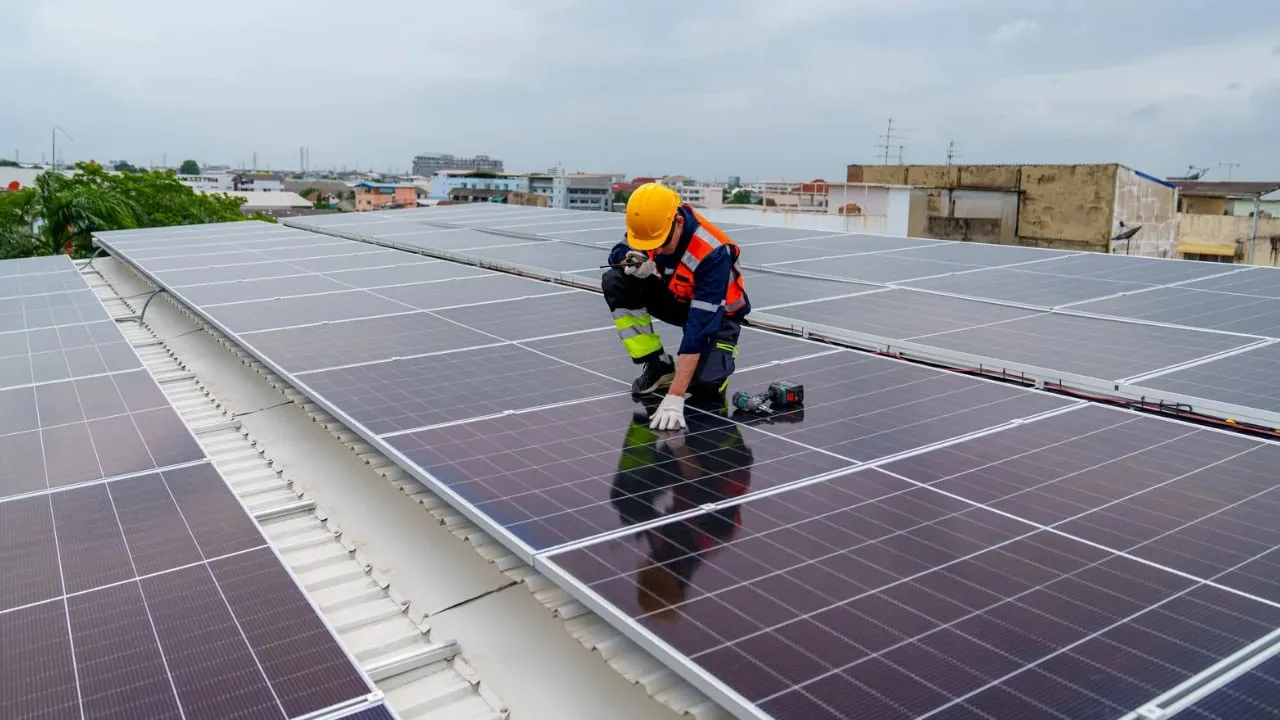
The rapid installation pace outpaced many official expectations, driven by commercial entities and residential consumers seeking alternatives to grid electricity. High utility tariffs encouraged both urban and rural households to invest in photovoltaic setups, transforming rooftops across major cities into miniature power plants.
Displaced Fuel Costs Drive Gross Import Savings
This surge in solar generation directly displaced expensive traditional fuel sources. Based on recent shares in the generation mix, the weighted average fuel cost of displaced generation stood at PKR 24.9/kWh. Specifically, this figure reflects the weighted average of three fuels:
- RLNG at PKR 34/kWh
- Coal at PKR 16/kWh
- RFO at PKR 58/kWh
Using a benchmark of 77.964 billion kWh multiplied by PKR 24.9/kWh, estimated annual energy import savings totaled PKR 1,649.99 to 1,941.3 billion. Moreover, applying an average exchange rate of PKR 281 converts these gross energy import savings to $5.9 billion to $6.9 billion.
By offsetting thermal generation units that rely heavily on imported coal, furnace oil, and liquefied natural gas, the power sector reduced its daily fuel burn. This reduction eases the operational burden on thermal power plants and lowers overall generation costs, although legacy capacity payments continue to present structural challenges for the national grid.
Machinery Import Bill Versus Net Import Savings
However, the ongoing solarization drive also increased imports of solar panels and related components. In FY26, these imports recorded around US$ 1.4 billion within the machinery import bill. Per the latest PBS HS 8 data, this import cost breaks down into three distinct categories:
- Solar panels: $819 million
- Solar inverters: $344 million
- Batteries: $254 million
Nevertheless, subtracting these component imports from gross energy savings still left Pakistan with $4.5 billion to $5.5 billion in net annual import savings. Overall, SBP staff compiled these estimates using Pakistan Bureau of Statistics HS 8 import data, the Pakistan Electricity Review Report, NEPRA performance evaluation reports of operational power plants, China's Solar PV Exports data, and Ember's report titled Shedding light on Pakistan's distributed solar revolution.
This capital expenditure on hardware represents a short-term import increase that yields long-term macroeconomic benefits. Because solar hardware has a multi-year operational lifespan, the initial import cost is offset by years of continuous fossil fuel displacement.
Background and Methodology of SBP Energy Estimates
The methodology behind these figures relies on comprehensive datasets gathered from multiple domestic and international monitoring bodies. Central bank analysts cross-referenced customs data with operational reports from the power regulator to establish reliable benchmarks for generation and displacement. This multi-agency approach ensures that the calculated savings reflect actual market conditions rather than theoretical projections.
Historical energy trends in the country demonstrate how vulnerability to international commodity price shocks plagued the balance of payments for decades. When global oil and gas prices spiked in previous years, the national treasury absorbed immense fiscal deficits to subsidize power generation. The pivot toward localized solar power acts as a natural hedge against such external price volatility.
Impact on Businesses, Households, and the National Economy
The mass adoption of solar technology affects various segments of society in distinct ways. Commercial and industrial enterprises that adopted rooftop solar systems managed to lower their operating expenses, protecting profit margins from escalating utility tariffs. Residential consumers also experienced relief from high monthly electricity bills, improving disposable income for households.
Conversely, the mass exodus of paying consumers from the traditional distribution grid creates financial strain for state-owned distribution companies. As high-tariff industrial and commercial users generate their own power, the utility companies face declining revenue collections while servicing fixed capacity payments to independent power producers. Regulators and policymakers continue to study tariff reforms to balance grid sustainability with consumer adoption.
What Comes Next for Pakistan Solar Sector Policy
As distributed generation continues to expand, regulatory authorities face the task of integrating large volumes of intermittent solar power into the transmission network. Future policy adjustments will likely focus on net metering frameworks, grid modernization, and energy storage mandates to manage peak load shifts effectively. Observers will monitor upcoming power sector reviews and trade data to see if the rapid pace of solar equipment imports and capacity additions persists into subsequent fiscal years.