Punjab School Education Department Orders Three Full-Syllabus Mock Exams
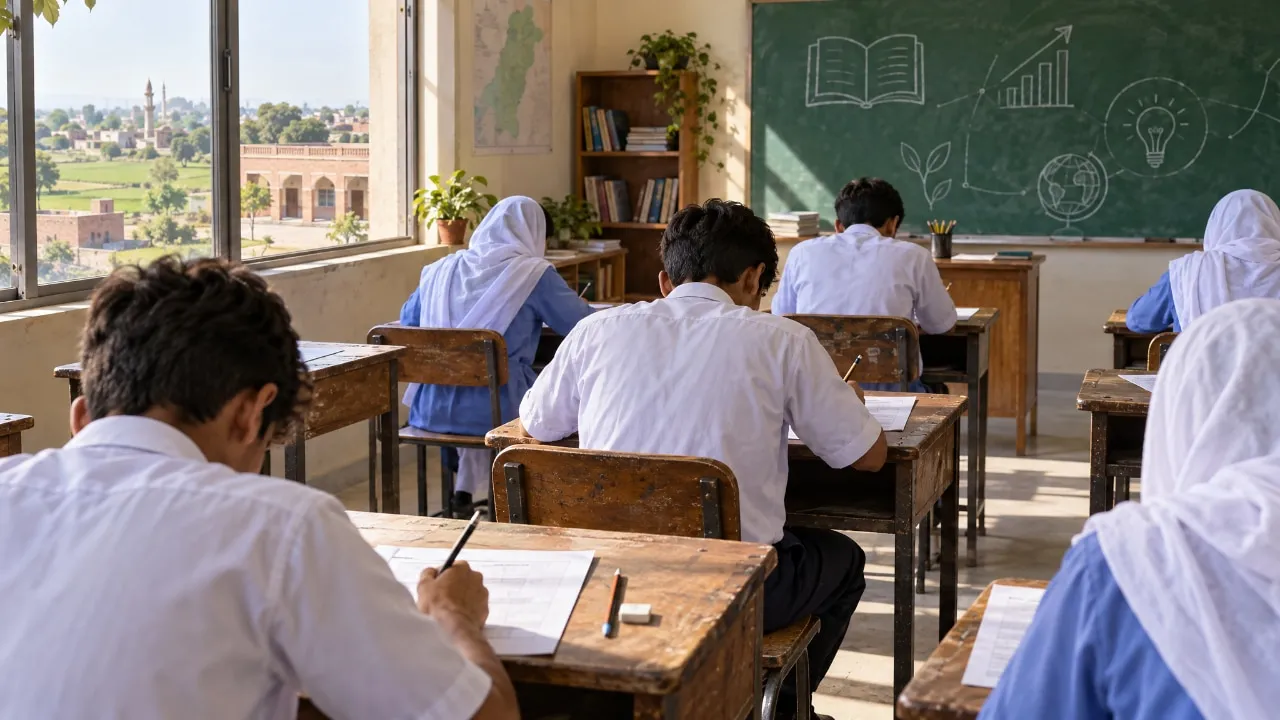
The Punjab School Education Department has announced a major initiative to improve board examination results, directing all government high and higher secondary schools to conduct three full-syllabus mock examinations for Classes 9 and 10. The decision was taken during a meeting on examination and digital reforms chaired by Secretary School Education Punjab, Sahibzadi Waseema Umar. This policy shift aims to transform how students prepare for matriculation tests across the province, addressing historical weaknesses in student performance and creating a more rigorous preparation framework.
Government schools often face scrutiny regarding their annual pass rates and overall academic standards compared to private institutions. By instituting mandatory practice exams that cover the entire curriculum multiple times, educational authorities hope to reduce exam anxiety and familiarize students with strict testing environments. The initiative requires active participation from educational administrators at every level of the provincial hierarchy, connecting district offices directly with regional testing boards.
Timeline and Schedule for Class 9 and 10 Mock Exams
The mock examinations will be held in December 2026, January 2027, and February 2027, giving students three complete practice runs ahead of their actual board papers. This phased schedule ensures that students receive multiple opportunities to test their knowledge, evaluate their preparation levels, and adjust their study habits before facing the official board examinations.
Timing these assessments during the final months leading up to the main board sessions creates a continuous loop of testing and review. Educators can use the results of the December exam to diagnose initial gaps, apply corrections in January, and verify improvements through the February assessment. This structured calendar removes guesswork from student preparation and imposes a disciplined academic routine across all participating government institutions.
Standardized Model Papers and Transparent Marking Schemes
All nine education boards will provide standardized model papers and marking schemes to their respective districts, ensuring a uniform testing standard across the province. CEOs and District Education Officers will maintain close coordination with the relevant boards to facilitate smooth implementation. Heads of educational institutions have been directed to ensure the effective conduct of these exams and transparent marking. Based on the results, students academic weaknesses will be identified and addressed through targeted remedial measures.
Special attention will be given to schools whose pass rate falls below the average pass rate of their respective education board, with a clear focus on lifting underperforming institutions. Standardized grading prevents discrepancies between different districts, ensuring that a grade or score in one city reflects the same level of mastery as in another. Remedial teaching sessions will then use these reliable scores to deploy extra resources where they are most urgently required.
New Question Paper Structure and Focus on Conceptual Understanding
Alongside the mock exams, the department reviewed a proposed framework for uniformity in question paper structure, quality, and mark allocation across all nine boards. Under the new structure, question papers will follow a fixed breakdown, consisting of 50 percent easy questions, 30 percent medium-level questions, and 20 percent difficult questions. The papers will be based on the syllabus and specified Student Learning Outcomes, with the emphasis on conceptual understanding and intellectual ability rather than rote learning.
This structured difficulty distribution is designed to challenge high-achieving students while remaining accessible to those who struggle with foundational concepts. Moving away from memorization towards analytical problem-solving aligns local qualifications with international educational standards. Teachers must adapt their classroom instruction to match this framework, training students to analyze scenarios and apply formulas rather than simply recalling textbook definitions.
Digital Reforms and On-Screen Marking Initiatives
The meeting also outlined a series of digital initiatives, including a plan to introduce On-Screen Marking in five science subjects for Classes 9 to 12 starting with the annual examination in 2027. Other measures include linking the examination system to NADRA data, monitoring examination centers through artificial intelligence, and providing modern digital facilities for students. PECTAA will also provide a Digital Item Bank to help students prepare more effectively for board examinations, with all schools directed to ensure access and effective use of the resource.
Digital transformation of the examination process reduces administrative delays, minimizes human error during grading, and curtails unfair practices inside examination halls. Connecting student registrations to national identity databases ensures accurate record-keeping and eliminates ghost candidates. Meanwhile, digital item banks grant educators access to a vast repository of verified questions, enriching daily classroom quizzes and homework assignments.
Prioritizing Academic Excellence and Student Support
The department emphasized that significantly improving students examination preparation and board results will remain its top priority. Educational leaders across Punjab are working to build a cohesive support system that bridges the gap between curriculum design and classroom delivery. Government schools are receiving explicit instructions to monitor student attendance, enforce syllabus completion timelines, and use remedial periods effectively.
Parents and local communities stand to benefit from these comprehensive reforms through increased transparency and accountability in public education. As districts prepare for the rollout of the mock examinations and digital tools, educational authorities will audit progress and provide technical assistance where needed. The ultimate success of this initiative rests on the dedicated execution of teachers, principals, and district officers across the province.