Nationwide Study Reveals Performance Gap Between Private and Public Schools
Pakistani pupils scored an average of 38 percent in maths and 47 percent in science in a nationwide study presented this week. The study found that private-school pupils outperformed those in public schools, and linked part of the gap to the way teachers ran their classrooms.
The Institute for Educational Development at Aga Khan University presented the findings of the study, titled Science and Mathematics Instruction and Learning Outcomes in Pakistan, in Karachi. The presentation marked the close of a research program funded by the United Kingdom and led by Oxford Policy Management, in partnership with the institute and Sightsavers International.
Understanding the root causes of educational disparities remains a priority for education specialists and policymakers in the region. The findings shed light on systemic challenges that extend beyond mere school enrollment figures, focusing directly on the quality of instruction that children receive on a daily basis. By examining classroom dynamics, researchers hope to guide future policy decisions and improve learning outcomes for thousands of children.
How Researchers Conducted the Study on Classroom Practices
In a policy brief on the study, lead researcher Sadia Muzaffar Bhutta and fellow researcher Sajid Ali wrote that private-school students significantly outperform public-school students. They added that the gap is partly explained by different teaching practices within the classroom.
The research team observed 436 maths and science teachers at 96 schools across six regions. A separate part of the study used data on 3,836 pupils and 162 teachers in 36 schools to examine the links between classroom practices and test scores.
Methodologies included direct observation of teaching styles, student engagement tracking, and assessments of institutional resources. This comprehensive approach allowed the research team to evaluate not just what students were learning, but how instructors delivered the curriculum and managed their daily lessons.
The Impact of Overcrowded Classrooms and Teaching Methods
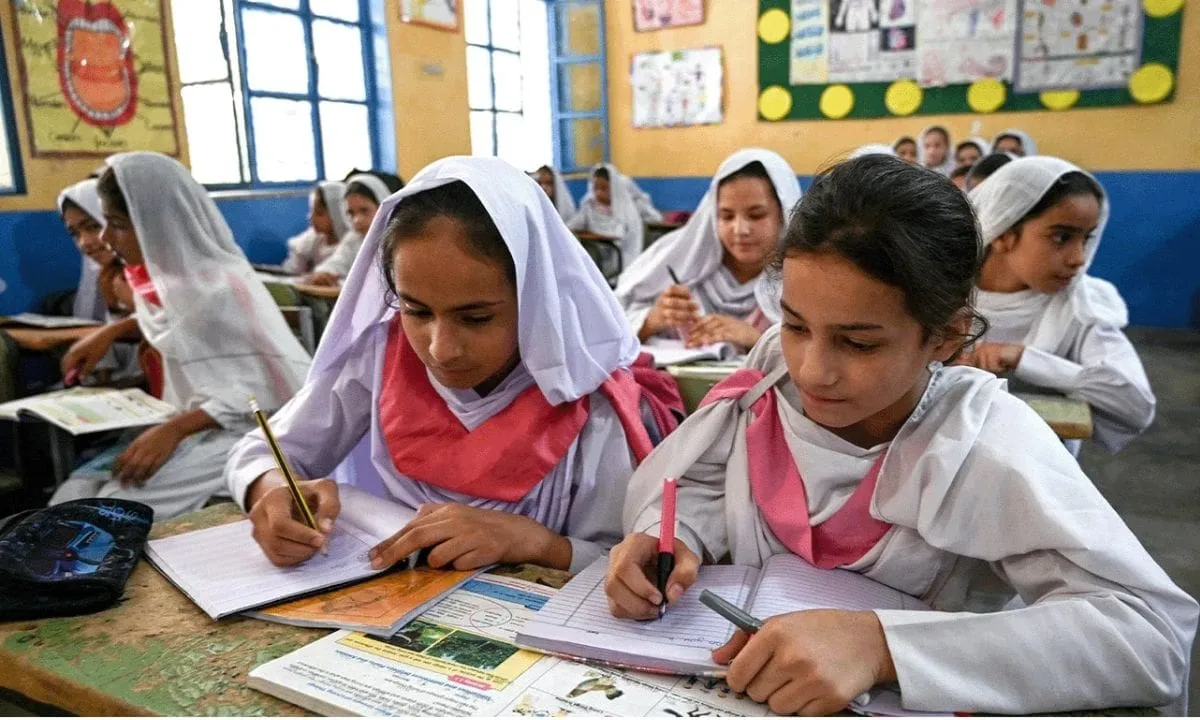
In the maths and science lessons observed by the researchers, teachers generally led the class, and pupils had few chances to investigate a problem or explain their reasoning.
Classes with fewer than 40 pupils were more likely to involve children actively in lessons. The researchers also found that overcrowding, limited resources and a lack of guidance from school leaders made it harder for teachers to change their methods.
Traditional lecture styles often dominate when instructors face high student-to-teacher ratios, leaving little room for individual attention or interactive problem-solving. Without adequate support and administrative oversight, educators struggle to adopt modern pedagogical strategies that encourage critical thinking among young learners.
Proposed Recommendations and Solutions for Schools
The researchers recommended giving teachers lesson plans that they can adapt, and having school leaders observe classes and offer feedback. Where schools cannot reduce class sizes, they suggested assigning two teachers to one classroom or moving staff to schools that need them.
These practical interventions aim to reduce the burden on individual educators while boosting student engagement. Structured lesson plans provide a reliable framework, while classroom observations by head teachers ensure accountability and continuous professional development.
Deploying multiple teachers to high-density classrooms can transform the learning environment, allowing for small-group instruction and better behavior management. Such measures require institutional commitment and resource allocation from educational authorities at both provincial and national levels.
The Broader Educational Crisis in Pakistan
The results point to a learning problem alongside an access problem. The constitution of Pakistan guarantees free and compulsory education for children aged 5 to 16, yet the Pakistan Institute of Education reported that about 25.1 million children in that age group, or 35 percent, were out of school in 2023-24.
The share ranged from 27 percent in Punjab, the most populous province, to 69 percent in southwestern Balochistan.
A separate World Bank estimate, based on data from before the pandemic and adjusted for children out of school, found that 80 percent of children in Pakistan could not read and understand a simple text by age 10.
These alarming statistics highlight the dual challenge facing the country. While millions of children remain entirely outside the formal education system, those inside classrooms often face substandard learning conditions that fail to build foundational literacy and numeracy skills.